
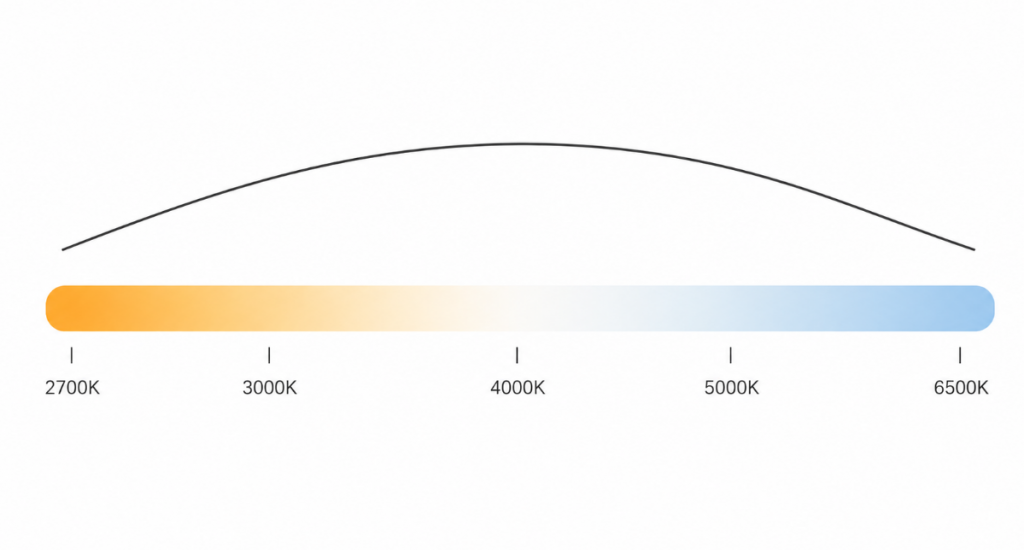
Same-CCT fixtures can look different because color temperature is an average number, not an exact color. LED chips are sorted into narrower groups called BINs based on color shifts too small for a spec sheet but visible on a wall. That mismatch is the real cause — and it’s controllable with the right process.

Key takeaways
- CCT (e.g. “3000K”) is a rounded position on the black body curve, not a single fixed color point.
- LEDs rated the same CCT are still split into 6–16 sub-groups called BINs (ANSI C78.377), and different BINs look visibly different.
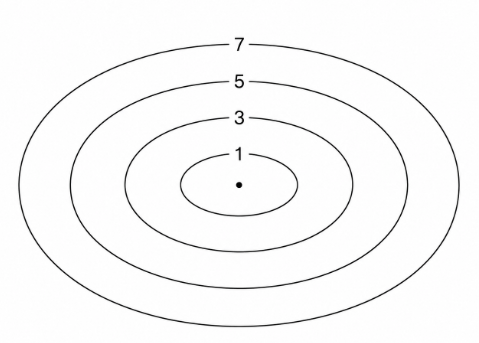
- Color match tolerance is measured in SDCM (MacAdam steps): 2–3 SDCM is tight enough that trained eyes can’t tell fixtures apart; 7+ SDCM is visibly inconsistent.
- Binning only fixes the chip. Driver current, optics, housing, and thermal design can still shift color batch to batch unless they’re locked too.
- Manufacturers keep batches consistent with a Locked BOM — freezing BIN, driver, optics, housing, thermal structure, accessories, and QC records for the life of a project.
What Is CCT, and Why Isn’t It Enough?
CCT (correlated color temperature) describes where a light source sits relative to a theoretical black body radiator at that temperature. It says nothing about how far off that curve the light actually falls — greener, pinker, left, right. That off-curve distance has a name, Duv, and two fixtures can share an identical CCT while sitting on opposite sides of the black body line. Same number on the box. Different color on the wall.
Manufacturing widens the gap further. Chips from the same production run aren’t identical — small variations in epitaxial growth and phosphor coating thickness shift each chip’s wavelength and color point. Across a batch of thousands, that produces a spread of color points around the target, not a single fixed value.
What Is LED Binning?
LED binning is the process of sorting LED chips into narrow color and brightness brackets after manufacturing, because chips from the same production run naturally vary in wavelength and color point. Packaging plants test every chip and assign it to a BIN based on that measurement.
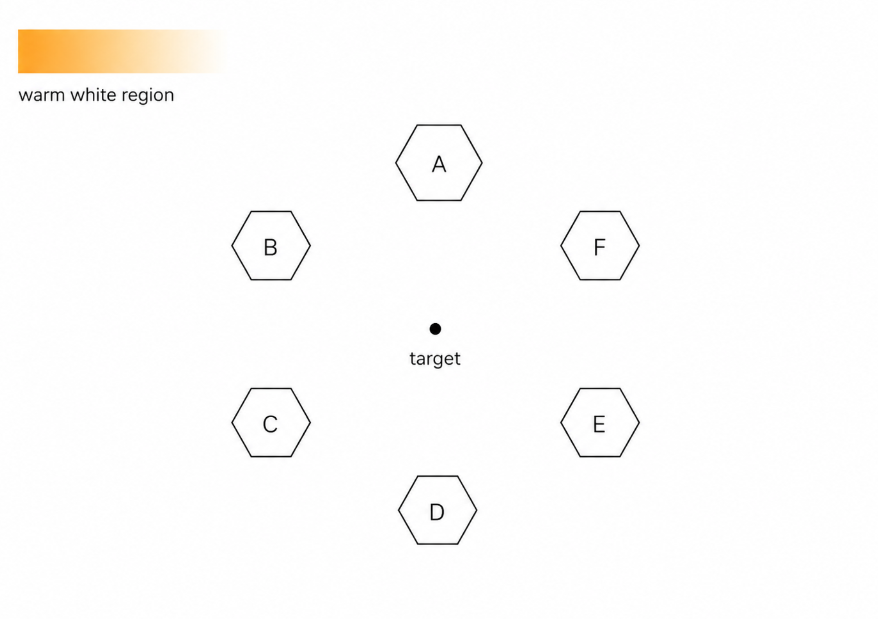
The usual reference standard is ANSI C78.377, which draws a boundary around the nominal CCT target roughly the size of a 7-step MacAdam ellipse, then divides that area into 6 to 16 individual color bins.
Show Image
So a “3000K” purchase order is really an order from one or several of those sub-bins. A fixture built from BIN A and one built from BIN F can both carry a legitimate 3000K label and still look noticeably different side by side. That’s the mechanism behind mismatched spotlights and uneven LED strips — not a defect, just an unmanaged variable.
What Is SDCM, and What’s a Good Tolerance?
SDCM (Standard Deviation of Color Matching), also called a MacAdam step, is the industry’s unit for how much color variation the human eye can detect. It comes from David MacAdam’s 1940s color-matching experiments, which found the eye can’t reliably separate colors within a certain distance of each other on the CIE chromaticity diagram.
| SDCM Level | What It Looks Like | Typical Use |
|---|---|---|
| 1 SDCM | No visible difference, even side by side | Rarely achieved at production volume |
| 2–3 SDCM | Trained eyes struggle to see a gap | Architectural, retail, high-end interiors |
| ~3 SDCM | Where most people start noticing a difference | Perceptual threshold benchmark |
| 5–7 SDCM | Slight but real color shift visible | Common mass-market tolerance |
| 7+ SDCM | Obvious color difference | Typical of unmanaged high-brightness white LED variation |
Tighter SDCM costs more, because tighter bins mean discarding or downgrading more chips that miss the target zone.
What Causes Color Drift Beyond Binning?
Even fixtures built from one tight BIN can drift apart downstream:
- Drive current and junction temperature — LEDs shift color as they heat. If actual operating temperature doesn’t match the temperature chips were binned at, the finished color lands off target.
- Mixed-bin blending — Fixture makers often blend chips from two or more bins to pull the average closer to the ANSI center. Uneven stock across bins makes this blend inconsistent batch to batch.
- Optics — Lenses, reflectors, and diffusers filter and scatter light. A different coating or resin batch changes the output color, even when the LED inside is unchanged.
- Dimming — Many drivers shift color point at low output — dim-to-warm drift, or plain color shift under PWM.
- Uneven aging — LEDs lose brightness at different rates over years of use, part of why large LED walls develop patchy color over time.
- Housing and thermal design — Surface finish and heat-sink geometry control heat dissipation, which loops straight back into the junction-temperature problem above.
None of this shows up in a datasheet comparison. It shows up once fixtures are mounted next to each other.
How Do Manufacturers Keep Color Consistent Across Batches?
By locking the entire bill of materials — not just the LED chip — for the life of a project. Binning solves the chip-level problem; everything downstream needs its own controls, or a well-binned chip still ends up in a fixture that drifts batch to batch. Any change to a locked item requires a formal engineering review before production resumes.
Show Image
| Locked Element | Why It Matters |
|---|---|
| LED BIN | Same supplier, same packaging run, same color bracket for the whole project — no mid-project bin swaps. |
| Driver | Fixed current, voltage, and dimming curve, so junction temperature and color point stay predictable. |
| Optics | Lens, reflector, and diffuser materials and coatings stay identical — no substitute resin or vendor. |
| Housing finish | Same surface treatment, since it governs heat dissipation and thermal color drift. |
| Thermal structure | Fixed heat-sink design so every unit settles at the same steady-state temperature. |
| Packaging & accessories | Filters, brackets, and other add-ons stay spec’d, so nothing introduces an unplanned optical variable. |
| QC records | Every batch keeps a traceable color and SDCM test log, so a problem batch traces back to a cause instead of a guess. |
Color consistency isn’t something you sort your way into after the fact. It’s something you protect by removing every variable that could move it — and by keeping a paper trail so any drift traces back to the batch, the component, and the change that caused it.
What Should You Ask a Lighting Supplier?
If color match across a project matters, CCT alone isn’t a useful spec. Ask for:
- The SDCM or MacAdam step tolerance, not just the CCT number
- Confirmation that the same BIN runs for the full order, with no mid-project resupply from a different bin
- Batch-level color test reports, ideally checked against a golden sample
- Color point behavior across the dimming range, not just at full output
A fixture locked at the BOM level and tested at the batch level is the difference between matching on paper and matching on the wall.
Frequently Asked Questions
Why do two “3000K” fixtures look different?
Because CCT is a rounded average. The chips inside were sorted into different BINs within the same CCT tolerance range, so their exact color points differ even though the label matches.
What is LED binning?
The process of sorting LED chips into narrow color and brightness brackets after manufacturing, since chips from the same production run naturally vary in wavelength and color point. The common reference standard is ANSI C78.377.
What’s a good SDCM tolerance for consistent lighting?
2–3 SDCM for projects where color match matters, such as retail or architectural lighting. 5–7 SDCM is typical mass-market tolerance, with a visible but minor shift.
Is SDCM the same as a MacAdam step?
Yes. SDCM (Standard Deviation of Color Matching) and MacAdam step are the same unit, used interchangeably in the lighting industry.
How do manufacturers keep color consistent across production batches?
By locking the entire bill of materials — LED bin, driver, optics, housing finish, thermal structure, and accessories — for the life of a project, with batch-level color testing to catch drift early.
Does dimming change a fixture’s color temperature?
Yes, on many drivers. Color point can shift at low output unless the driver and dimming curve are specifically controlled for stable color across the dimming range.
Yes, on many drivers. Color point can shift at low output unless the driver and dimming curve are specifically controlled for stable color across the dimming range.