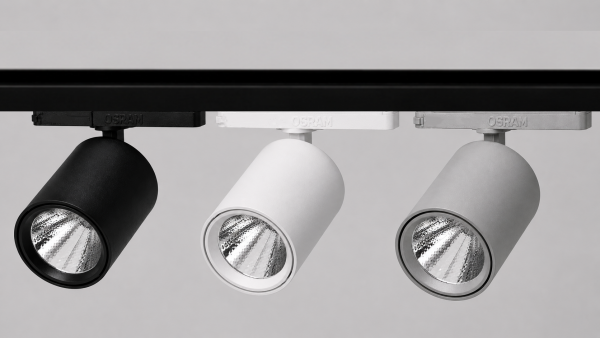
The best focus light for a garment shop is an adjustable LED track spotlight with CRI 90+, a suitable beam angle and consistent colour output. For most clothing displays, 24°–36° beams provide a useful starting point, while 15°–24° beams highlight mannequins and featured products.
What Is Focus Lighting in a Garment Shop?
Focus lighting directs light onto selected merchandise, helping customers notice clothing details, new arrivals and featured collections. Unlike general lighting, which illuminates the overall sales area, focus lighting creates contrast between products and their surroundings.
In a garment shop, it is commonly used for:
- Mannequins and window displays
- Clothing rails and wall-mounted collections
- New arrivals and seasonal merchandise
- Promotional tables and featured products
- Premium garments that require stronger visual emphasis
LED track spotlights are widely suited to these applications because their direction and position can be adjusted when the store layout changes.
Which LED Track Spotlight Specifications Work Best for Clothing Stores?
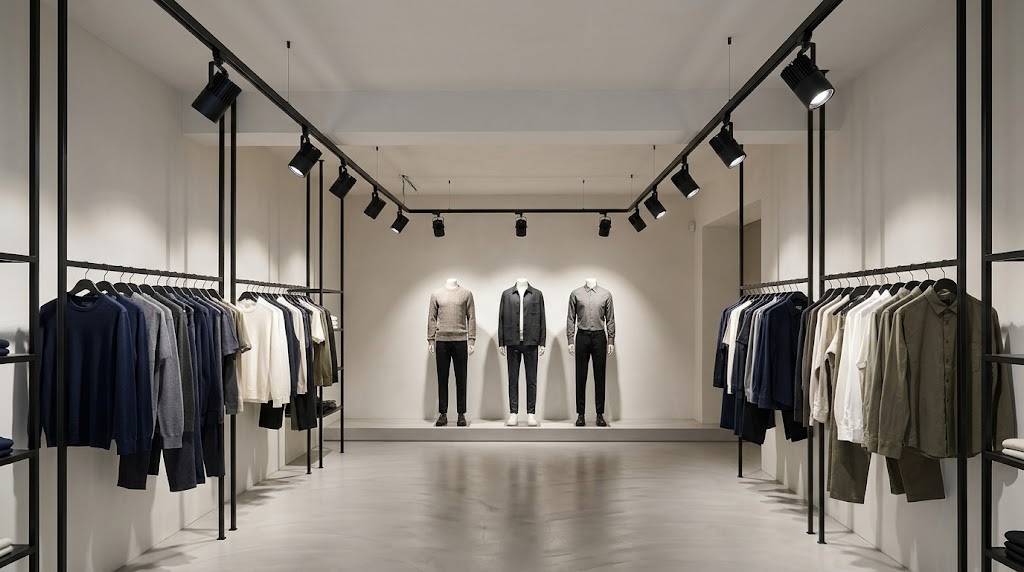
For most garment shops, the starting point is CRI 90+, a beam angle matched to the display, and a colour temperature that complements the store interior. Wattage and lumen output should be selected according to mounting height and the required illuminance.
| Specification | Recommended starting point | Application |
|---|---|---|
| Light source | LED track spotlight | Directional merchandise lighting |
| Colour rendering | CRI 90+ | Accurate fabric and garment colours |
| Beam angle | 24°–36° | Clothing rails and medium-sized displays |
| Narrow beam | 15°–24° | Mannequins and individual feature products |
| Wide beam | 36°–60° | Large displays and broader wall areas |
| Colour temperature | 3000K, 3500K or 4000K | Selected according to brand identity |
| Colour consistency | Low SDCM, such as 3-step where required | Consistent appearance across fixtures |
| Control | On/off or compatible dimming | Basic operation or adjustable lighting scenes |
These values are design starting points rather than fixed requirements. The final specification depends on ceiling height, display dimensions, fixture output and the intended lighting effect.
How to Choose the Right Beam Angle for Garment Shop Lighting
Beam angle determines how widely a spotlight distributes light across a display. A narrow beam concentrates light on a small target, while a wider beam covers more merchandise.
| Beam angle | Best use | Expected effect |
|---|---|---|
| 15° | Single mannequin or hero product | Concentrated accent |
| 24° | Small clothing display or feature table | Defined product highlight |
| 36° | Clothing rails and medium-sized displays | Balanced coverage |
| 50°–60° | Large display areas and selected wall sections | Broad light distribution |
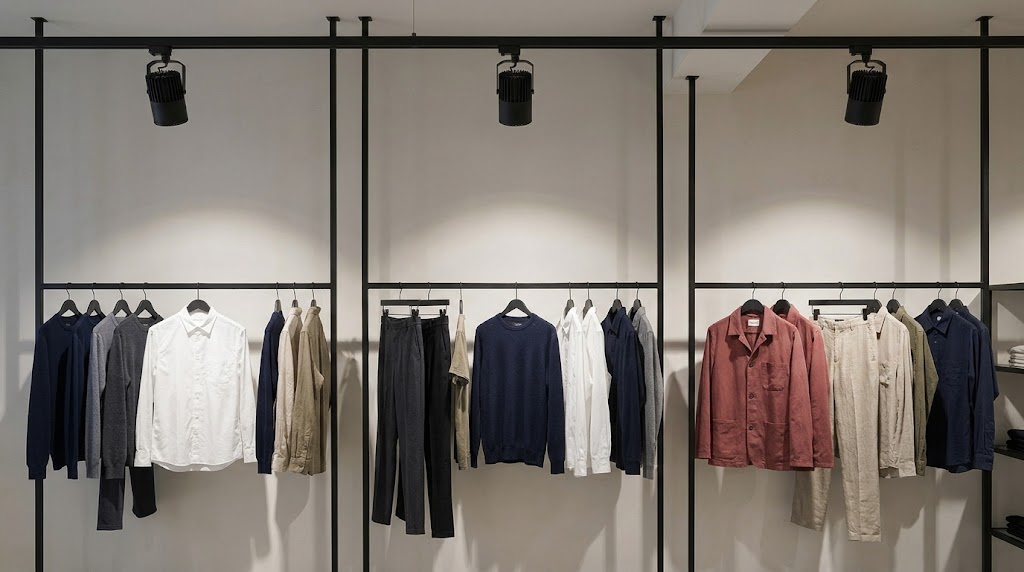
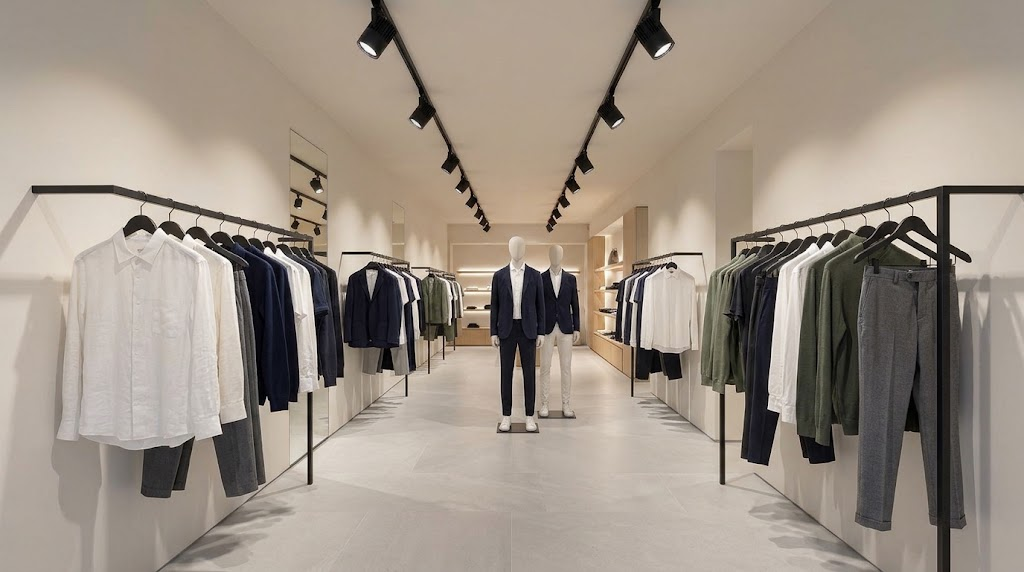
For example, a boutique may use 15° spotlights to emphasise mannequins near the entrance and 36° spotlights to illuminate clothing rails along the walls.
Avoid selecting beam angles by habit. A narrow beam mounted too far from the target may create an isolated bright spot, while an excessively wide beam can weaken the contrast needed to highlight a product.
For larger projects, IES or LDT photometric files help lighting designers check beam distribution, illuminance and fixture spacing before installation.
What Colour Temperature Is Best for a Garment Shop?
Colour temperature affects the atmosphere of a fashion store and the appearance of its materials. The best choice depends on the brand concept, garment colours and interior finishes.
| Colour temperature | Appearance | Suitable store concepts |
|---|---|---|
| 3000K | Warm and inviting | Premium boutiques and warm-toned interiors |
| 3500K | Balanced warm-neutral white | Contemporary fashion retail |
| 4000K | Clean, neutral white | Minimalist fashion, sportswear and modern retail |
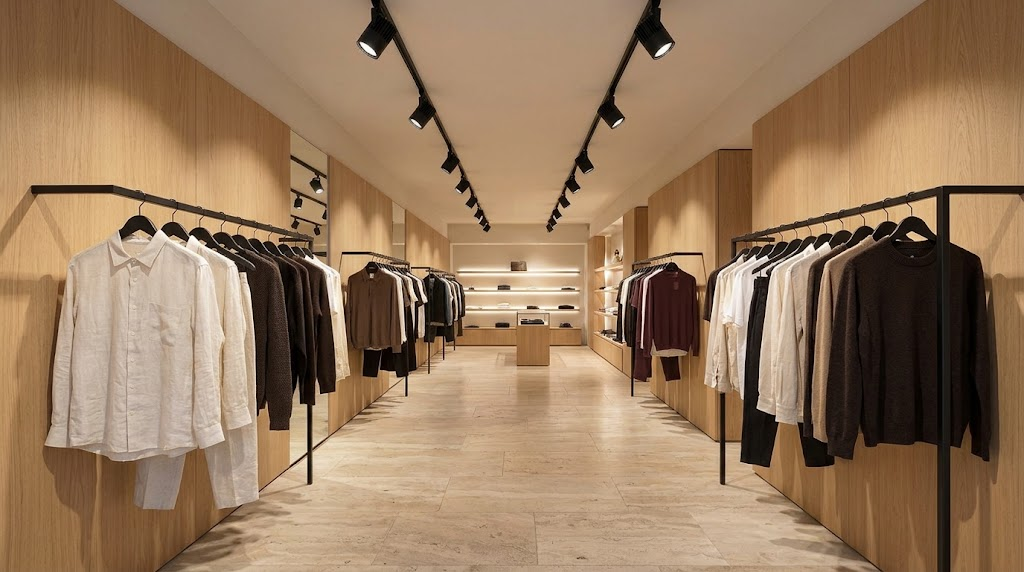
A warm colour temperature can complement wood, beige and earthy tones. A neutral-white source often suits white walls, grey finishes and contemporary store designs.
Colour temperature alone does not determine colour accuracy. Two LED spotlights at 4000K can render the same garment differently if their spectral characteristics differ. Check CRI and, where colour quality is critical, R9 or TM-30 data as well.
Why Does CRI Matter for Clothing Store Spotlights?
CRI, or Colour Rendering Index, indicates how accurately a light source renders colours compared with a reference source. For garment shops, CRI 90+ is a practical starting point because customers need to distinguish fabric colours, patterns and subtle shades.
When comparing LED track spotlights, check three aspects:
- CRI (Ra): A general indicator of colour rendering. CRI 90+ is a common target for quality-focused fashion retail.
- R9: Indicates rendering performance for saturated red, which can be relevant when assessing certain fabrics and skin tones.
- SDCM: Describes chromaticity variation between light sources. Lower values generally mean closer colour matching between fixtures.
For demanding fashion displays, TM-30 data can provide additional information about colour fidelity and gamut. A high CRI rating is useful, but it does not replace an assessment of the full lighting performance.
How Bright Should Focus Lighting Be in a Garment Shop?
Focus lighting should make featured merchandise stand out without causing glare or uncomfortable differences in brightness.
The following illuminance levels can be used as initial planning references:
| Area | Indicative illuminance |
|---|---|
| General sales floor | 200–500 lux |
| Clothing rails and product displays | 500–1,000 lux |
| Feature displays | Set according to the desired contrast and surrounding lighting |
These ranges are not universal standards. The required levels depend on the retail concept, ambient illumination, merchandise and applicable local recommendations.
Lux measures the light reaching a surface. For clothing displays, vertical illuminance is especially important because most garments hang vertically. A bright floor does not necessarily mean that clothing is adequately illuminated.
Aim spotlights toward the merchandise rather than directing every beam straight down. Check for harsh shadows, reflections in mirrors and glare from exposed LED sources.
How to Position Track Spotlights in a Garment Shop
A good lighting layout follows the merchandise plan. The entrance, mannequins, clothing rails and feature tables each require a different lighting approach.
1. Entrance and window displays
Use controlled accent lighting to draw attention to new arrivals and seasonal collections. Avoid excessive brightness that obscures garment details.
2. Mannequins
Aim adjustable spotlights at the clothing rather than only at the mannequin’s head or the floor. Check how the light reveals fabric texture, folds and the overall silhouette.
3. Wall-mounted clothing rails
Position fixtures to illuminate the hanging garments and reduce shadows between adjacent items. A combination of suitable beam angles may be needed for long rails.
4. Central display tables
Use overlapping light distributions where necessary to avoid bright patches and dark gaps across folded clothing or accessories.
5. Mirrors and fitting areas
Check the lighting from the customer’s viewing position. Balanced vertical illumination helps reduce unflattering facial shadows, while careful aiming limits glare and distracting reflections.
Track systems make it easier to reposition compatible fixtures as displays change. However, the required adjustment range, track type and electrical compatibility should be confirmed before ordering.
LED Track Spotlights vs. Downlights for Garment Shops
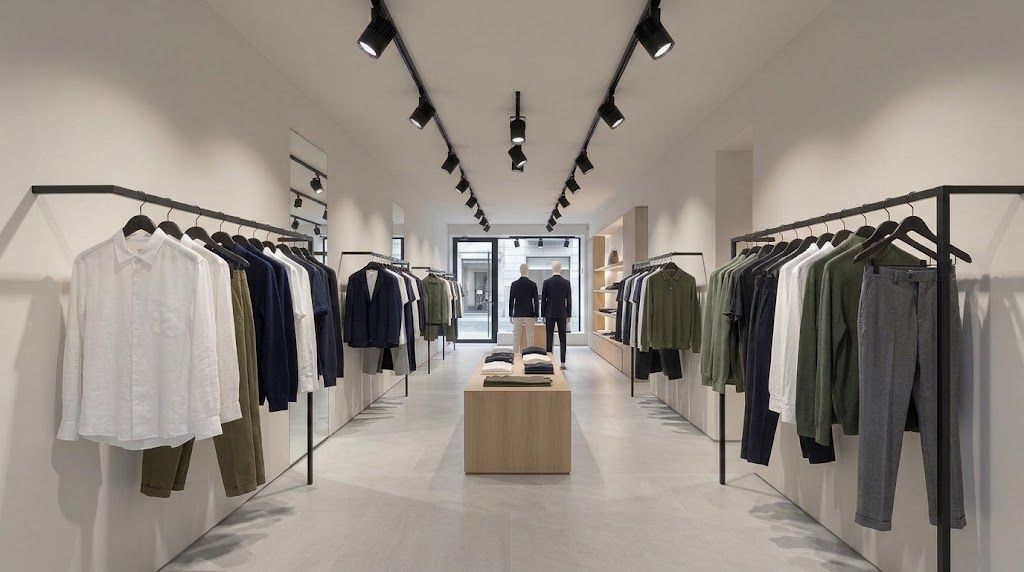
Track spotlights and downlights serve different purposes. Track spotlights are particularly useful for merchandise that needs directional emphasis, while downlights commonly provide general illumination.
| Comparison | LED track spotlights | LED downlights |
|---|---|---|
| Light direction | Adjustable on suitable models | Usually fixed |
| Product highlighting | Well suited to accent lighting | Depends on optic and installation |
| Layout changes | Fixtures can often be repositioned | Usually less flexible |
| General illumination | Possible with suitable optics and layout | Commonly used |
| Typical application | Mannequins, rails and feature displays | Sales floor and circulation areas |
For many clothing stores, combining ambient lighting with track spotlights provides a better result than relying on either fixture type alone.
What Should Buyers Check Before Ordering Garment Shop Focus Lights?
For retailers, lighting designers and contractors, the selection process should cover photometric performance, product quality and installation compatibility.
Before placing an order, confirm:
- Beam angle and lumen output for each display type
- CRI, R9 and colour consistency requirements
- Colour temperature and dimming compatibility
- Track system compatibility and fixture adjustment range
- Glare control, thermal performance and rated lifetime
- IES/LDT files for lighting calculations
- Applicable electrical safety and market-specific compliance documents
- Sample availability for evaluating colour and light distribution
For multi-store projects, standardising the fixture specifications helps maintain a consistent appearance between locations. Samples should be checked under representative interior conditions before bulk production or installation.
Focus Lighting Solutions for Garment Shops by BREE LIGHTING
BREE LIGHTING provides LED track lighting and commercial lighting solutions for retail environments. For garment shop projects, the priority is matching the spotlight’s beam angle, colour rendering and light output to the store layout and merchandise.
When specifying track spotlights, buyers should prepare the ceiling height, floor plan, display positions, preferred colour temperature and target illuminance. These details help establish the required fixture configuration and reduce the risk of uneven lighting.
For a new store or refurbishment, the project team can evaluate:
- Different beam angles for mannequins, rails and feature displays
- CRI and colour consistency across the installation
- Track compatibility and adjustable fixture designs
- Project-specific configurations and customisation requirements
- Technical documentation and sample testing
The right solution should be based on the lighting requirements of the project, not wattage alone.
Frequently Asked Questions About Focus Lights for Garment Shops
An adjustable LED track spotlight with CRI 90+ is a practical starting point. Select the beam angle according to the display size, mounting height and desired accent effect.
A 24°–36° beam is a useful starting range for many clothing rails. Wider beams may suit larger displays, while narrower beams are better for selected products and mannequins.
3000K suits warm, boutique-style interiors, while 4000K often works well in modern and minimalist stores. The choice should reflect the brand identity, materials and garment colours.
CRI 90+ is a sensible starting point for stores that need reliable garment colour presentation. Projects with demanding colour requirements should also assess R9, TM-30 and colour consistency between fixtures.
The quantity depends on floor area, ceiling height, fixture output, beam angle, display layout and target illuminance. A lighting calculation is more reliable than estimating the number of fixtures from floor area alone.
LED track spotlights can reduce energy consumption compared with less efficient lighting technologies. Actual savings depend on fixture efficacy, operating hours, control strategy and the existing installation.
Yes, provided the track system and fixtures support the required repositioning and aiming. Their flexibility makes them useful for seasonal displays, changing collections and retail refurbishments.
Conclusion
For garment shops, effective focus lighting depends on three key decisions: beam angle, colour rendering and fixture positioning. LED track spotlights with CRI 90+ and appropriately selected optics can highlight mannequins, clothing rails and featured products while maintaining a consistent retail presentation.
A lighting calculation, photometric data and sample testing should guide the final specification. This approach helps retailers achieve the intended visual effect without relying on excessive brightness or unnecessary fixtures.