Quick Answer
UGR < 19 is the international glare-comfort benchmark for retail lighting, achieved through deep-recessed housings, high shading angles, and TIR optics. Paired with modular magnetic track systems, it increases shopper dwell time, enables DALI-2/Zigbee/Matter automation, and can cut energy use by 30%+.
Executive Summary
In 2026, professional retail lighting has shifted from simple “lumen output” to “visual experience.” Top-tier commercial spaces now prioritize Unified Glare Rating (UGR) < 19 for comfort, combined with modular magnetic track systems for operational flexibility. This guide explains how these technologies optimize shopper engagement, ensure compliance with European standards, and reduce long-term operational costs.
1. The Power of UGR < 19: Enhancing Shopper Experience
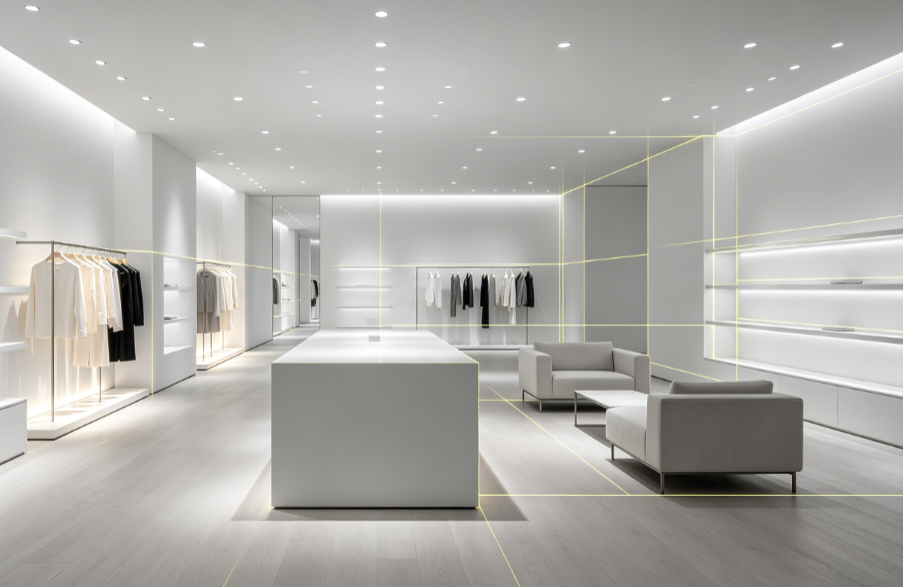
UGR < 19 is the international benchmark for visual comfort in retail lighting
measures glare (not color or brightness), and values below 19 are considered glare-free to the human eye.
Why it matters: Excessive glare causes “visual fatigue,” leading customers to spend less time in stores. By controlling glare, you create a premium atmosphere that encourages longer dwell times — a direct driver of conversion rates.
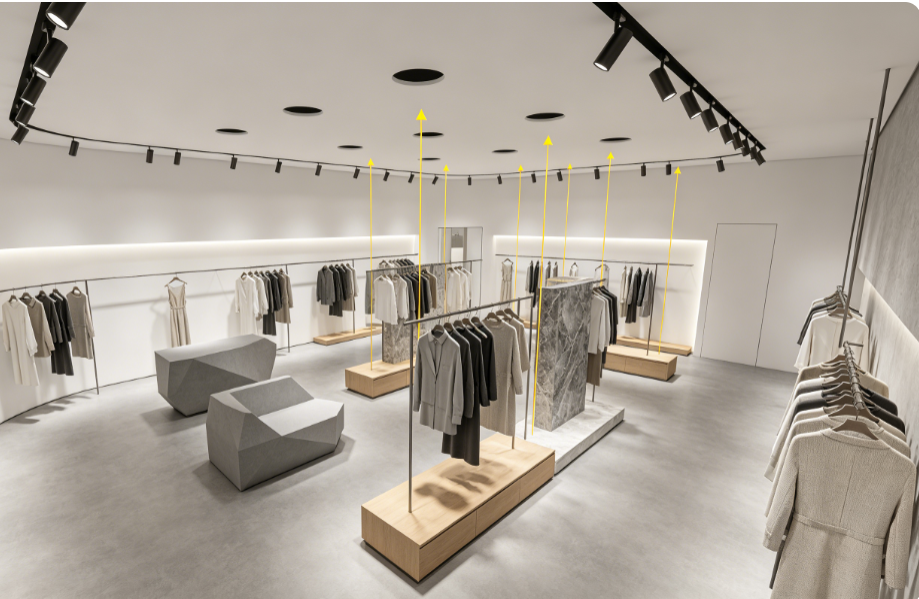
How to achieve UGR < 19: It isn’t just about the bulb — it’s about optical architecture. High-performance fixtures combine three design elements:
- Deep-Recessed Housings — physically hide the light source from the user’s direct line of sight.
- High Shading Angles (up to 41°) — block peripheral light rays that cause discomfort.
- Advanced TIR Optics — Total Internal Reflection lenses direct light exactly where needed, with zero spill.
The Rise of Modular Magnetic Systems
Modular magnetic track lighting is a tool-free rail system that lets retailers swap fixture heads instantly without rewiring — ideal for stores that rotate displays for seasonal campaigns.
System Integration: These tracks act as a backbone for more than just light. They integrate seamlessly with DALI-2, Zigbee, and Matter protocols, enabling AI-driven scene management that responds to store foot traffic.
Plug-and-Play Versatility: Unlike traditional fixed lighting, staff can swap a narrow-beam spotlight for a linear floodlight in seconds — no tools required.
3. Technical Standards: The “Invisible” Quality
Three numeric thresholds define premium retail-lighting quality: SDCM ≤ 3, CRI > 90/95, and UGR < 19.
To compete in the European market, products must meet all three.
- Color Consistency (SDCM ≤ 3): Standard Deviation of Color Matching ensures every fixture on the same rail emits the exact same light shade, preventing the “patchwork” look seen in inferior installations.
- High Color Rendering (CRI > 90/95): Ensures retail products appear vivid and true to life under the light.
Key Terms at a Glance
| Term | One-Line Definition |
|---|---|
| UGR (Unified Glare Rating) | Measures visual discomfort from glare; lower = more comfortable. Target: < 19. |
| SDCM (Standard Deviation of Color Matching) | Measures color consistency between fixtures on the same line. Target: ≤ 3. |
| CRI (Color Rendering Index) | Measures how accurately a light source renders true color. Target: > 90/95. |
| TIR Optics | Total Internal Reflection lenses that direct light precisely with zero spill. |
| Shading Angle | The cutoff angle (e.g., 41°) that hides the light source from direct view. |
Common FAQs: Understanding Advanced Track Lighting
Can I achieve UGR < 19 with existing, traditional track systems?
Generally, no. UGR < 19 depends on fixture geometry (deep-recessed housing) and specialized optics. You typically need to replace the fixture head to reach this comfort level.
Is high CRI always glare-free?
No. CRI measures color accuracy, while UGR measures glare — they are independent metrics. For a premium retail experience, prioritize both: CRI > 95 for color and UGR < 19 for comfort.
Why is SDCM ≤ 3 important for commercial retail?
DCM ≤ 3 guarantees color uniformity. In a long row of track lights, it ensures there is no noticeable color difference between units — critical for a professional, high-end retail visual identity.
How does the “shading angle” contribute to UGR < 19?
The shading angle is the physical cutoff point of the luminaire. A high shading angle (e.g., 41°) blocks the light source from the shopper’s direct view, eliminating discomfort glare without requiring heavy filters.
How do these systems save energy?
Modular systems that support AI-driven dimming (via DALI-2) let stores automate lighting to match illumination levels to time of day and customer density — typically reducing energy use by 30%+.