Overlighting is a ratio problem, not a lumens problem. Keep ambient at 150–300 lux, accent spotlights at 3–5× that on the product, beam angle matched per zone (10°–60°), CRI ≥ 90, UGR < 19. Check all of it before the schedule is signed, not on site.
A showroom sells through the eye first. Lighting has one job the rest of the interior doesn’t: tell people where to look. Ambient light keeps a room walkable. Spotlights decide what matters. Most “too bright” complaints come from one layer doing the other’s job.
What is a spotlight actually for?
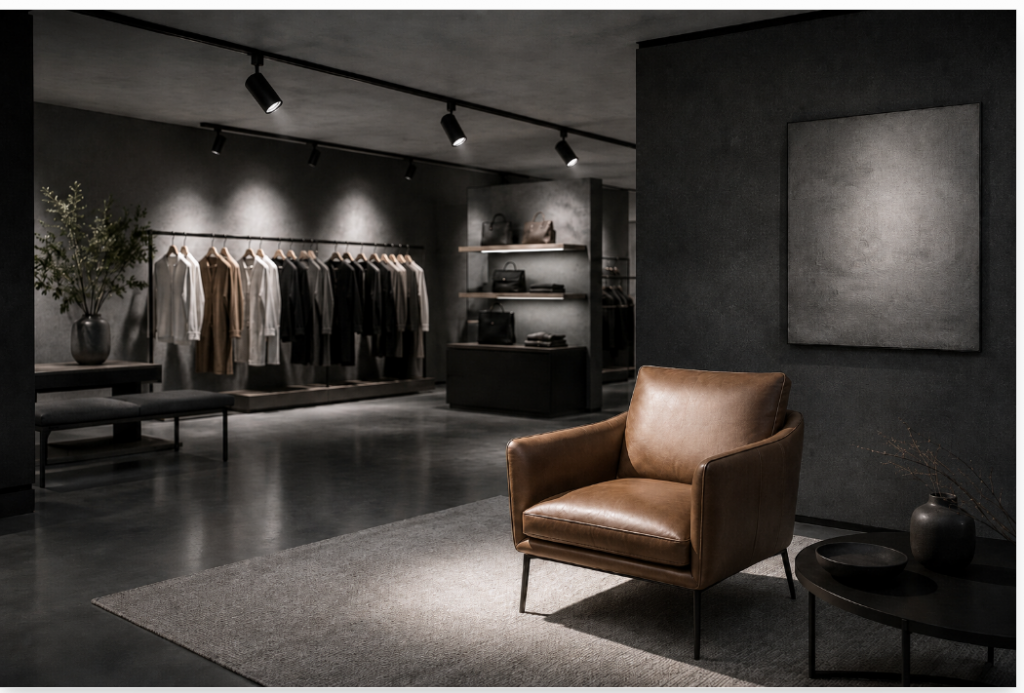
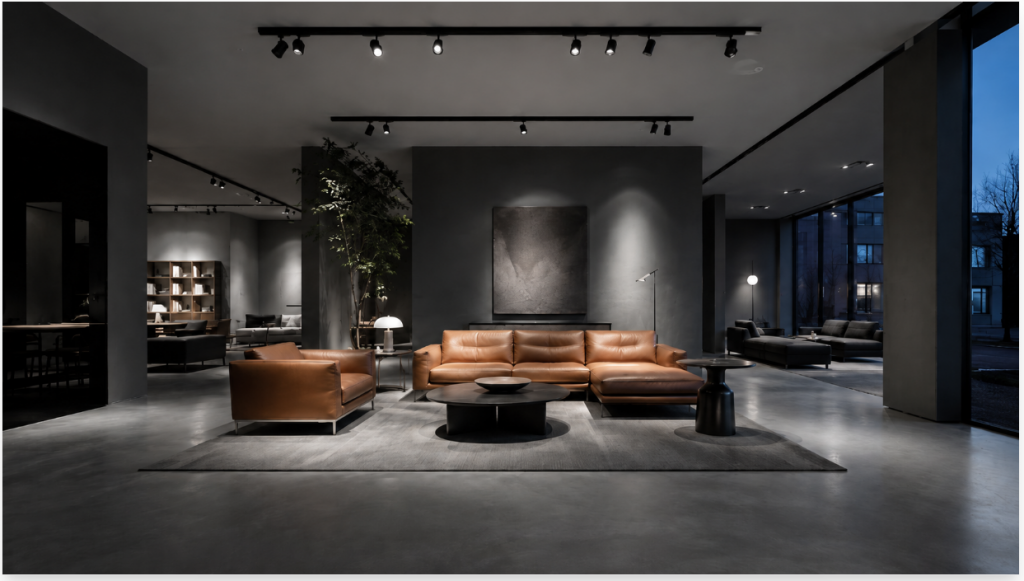
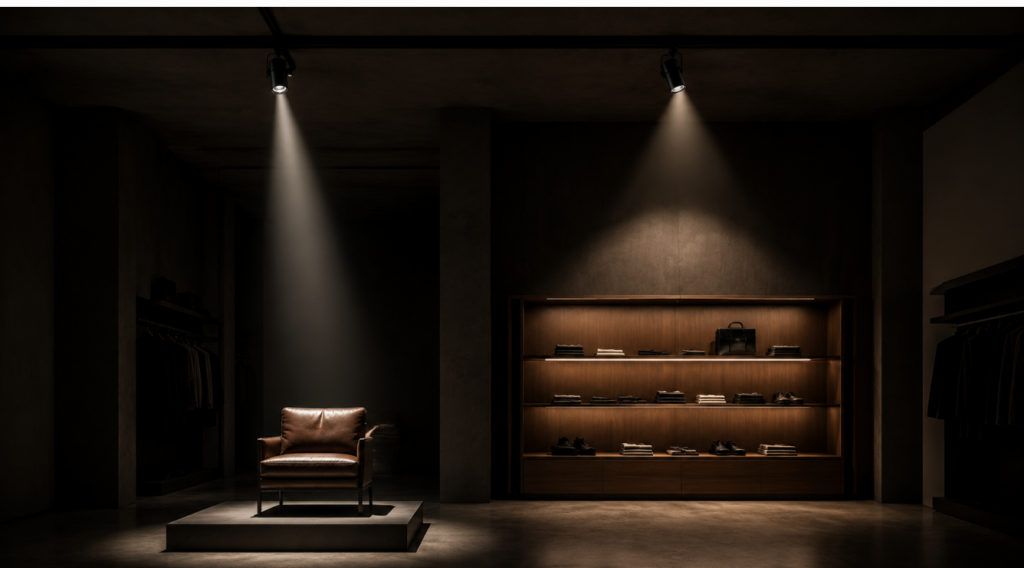
Spotlights create a deliberate difference in brightness. A sofa grouping, a mannequin, a car’s bodywork — the eye goes there first because it’s brighter than everything around it, not because it’s the biggest thing in the room.
| Layer | Target | Role |
|---|---|---|
| Ambient | 150–300 lux | Keeps the room usable |
| Accent | 3–5× ambient | Creates priority |
Below 2× ambient, nothing stands out. Above 6–8×, the room starts to look like a stage set rather than a showroom.
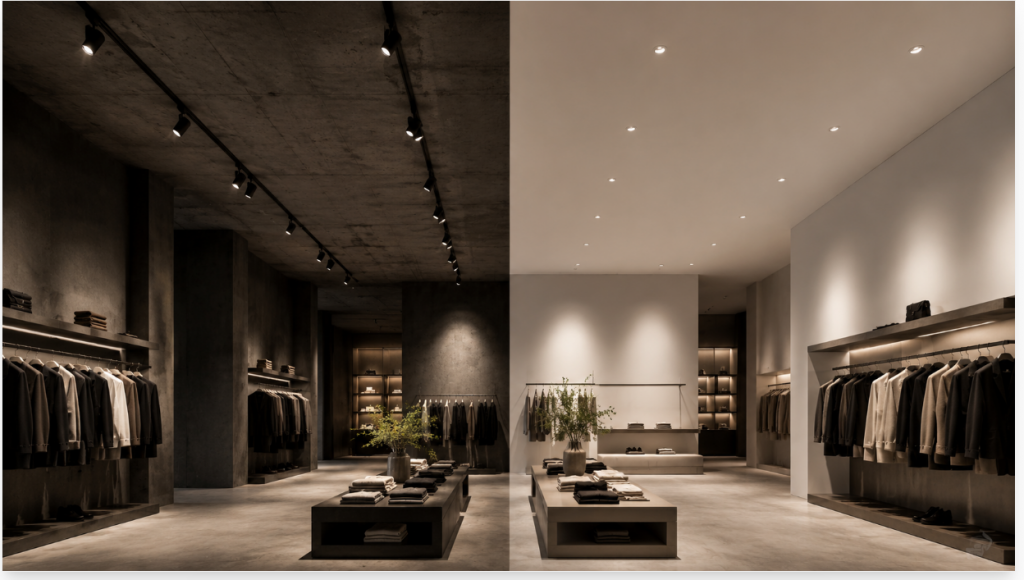
Ceiling-mounted or recessed — the ceiling decides first
| Surface / track spotlight | Recessed spotlight | |
|---|---|---|
| Ceiling depth | None needed | Void required above |
| Repositioning | Slide on the track | Fixed once installed |
| Fits | Exposed or industrial ceilings, changing layouts | Luxury retail, galleries, clean low ceilings |
| Maintenance | Easy — fixture is exposed | Access to the void or trim |
Recessed gives the cleaner line. Track gives you the ability to move the light in minutes instead of opening the ceiling again. Pick based on how often the layout will change, not which looks tidier on day one.
Beam angle by category
One beam angle for the whole project is the most common mistake on a showroom schedule.
| Beam angle | Use it for |
|---|---|
| 10°–15° | Single hero pieces — watch, sculpture, bonnet line, mannequin face |
| 24°–36° | Furniture groupings, shelving, clothing rails |
| 45°–60° | Large surfaces, feature walls, close-viewing zones |
Most schedules need at least two of these in the same room. Zoomable heads (15°–55°) cut the SKU count and leave room to adjust later.
| Showroom | CCT | CRI | Beam mix |
|---|---|---|---|
| Furniture | 3000K | ≥ 90 | 24° + 36° |
| Fashion | 3000K–3500K | ≥ 95 | 15° + 36° |
| Jewellery / watches | 2700K–3000K | > 97 | 10°–24° |
| Car showroom | 3500K–4000K | ≥ 90 | 15° + 36° |
| Homeware | 3000K–4000K | ≥ 90 | 24° + 45° |
Colour quality over raw output
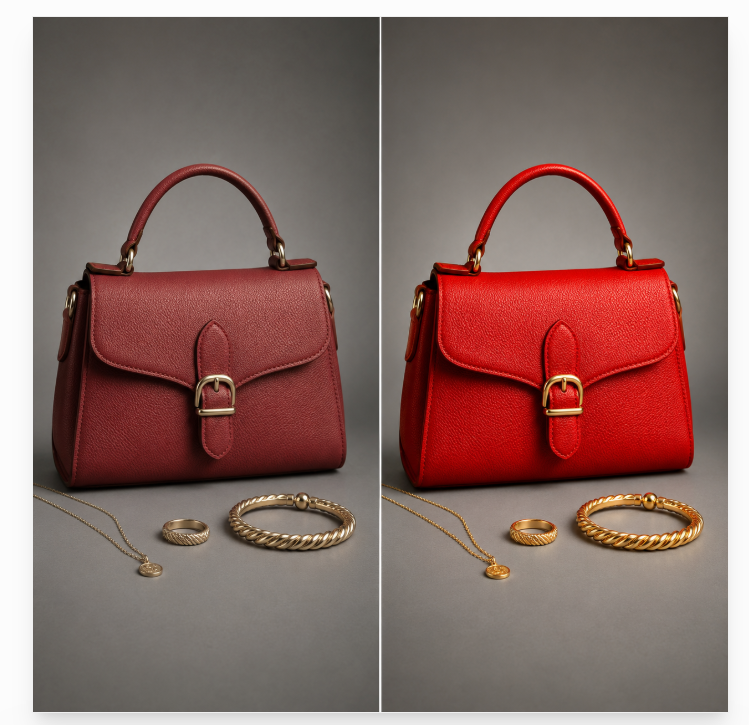
Brightness is easy to fix after installation. Colour rendering isn’t — by the time it’s wrong, the shopfit is already finished.
- CRI ≥ 90 — the floor for any showroom.
- CRI ≥ 95, or > 97 for jewellery — where fabric, leather, skin tone or gemstone colour has to read true.
- R9 matters as much as the headline Ra figure. Two CRI 90 fixtures can render warm-toned materials very differently depending on R9. Ask for R1–R14, not just the average.
- SDCM ≤ 3 — keeps colour consistent between fixtures once there are more than a handful on view.
Test the actual CCT/CRI combination on the real product before locking the schedule. Datasheet white walls and dark leather don’t behave the same way.
Glare — the line item that gets skipped
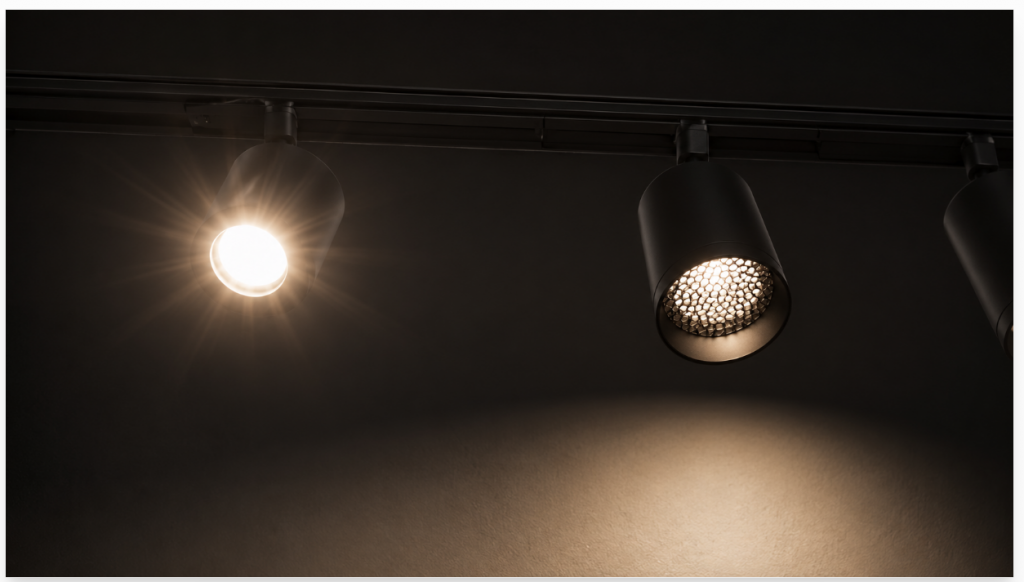
Glare doesn’t show up on a lux meter, which is probably why it’s the spec most often left off. In a showroom, people lean in, look up, and stay longer than they would in a corridor. An exposed source gets noticed, and it reads as cheap regardless of how good the CRI is.
UGR < 19 is the standard for customer-facing showroom lighting. Fix it at the fixture — deep anti-glare reflectors, honeycomb louvres, barn doors on narrow accents — not after installation.
Adjustability — the spec that matters after opening day
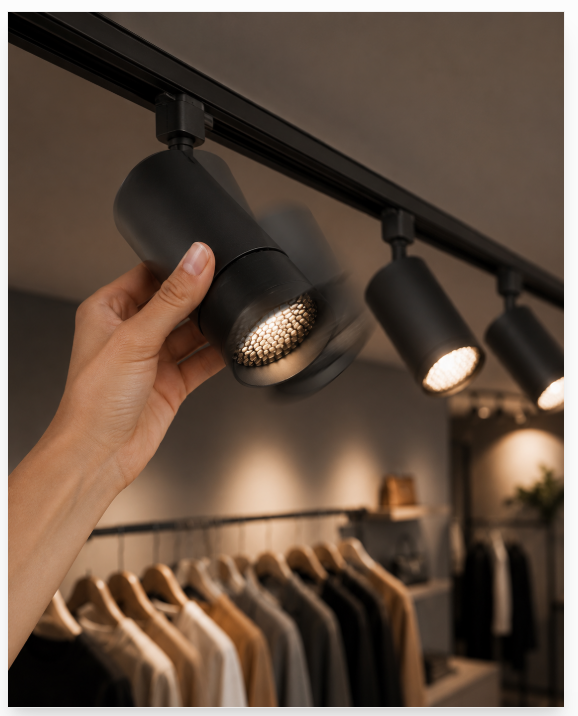
A layout is never proven right on day one. It’s proven right at the first display change. Fixed downlights are fine in a space that genuinely doesn’t move. Everywhere else, adjustability saves a ceiling reopening every time the merchandising shifts.
Specify:
- 3-circuit track as the baseline beyond a very small space, so zones switch and dim independently.
- Zoomable heads (15°–55°) where display categories are likely to change.
What actually causes an overlit showroom
- Specifying by wattage alone, without matching beam angle to the object.
- Ambient light only — visible, but flat, with no hierarchy.
- UGR left off the schedule, discovered once the client is standing under the fixture.
- Fixed fixtures in a space that gets re-merchandised within the year.
Fixture schedule checklist
- Ceiling condition confirmed — track vs recessed
- Beam angle matched per zone, not standardised
- CRI ≥ 90 (≥ 95 fashion, > 97 jewellery); R9 checked, not just Ra
- UGR < 19 confirmed against the tested optic
- SDCM ≤ 3 where several spotlights are visible together
- Track type confirmed — 3-circuit as the practical baseline
- Adjustability matched to expected layout changes
- CE / RoHS / ENEC, and ErP for EU projects, confirmed
FAQ
What beam angle for a showroom spotlight?
Match it to the object: 10°–15° for small, high-value pieces, 24°–36° for furniture and rails, 45°–60° for large surfaces or close viewing. Most showrooms need two angles minimum.
What CRI does a showroom need?
90 as the floor. 95 for fashion and cosmetics. Above 97 for jewellery, where colour accuracy is the product.
What UGR should showroom lighting meet?
Under 19. Controlled at the fixture — reflector, louvre, barn door — not compensated for afterward.
Track or recessed?
Track for showrooms that change layout often. Recessed for stable, high-end spaces where the ceiling line matters more than flexibility.
Why does a well-specified showroom still feel overlit?
Usually the ambient-to-accent ratio, not the total lumens — either too flat to create hierarchy, or pushed so far it reads as stage lighting.