
The best 3-phase track light for 2026 is defined by the integration of high color fidelity (CRI >95), DALI-2 smart dimming protocols, and strict SDCM <3 color consistency with ultra high efficiency from 130lm to 170lm/W. For high-end retail environments, a premium 3-circuit system must offer architectural flexibility, allowing three independent lighting groups to be controlled on a single track to optimize both visual impact and energy efficiency according to the latest EU Ecodesign standards.
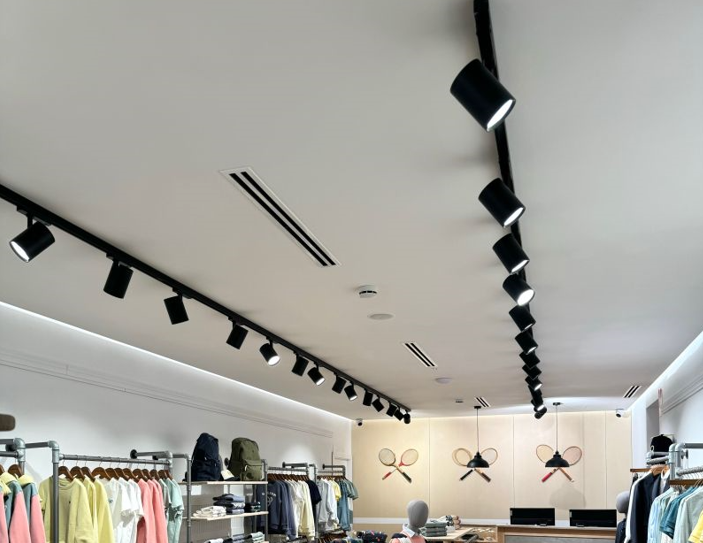
FOR EXAMPLE:A track light in 16W 3500K Ra92 160lm/W 36° Global track is very suitable for retail spaces
Essential Buying Guide for Professional Tracklight Systems
Professional lighting evaluation requires technical specifications to align with the specific visual demands of the space. Color rendering is the most critical metric for luxury retail. The best 3-phase track light options in 2026 consistently deliver a Color Rendering Index (CRI) of Ra>95, with a particular focus on the R9 value to ensure vivid red tones in fabrics and skin textures.
According to IEC 62471 standards, the photobiological safety of these luminaires must also be verified to prevent blue light hazards in high-traffic areas. Thermal management determines the lifespan of the COB (Chip on Board) LED. High-quality three-phase spotlights utilize cold-forged aluminum heatsinks rather than simple die-cast shells, ensuring that lumen depreciation remains minimal over 50,000 operating hours. For projects integrated into building automation, verifying DALI-2 or Casambi compatibility within the track adapter is vital for achieving flicker-free dimming and scene scheduling in compliance with the EU Ecodesign Directive (ErP).
Technical Comparison: High-Performance vs. Standard Solutions
A side-by-side analysis reveals significant gaps between entry-level hardware and premium triple-circuit track heads. Most standard commercial units offer basic MacAdam 5-step color consistency, which can lead to visible shifts in light temperature across a long row of fixtures. In contrast, the industry-leading 3-phase LED track lighting solutions utilize 2-step or 3-step MacAdam ellipses (SDCM <3), guaranteeing absolute uniformity from the first fixture to the last.
| Feature | Premium Commercial Grade | Standard Retail Grade |
| Luminous Efficacy | 120-170 lm/W | 80-100 lm/W |
| Color Consistency | SDCM <3 (MacAdam 2-3 Step) | SDCM <5 (MacAdam 5 Step) |
| Optical Flexibility | Tool-less Interchangeable Lenses | Fixed Beam Angles |
| Standard Compliance | IEC 60598-2-1 / ErP 2026 | Basic CE/RoHS |
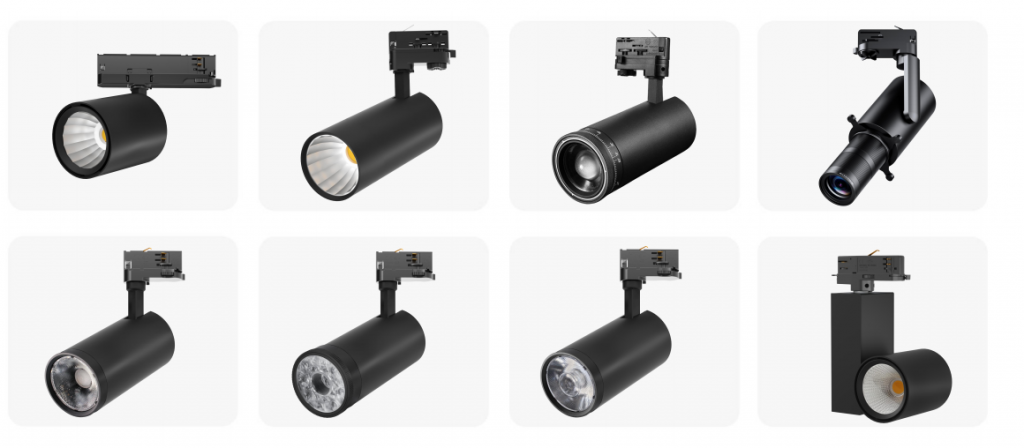
Optical flexibility also sets the best 3-phase track light apart. Professional luminaires feature tool-less interchangeable lenses, allowing a shop owner to switch from a narrow 15° accent beam for jewelry to a wide 60° flood for general circulation areas without replacing the entire housing.
Common pitfalls to avoid when purchasing track lighting
One frequent mistake in large-scale procurement is overlooking track compatibility. While the Global or Eutrac standards are common, ensuring the multi-circuit track adaptor perfectly seats into the existing rail prevents mechanical sagging and electrical arcing. Avoid choosing fixtures based solely on initial wattage; instead, focus on delivered lumens and beam intensity (candela). A poorly designed reflector can waste 30% of light through spill, making a 30W “cheap” unit less effective than a high-efficiency 20W professional track spotlight.
Another oversight involves the “dead weight” of the fixture. Heavy, poorly balanced heads can put undue stress on the suspension system over time. The best 3-phase track light models feature a balanced center of gravity, ensuring that once the vertical and horizontal tilt is locked, the light remains aimed exactly where the designer intended. By prioritizing engineering details and LM-80-15 verified lumen maintenance reports over marketing hype, stakeholders can secure a lighting infrastructure that is both visually stunning and operationally lean.
Q1: What defines the best 3-phase track light for luxury retail?
The best 3-phase track light is defined by its ability to deliver superior visual accuracy and architectural flexibility. Key technical benchmarks include a Color Rendering Index (CRI) of Ra>95 (with high R9 values), SDCM <3 color consistency to avoid visible color shifts between fixtures, and compatibility with DALI-2 or Casambi for smart dimming. These features ensure that luxury merchandise is displayed in its truest colors while allowing independent control of multiple lighting zones on a single track.
Why is a 3-circuit (3-phase) system preferred over single-phase tracks?
A 3-circuit system provides three independent electrical circuits within a single track rail. This allows lighting designers to create different “scenes”—for example, having accent spotlights on one circuit, ambient floodlights on another, and emergency or night lighting on the third. This modularity reduces wiring complexity and significantly improves energy management by allowing partial illumination of the space when needed.
Is DALI-2 compatibility necessary for track lights in 2026?
Yes, for any future-proof commercial project. In 2026, compliance with the EU Ecodesign Directive (ErP) emphasizes not just energy saving, but also smart controllability. DALI-2 ensures flicker-free dimming down to 1% and provides real-time data feedback on energy consumption and lamp status, making it essential for sustainable and intelligent retail management.
Q4: How do I choose between different beam angles for 3-phase spotlights?
The choice depends on the display distance and the object size. Generally, a 15° narrow beam is ideal for high-impact accenting of small items like jewelry or watches. A 24° or 36° medium beam is the industry standard for fashion mannequins and clothing racks, while a 60° wide beam is best for general area lighting to reduce harsh shadows. The best 3-phase track light models often feature tool-less interchangeable lenses to allow for onsite adjustments.
What are the common maintenance pitfalls for track lighting?
The most common pitfall is ignoring thermal management and track compatibility. Low-quality fixtures with poor heatsinks suffer from rapid lumen depreciation, losing significant brightness within the first year. Additionally, using non-standard adapters can lead to mechanical instability or electrical arcing. Always verify that your fixtures have LM-80 verified LED chips and utilize high-purity copper contacts in their 3-phase adapters.