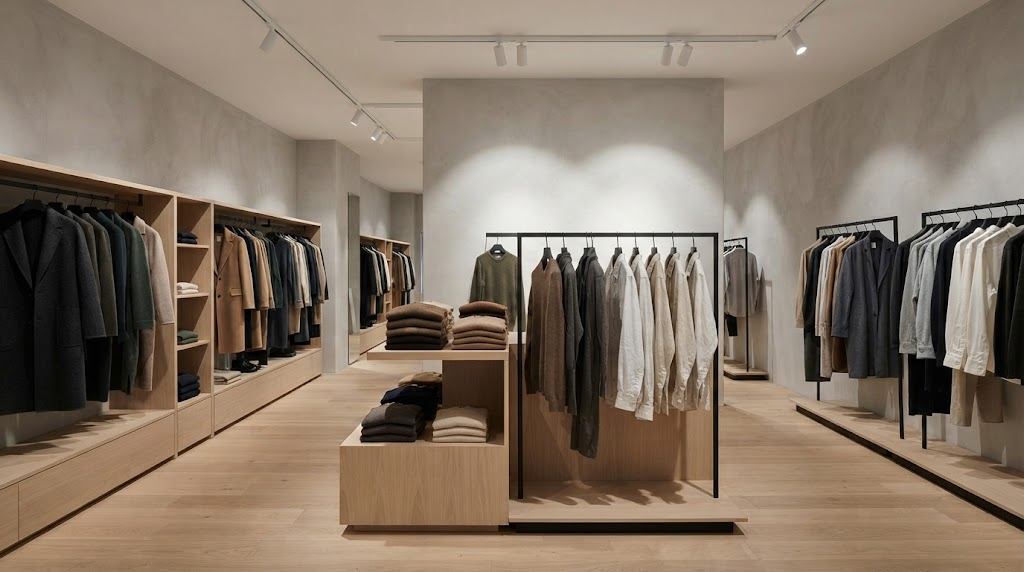
ask lighting is focused illumination for a specific activity, such as reading, working, preparing food, checking products or serving customers. Unlike general lighting, it does not aim to brighten the entire room. It puts useful light on the area where visual work actually takes place.
That distinction sounds obvious, but it changes how a lighting system should be designed.
Instead of asking how many fixtures a room needs, start by asking what people will do there.
A checkout counter, office desk, kitchen worktop and retail display may all be in the same building, but they do not require the same kind of light.
What Is Task Lighting?
Task lighting is localized lighting designed to make a particular activity easier to perform.
The task determines the lighting requirement.
Reading a document requires different visual conditions from preparing food. Inspecting a product is different again. In a retail environment, a staff member handling merchandise at a counter has a different need from a customer walking through the sales floor.
This is why task lighting should be considered in relation to the activity rather than treated simply as an additional light fixture.
A well-designed system considers where the task happens, how detailed it is, how far away the light source is and whether the light could create shadows or glare.
How Is Task Lighting Different from General Lighting?
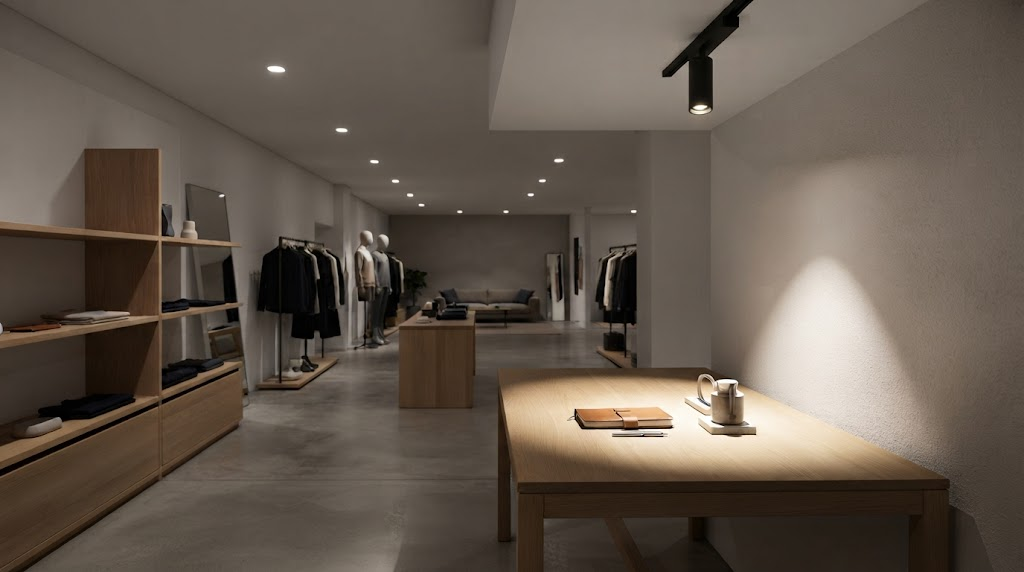
General lighting establishes the overall brightness of a space. Task lighting provides more controlled illumination at a particular working area.
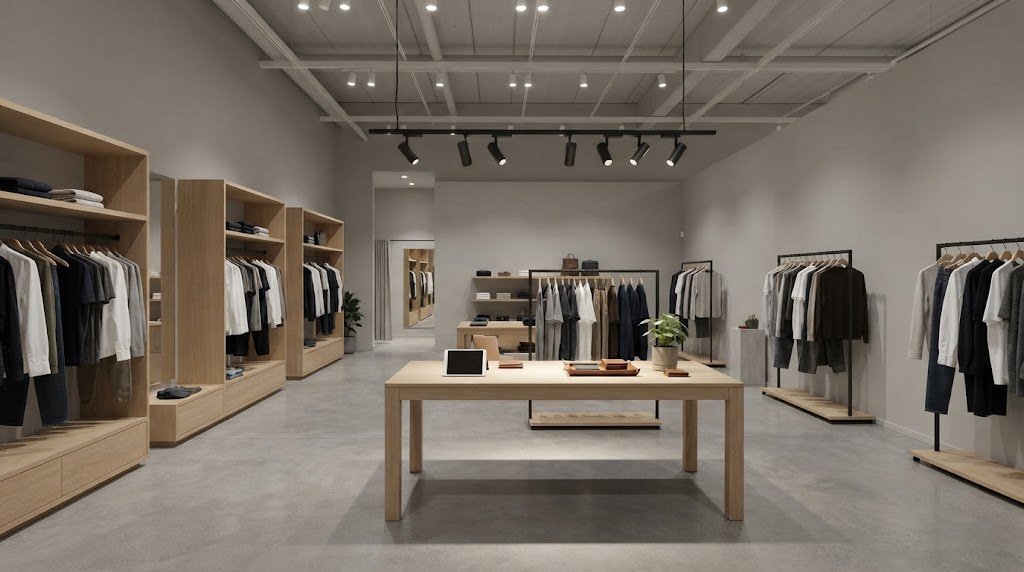
Think of a retail store.
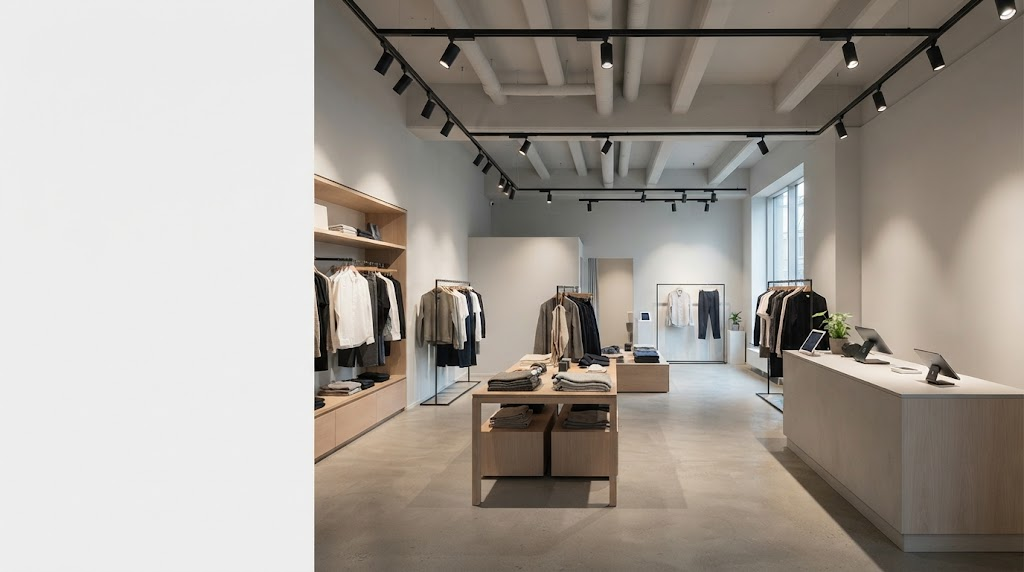
The sales floor needs enough ambient light for customers to move around comfortably. The checkout counter has another requirement: staff need clear visibility of products, receipts and the working surface.
Raising the brightness of the entire store would solve the second problem inefficiently.
A dedicated task-lighting layer solves it locally.
This is the fundamental difference:
General lighting serves the room. Task lighting serves the activity.
Where Is Task Lighting Most Useful?
Task lighting is useful wherever people need to perform a visually specific activity.
Retail
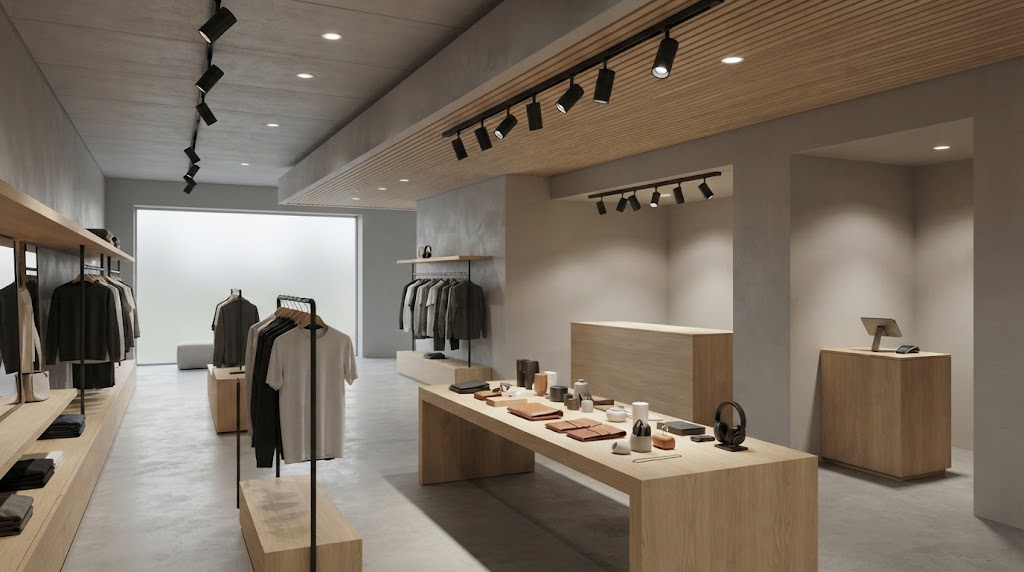
In retail environments, task lighting can be used around checkout counters, service desks, fitting areas and product handling points.
It can also be used on display tables where customers need to examine products closely.
The light should be directed at the actual working or viewing surface rather than simply increasing the brightness of the surrounding ceiling.
Offices
Office work often involves screens, paperwork and detailed visual tasks.
The lighting needs to support the work without producing reflections on monitors or excessive contrast between the desk and its surroundings.
In flexible offices, adjustable fixtures can be useful because desk layouts may change over time.
Restaurants and Kitchens
Kitchen work requires reliable illumination on preparation surfaces, cooking areas and cleaning zones.
Here, the position of the light matters considerably. Equipment, shelves and the user’s body can all create shadows.
Dining areas have different requirements and may use a combination of softer ambient lighting and more focused illumination over tables or counters.
Showrooms
Showrooms often combine customer movement with detailed product inspection.
A piece of furniture, sanitaryware, appliance or material sample may need focused illumination so customers can see its finish and construction clearly.
In this situation, task lighting can overlap with accent lighting.
The difference is the intention: task lighting supports visual activity; accent lighting creates emphasis.
Salons and Beauty Spaces
Hair and beauty work requires good visibility of colour, texture and detail.
The position and colour quality of the light become particularly important because the user may need to evaluate skin tones, hair colour or fine details.
A fixture that looks impressive on the ceiling is not necessarily the right fixture for the task.
Does Task Lighting Always Need to Be Brighter?
No. Task lighting does not simply mean maximum brightness.
The amount of useful illumination depends on what the person is trying to see.
Small details, low contrast, reflective surfaces and longer viewing periods can all change the requirement. A highly concentrated beam may also appear much brighter than a wider distribution even when the total light output is similar.
The aim is to create enough useful illumination at the task while maintaining visual comfort.
This is why brightness should be considered together with distribution, contrast and glare.
Why Does Light Distribution Matter?
Light distribution determines where the output of a luminaire actually goes.
This becomes especially important for task lighting because the target area is usually defined.
A fixture with a narrow distribution can concentrate light on a small work area. A wider distribution can cover a larger surface more evenly.
Neither is automatically better.
Imagine a long checkout counter. A very narrow beam may create several bright spots and leave gaps between them. On a small product display, the same optical approach could be highly effective.
The size of the task and the distance from the fixture should therefore be considered together.
How Do You Choose a Beam Angle for Task Lighting?
The beam angle should match the size and distance of the area being illuminated.
A narrow beam is generally more suitable for a small, defined target. A medium beam provides broader coverage, while a wide beam can be useful for larger work surfaces.
But beam angle alone is not enough.
Mounting height changes the size of the illuminated area. A beam that works well at a low ceiling may cover a much larger area when mounted higher.
For this reason, commercial lighting projects should evaluate beam angle together with:
- Mounting height
- Target distance
- Target size
- Required uniformity
- Light output
- Surface reflectance
The right beam is the one that puts the light where the task is—not simply the one with the most concentrated output.
Where Should Task Lighting Be Installed?
Task lighting should be positioned according to the user’s activity and viewing direction.
The fixture should provide useful illumination while avoiding unnecessary shadows and reflections.
For a work surface, consider:
- Where the user stands or sits
- Which direction they face
- Where their hands are positioned
- Whether a screen is present
- Whether the surface is glossy
- Whether another object could block the light
A poorly positioned fixture can create a shadow across the very area it is supposed to illuminate.
This is particularly relevant for counters, desks, workbenches and preparation areas.
How Can Task Lighting Reduce Glare?
Good task lighting should improve visibility without becoming a source of discomfort.
Glare can occur when a bright luminaire is directly visible or when light reflects from a glossy surface.
Common solutions include:
- Adjusting the fixture position
- Controlling the beam direction
- Using appropriate optical shielding
- Reducing excessive output
- Balancing task and ambient lighting
- Considering reflections from screens and polished surfaces
The goal is not to hide the light source completely. It is to keep the visual task more important than the luminaire itself.
What Colour Temperature Works Best for Task Lighting?
The best colour temperature depends on the space and the activity.
Around 3000K can create a warm and relaxed environment.
Around 3500K provides a balanced warm-neutral appearance.
Around 4000K produces a clean neutral-white appearance and is often suitable for offices, retail environments and other professional spaces.
The surrounding lighting should always be considered.
A task light with a noticeably different colour temperature from the general lighting can make the working area feel disconnected from the rest of the room.
For commercial projects, consistency is often more important than choosing a particular Kelvin value simply because it is common.
Does Colour Rendering Matter for Task Lighting?
Yes, particularly when the task involves colour or material evaluation.
Two light sources can have the same colour temperature but reproduce colours differently.
High-quality colour rendering can be important in:
- Fashion retail
- Cosmetics
- Hair salons
- Food
- Product inspection
- Art and design
- Material showrooms
CRI is commonly used to describe colour rendering performance. R9 is also relevant when saturated red tones need to be reproduced accurately.
For a colour-sensitive task, these specifications deserve as much attention as brightness.
Can Track Lighting Be Used as Task Lighting?
Yes. Track lighting can be particularly useful when the task position is not permanent.
Adjustable track spotlights can direct light toward a checkout counter, display table, service point or workstation.
This makes them useful in commercial spaces where layouts change.
For example, a retail store may move a promotional display several times during the year. An adjustable spotlight can follow the display without requiring a new ceiling installation.
The flexibility comes from the combination of the track system and the adjustable luminaire.
However, the track itself does not determine the quality of the lighting. Beam control, output, colour rendering and glare performance still need to suit the task.
When Is Adjustable Task Lighting Worth Using?
Adjustable lighting is most useful when the location of the task may change.
This includes:
- Retail stores
- Showrooms
- Exhibition spaces
- Flexible offices
- Multi-purpose commercial interiors
A fixed luminaire can make more sense when the working area is permanent.
There is no advantage in adding mechanical adjustment simply for the sake of flexibility.
Good lighting design uses flexibility where it provides practical value.
Can Task Lighting Improve Energy Efficiency?
It can, because it allows additional illumination to be concentrated where it is actually required.
Instead of increasing the output of every luminaire in a room, a project can maintain a comfortable ambient level and provide additional light around specific work areas.
This is particularly useful in large commercial spaces.
A store may have moderate general illumination across the sales floor and stronger task lighting around checkout counters.
An office may have comfortable ambient lighting with additional illumination at selected workstations.
The principle is straightforward:
Do not increase the lighting level of the whole room to solve a problem that exists in one small area.
How Should Task Lighting Be Planned in a Commercial Project?
Task lighting should be considered during the lighting design stage, not added after the ceiling layout has already been fixed.
Start with the activities in the space.
1. Identify the Task
Determine what people will actually do in each area.
2. Define the Visual Requirement
Consider the size, detail and contrast of the objects people need to see.
3. Locate the Working Area
Mark the exact surface or zone where the activity takes place.
4. Consider the Distance
The distance between the luminaire and the task affects beam spread and illumination.
5. Select the Optics
Choose the beam distribution according to the target rather than choosing a fixture first.
6. Check Glare and Shadows
Consider the user’s position, surrounding surfaces and other light sources.
7. Choose Colour Quality
Select colour temperature and colour rendering according to the application.
8. Decide on Flexibility
If the task may move, adjustable lighting may be worthwhile.
This process keeps the fixture selection connected to the actual needs of the space.
Common Task Lighting Mistakes
Choosing the Fixture Before Defining the Task
A visually attractive luminaire may not have the right optics or distribution.
Assuming More Light Means Better Visibility
Excessive brightness can introduce glare and uncomfortable contrast.
Ignoring Mounting Height
The same beam angle can produce very different results at different installation heights.
Forgetting Shadows
People and equipment can block the light from reaching the working surface.
Mixing Incompatible Colour Temperatures
A task area can look disconnected if its colour temperature differs significantly from the surrounding lighting.
Looking Only at Lumens
Total light output does not describe how effectively light reaches the task.
Making Everything Adjustable
Flexibility is useful when the layout changes. It is unnecessary when the task never moves.
Task Lighting Specification Checklist
Before selecting a task-lighting fixture, define these points:
- What activity will take place?
- What surface needs illumination?
- How large is the task area?
- How far is the fixture from the target?
- What beam angle is appropriate?
- Is uniform illumination required?
- Could the user create shadows?
- Could the light create glare or reflections?
- Is accurate colour important?
- What colour temperature suits the environment?
- Does the fixture need to be adjustable?
- Will the task location change?
- How will the task lighting interact with general lighting?
These questions provide a much stronger starting point than simply choosing a fixture based on appearance or wattage.
What is task lighting?
Task lighting is focused illumination designed for a specific activity or working area. It provides additional useful light where people need to see details or perform a visual task.
What is the difference between task lighting and general lighting?
General lighting illuminates the overall space, while task lighting provides more focused illumination at a particular activity or work area.
What is the difference between task lighting and accent lighting?
Task lighting supports an activity, while accent lighting creates visual emphasis on a product, object or architectural feature. One fixture can sometimes perform both functions.
Is task lighting necessary in retail stores?
Task lighting can be useful at checkout counters, service desks, fitting areas, product inspection points and display tables. Its value depends on the activity and the existing general lighting.
Is brighter task lighting always better?
No. Excessive brightness can cause glare and uncomfortable contrast. The goal is sufficient, well-distributed illumination at the task.
What beam angle is best for task lighting?
There is no universal beam angle. Narrow beams suit smaller targets, while wider distributions can work better for larger surfaces. Mounting height and target distance also need to be considered.
What colour temperature is best for task lighting?
Task lighting commonly uses colour temperatures between approximately 3000K and 4000K, depending on the interior and application. Consistency with the surrounding lighting is important.
Why is CRI important for task lighting?
CRI indicates how accurately a light source reproduces colours. It becomes particularly important when the task involves clothing, cosmetics, food, materials or other colour-sensitive products.
Can track spotlights be used for task lighting?
Yes. Adjustable track spotlights can provide focused illumination for work areas, counters and displays, especially when the layout may change.
Can task lighting save energy?
It can help reduce unnecessary energy use by concentrating additional illumination around specific activities instead of increasing the lighting level throughout the entire room.
Final Takeaway
Task lighting begins with understanding the task.
Once the activity is clear, the rest of the decision becomes more logical: where the light should come from, how wide the beam should be, how much illumination is useful, how colour should appear and how much flexibility the space needs.
A good task-lighting system does not try to make the whole room brighter.
It puts the light where better visibility actually matters.