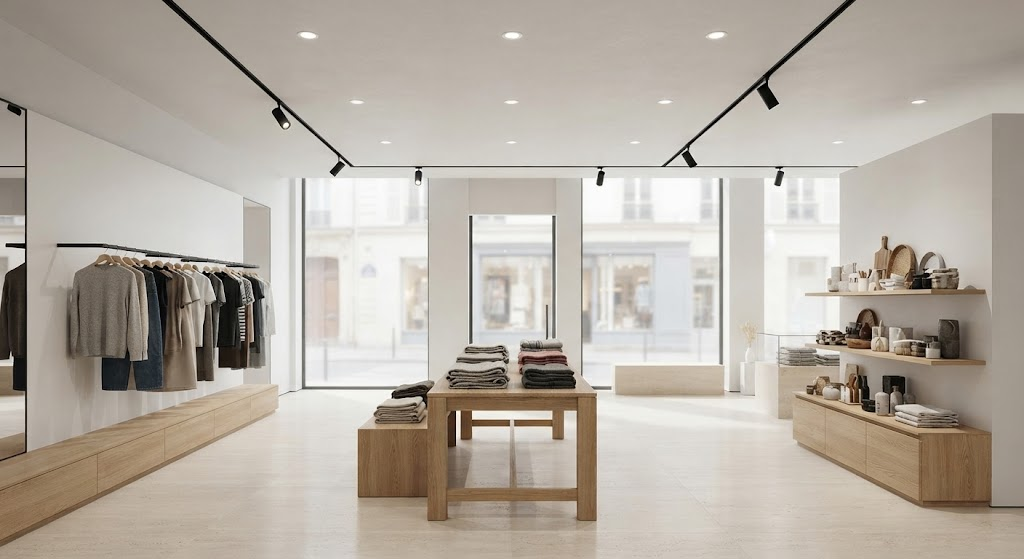
Yes. Retail lighting can influence how customers see products, judge quality and decide where to look. Good lighting improves colour and material visibility, creates contrast and draws attention to key merchandise. It does not sell a product by itself, but it can make the product easier to notice and understand.
How Does Lighting Affect Product Sales?
In a retail store, customers do not see every product in the same way.
Lighting helps determine what catches the eye first, which products stand out and how colours, textures and materials are perceived.
A well-designed lighting scheme can support the sales process by:
- highlighting new or important products
- making merchandise easier to see
- showing colours and materials more accurately
- creating clear visual priorities
- guiding attention through the store
- supporting the atmosphere of the brand
This is why retail lighting should be planned around the merchandise and the customer journey, rather than around brightness alone.
This is why retail lighting should be planned around the merchandise and the customer journey, rather than around brightness alone.
Why Is Brightness Not Enough?
A store can be bright and still have poor lighting.
When the same light level is used across the entire sales floor, there may be little difference between a wall, a display table and the products themselves. Everything becomes equally visible, but nothing becomes particularly important.
This is where contrast and lighting hierarchy become useful.
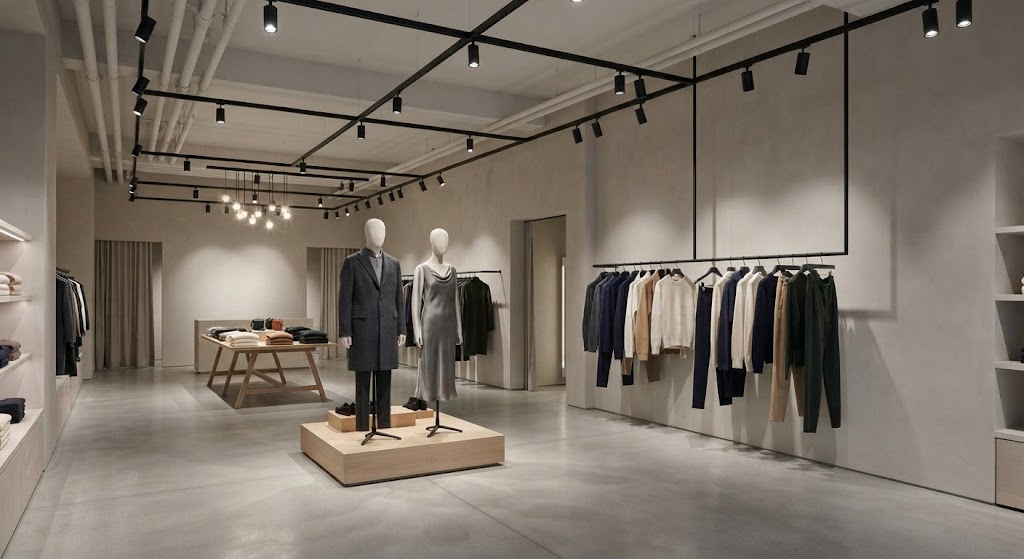
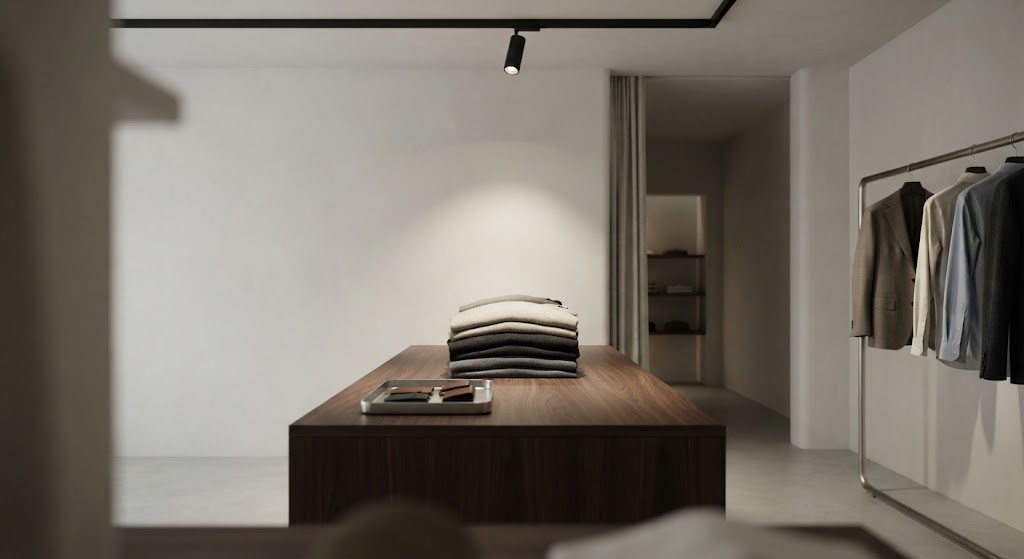
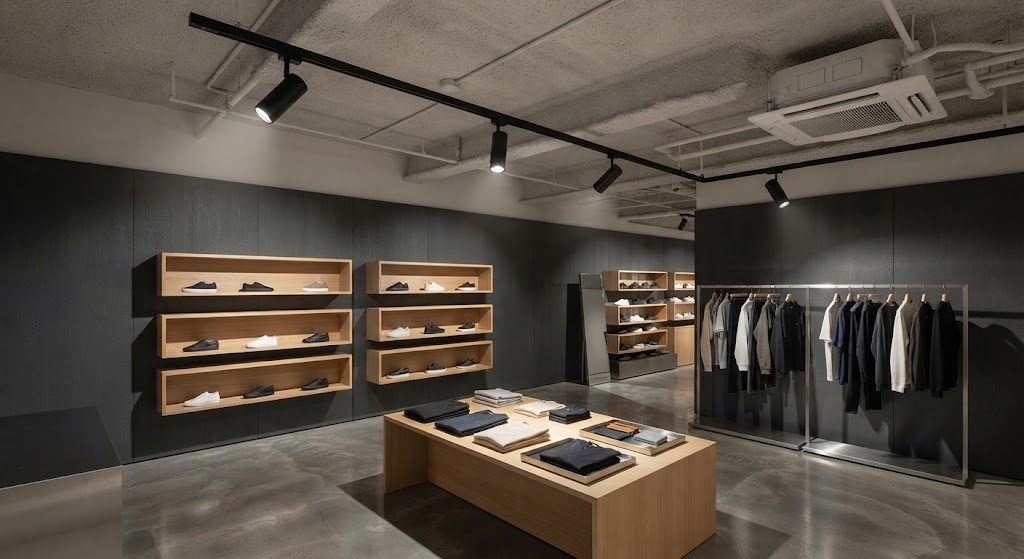
A darker background with a well-lit product display can create a clear focal point. A brighter feature wall can attract attention from a distance. A softer general lighting level can allow accent lighting to work more effectively.
The objective is not to make every part of the store brighter.
The objective is to make the important parts easier to notice.
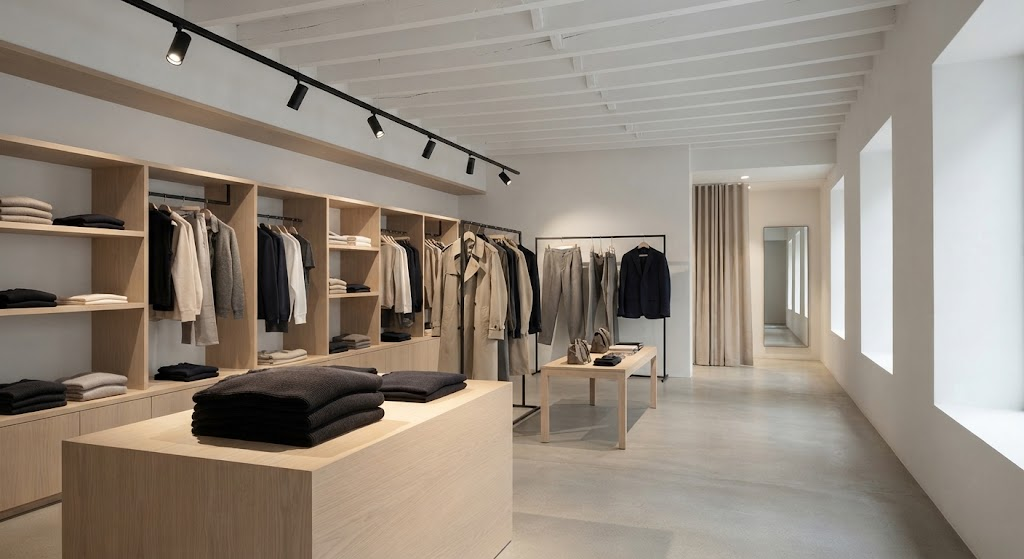
What Is Accent Lighting in Retail?
Accent lighting is used to give selected products or displays more visual attention than their surroundings.
Track spotlights are commonly used for this purpose because the beam can be directed towards a mannequin, display table, shelf or feature product.
The beam angle should match the application.
A narrow beam can work well for a single product or small display. A wider beam is more suitable for larger merchandise areas, shelving or display walls.
For example:
- Narrow beam: individual products, mannequins and focal displays
- Medium beam: display tables and grouped merchandise
- Wide beam: shelving, walls and larger product areas
The right beam is not necessarily the narrowest one. It depends on the size, distance and position of the merchandise.
Why Does Colour Rendering Matter?
Customers need to see a product’s colour and material as accurately as possible.
This is particularly important in fashion, cosmetics, furniture, jewellery and other categories where colour has a direct influence on purchasing decisions.
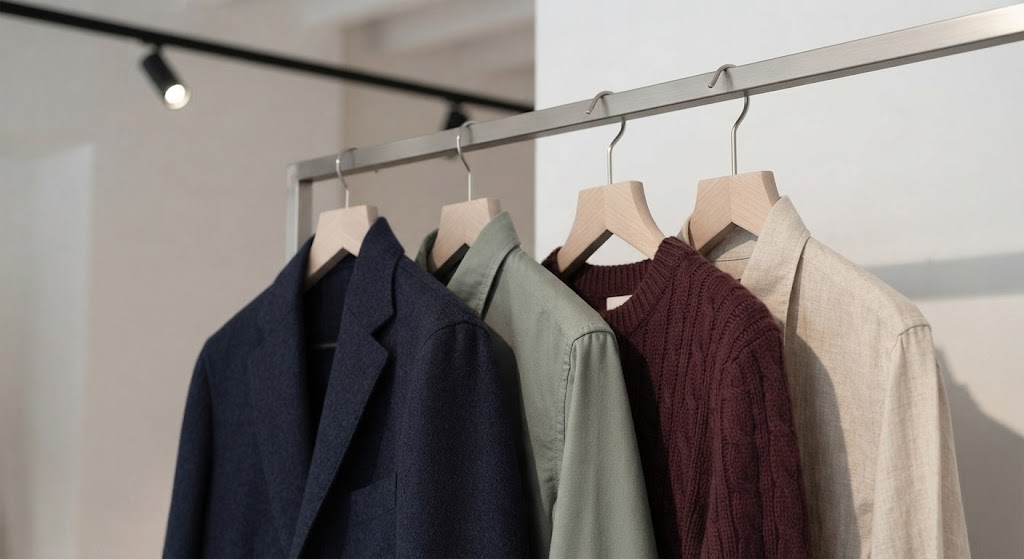
A high-quality LED light source with good colour rendering can reveal differences in fabric, leather, wood, paint and other materials more naturally.
For fashion retail, this matters even more in fitting rooms. A garment that looks different under the fitting-room light and outside the store can affect the customer’s perception of the product.
Colour rendering should therefore be considered together with colour temperature, optical performance and consistency across the store.
How Does Contrast Change the Way Customers See a Store?
The eye naturally responds to differences in brightness.
This makes contrast an important tool in retail lighting.
A product does not always need extremely high illumination to stand out. Sometimes the surrounding area simply needs to be controlled so that the product receives more visual attention.
For example, a retailer might use:
general lighting → merchandise lighting → accent lighting
Each layer has a different purpose.
General lighting provides visibility. Merchandise lighting makes products easier to examine. Accent lighting creates focal points.
Together, they give the store a clearer visual structure.
What Happens When a Store Is Lit Too Uniformly?
Uniform lighting can make a retail space feel flat.
This is particularly noticeable when walls, shelves, products and circulation areas receive almost the same amount of light.
The store may meet basic illumination requirements, but the lighting does little to support merchandising.
This does not mean uniform lighting is always wrong. General illumination is still necessary for safe and comfortable movement.
The problem occurs when general lighting is used as the only lighting layer.
Retail spaces usually benefit from a combination of ambient light, product lighting and accent lighting.
What Lighting Is Best for a Clothing Store?
There is no single lighting specification that works for every fashion store.
The lighting should reflect the brand, merchandise and interior design.
A contemporary clothing store may use neutral white light around 3500K–4000K for a clean appearance. A more intimate fashion environment may use warmer light around 2700K–3000K.
The more important factors are:
- colour rendering
- glare control
- beam angle
- vertical illumination
- product contrast
- consistency between different areas
For clothing stores, lighting should also reveal the shape and texture of garments without producing harsh shadows or uncomfortable glare.
Why Is Track Lighting Still Popular in Retail?
Retail layouts change.
New collections arrive, promotional displays move and seasonal merchandise takes over different areas of the store.
This makes flexibility important.
Track lighting allows individual luminaires to be repositioned and aimed at new merchandise without changing the entire ceiling installation.
It is particularly useful for:
- fashion stores
- footwear stores
- supermarkets
- lifestyle shops
- showrooms
- department stores
- pop-up retail spaces
For projects where displays change frequently, adjustable track spotlights can reduce the need for repeated lighting modifications.
How Can Retail Lighting Save Energy?
Energy efficiency should not mean simply reducing the amount of light.
A better approach is to use light more precisely.
LED luminaires with efficient optics can direct light towards the merchandise instead of wasting light outside the intended area. Dimming and zoning can then adjust the lighting level according to the store’s actual requirements.
Common strategies include:
- high-efficiency LED luminaires
- appropriate beam angles
- separate lighting zones
- dimming
- daylight-based control
- occupancy or presence detection
- scheduled lighting scenes
The result can be a lower-energy lighting system without making the sales floor unnecessarily dark.
Does Smart Lighting Make a Difference in Retail?
Smart controls are most useful when they solve a practical problem.
A retailer may want different lighting scenes for normal trading hours, evening operation, seasonal displays or special events.
With a controllable lighting system, these settings can be adjusted without physically changing each luminaire.
For larger retail chains, centralised control can also make it easier to maintain consistent lighting strategies across multiple stores.
The technology itself is not the goal.
The goal is better control of where, when and how light is used.
What Should Retailers Ask Before Choosing Lighting?
Instead of starting with wattage or lumen output, retailers should first consider what the lighting needs to achieve.
Useful questions include:
- Which products need the most attention?
- Where will customers look first?
- Which colours or materials need accurate reproduction?
- Which areas change frequently?
- Where is accent lighting required?
- How much general illumination is actually needed?
- How will the lighting be adjusted when the merchandising changes?
- How will energy consumption be controlled?
These questions usually lead to a more useful lighting specification than simply selecting the brightest fixture.
FAQ: Retail Lighting
Retail lighting can influence product visibility, perceived quality, customer attention and the overall shopping experience. It cannot guarantee higher sales, but it can create better conditions for product presentation and purchasing.
There is no single factor. Colour rendering, beam angle, contrast, glare control, lighting levels and flexibility all need to work together.
Not necessarily. Excessive brightness can create glare and reduce the effect of accent lighting. Good retail lighting uses appropriate light levels and contrast rather than maximum brightness.
It depends on the store and product category. Around 3000K–4000K is common in many retail environments, but brand identity, interior materials and product presentation should guide the final choice.
Yes. Good colour rendering helps customers see garment colours and materials more accurately. This is especially important for fashion and other colour-sensitive merchandise.
It depends on the target. Narrow beams suit small focal displays, medium beams work well for grouped merchandise, and wider beams are generally better for shelves and larger display areas.
Yes. Adjustable track lighting is particularly useful where products and displays are frequently moved because the luminaires can be redirected as the layout changes.
Use efficient LED luminaires, suitable optics, zoning and dimming. Smart controls can further reduce unnecessary operating hours or light levels.
The Point of Good Retail Lighting
Good retail lighting is not about making the store as bright as possible.
It is about making the right products visible in the right way.
The lighting should support the merchandise, not compete with it.
A well-planned system combines general illumination with focused product lighting, accurate colour rendering and controlled contrast. It should also remain flexible enough to follow changes in merchandising.
That is the real value of professional retail lighting.