The best retail lighting in 2026 mixes layered zone lighting, flexible track systems, and smart dimming to spotlight products and shape how long people stay.
Why lighting still decides whether a store feels good
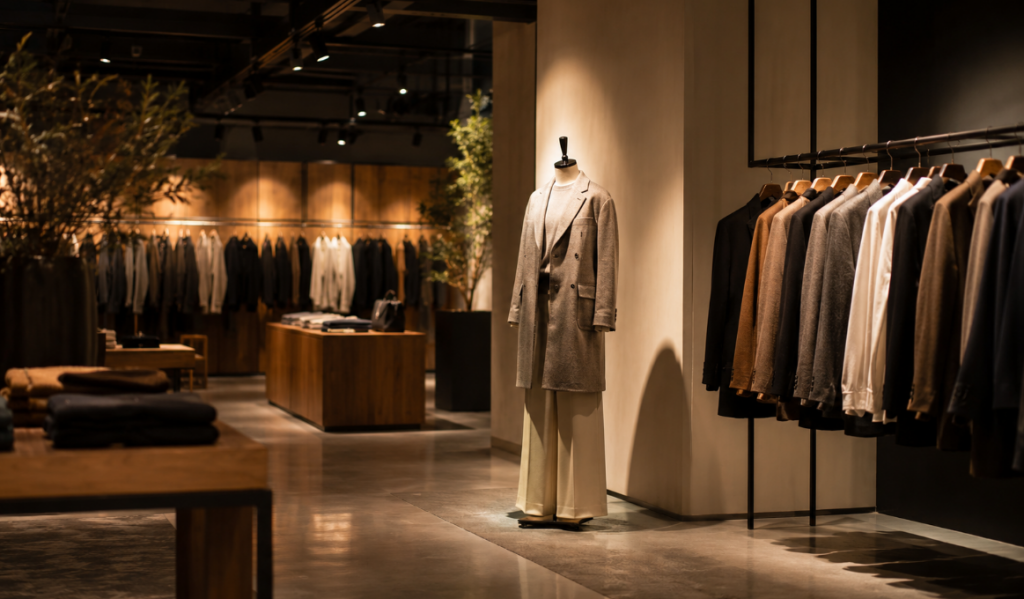
Walk into two stores selling the same shoes at the same price, and you’ll still like one more. Lighting is usually why. A flat, evenly-lit room reads as a warehouse. A room with contrast — bright where the product is, dimmer where it isn’t — reads as a place worth browsing. That difference isn’t decoration, it’s a sales tool, and most retailers still underuse it.
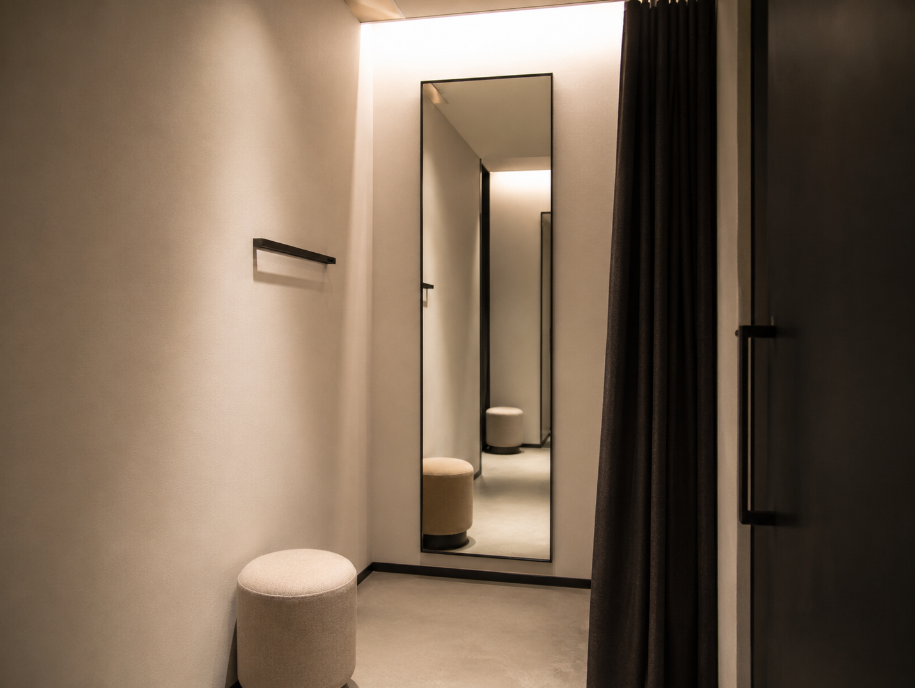
The mistake a lot of stores make is treating lighting as one decision: pick a fixture, install it everywhere, done. But a store isn’t one space. The entrance needs to pull people in from the street. The fitting room needs to make skin tones look human, not greenish. The checkout just needs to be functional. Treating all of that the same way is why so many stores feel generic even when the products are good.
What’s actually changing in 2026
A few shifts are worth paying attention to:
Zones are getting treated separately, on purpose. Instead of one lighting plan for the whole floor, retailers are designing entrance, sales floor, fitting rooms, checkout, and window displays as separate lighting problems with separate answers. It sounds obvious, but most existing stores still don’t do it.
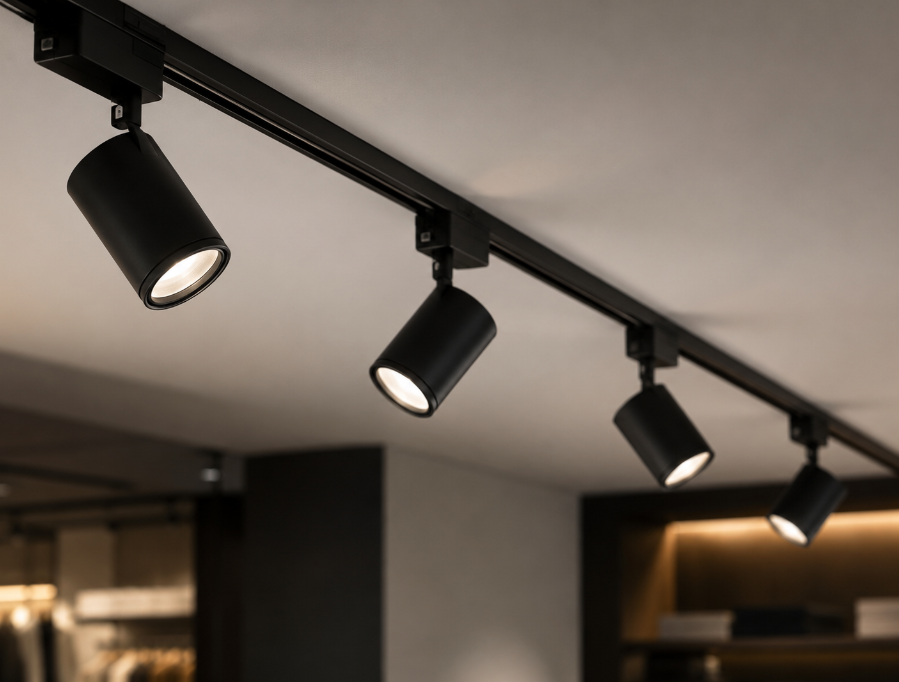
Track and rail systems are becoming the default, not the upgrade. The appeal is simple: seasonal resets, new arrivals, and pop-up campaigns all change what needs highlighting, and rewiring the ceiling every time isn’t realistic. A repositionable track lets staff redirect light in minutes instead of calling an electrician.
Dimming is being controlled by zone, not by switch. DALI-style control setups let a store run one lighting scene during business hours, a dimmer one for closing cleanup, and a brighter one for a launch event — without touching a single fixture. The energy savings are real, but the bigger win is flexibility.
Beam angle is doing more work than brightness. A narrow, well-aimed spotlight on a single display often sells more than flooding the whole wall with light. Retailers are learning that contrast — not total lumens — is what pulls the eye.
Efficiency is no longer optional. LED lifespan and running cost used to be a nice-to-have argument. Now it’s closer to a baseline requirement, partly because energy prices haven’t been forgiving, and partly because customers notice sustainability claims more than they used to.
A rough guide to lighting by zone
| Zone | What it needs to do | What tends to work |
|---|---|---|
| Entrance | Pull people in from outside | High-output ceiling or track lighting |
| Sales floor | Guide movement, highlight product | Adjustable spotlights, recessed downlights |
| Fitting rooms | Flatter skin tone, feel calm | Soft, diffused, warmer light |
| Checkout | Just work — no glare, no shadows | Even ambient light, no drama |
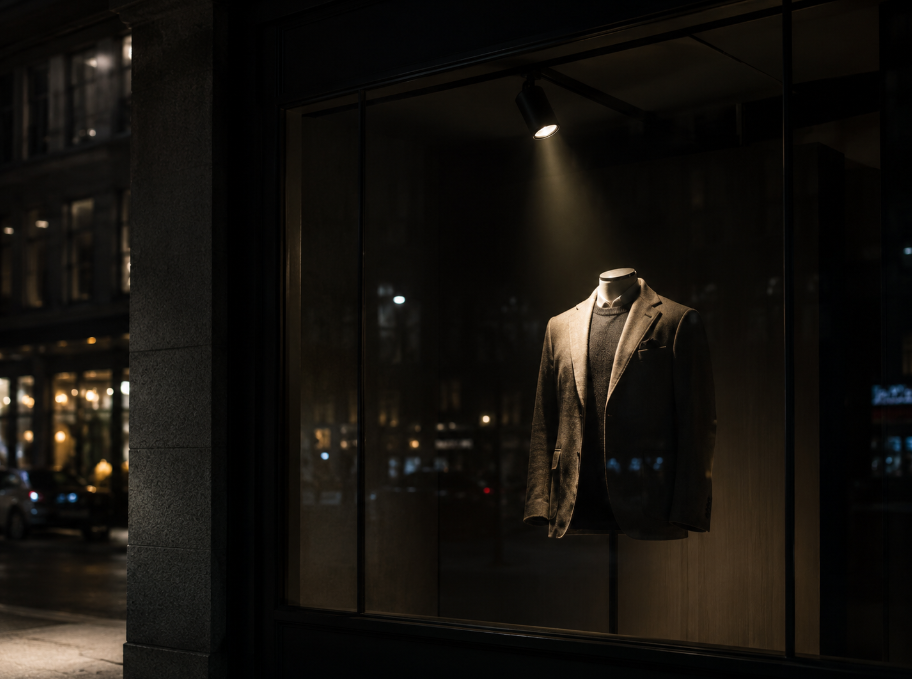
| Window displays | Grab attention day and night | Narrow-beam accent lighting |
| Storage/back of house | Be cheap to run and maintain | Basic linear LED |
Questions people actually ask
s (clothing, cosmetics) usually wants a higher color rendering index too, so items don’t look off under the lights.
Is track lighting worth it for a small store?
Most sales floors sit around 3000K–4000K — warm enough to feel inviting, neutral enough not to distort colors. Anything selling food or heavily color-dependent products (clothing, cosmetics) usually wants a higher color rendering index too, so items don’t look off under the lights.
Is track lighting worth it for a small store?
If the layout changes more than once or twice a year — new collections, seasonal resets — yes. If the store almost never rearranges, fixed downlights are cheaper and simpler, and the flexibility of track lighting goes to waste.
What’s the one mistake most stores make with window displays?
Lighting the whole window evenly instead of picking one or two focal points. Even light looks flat from the street; a spotlighted mannequin or product against a dimmer background is what actually stops foot traffic.