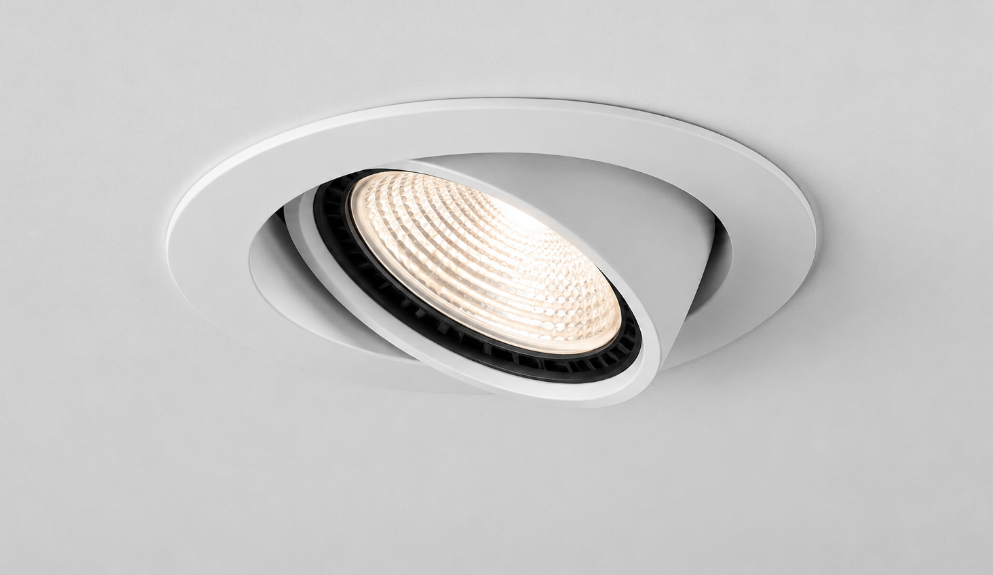
A DMX512 RGB&RGBW gimbal downlight or track light is a commercial fitting that can be individually addressed, colour-mixed and aimed, giving retail and hospitality venues precise control over both light quality and direction from a single control system.
What Sets These Fittings Apart
Most shops and restaurants still run on fixed colour-temperature downlights with a single dimmer channel. That’s fine until you need the window display to shift for a seasonal campaign, or the private dining room to feel different at 7pm than it did at lunch. DMX512 changes that equation.
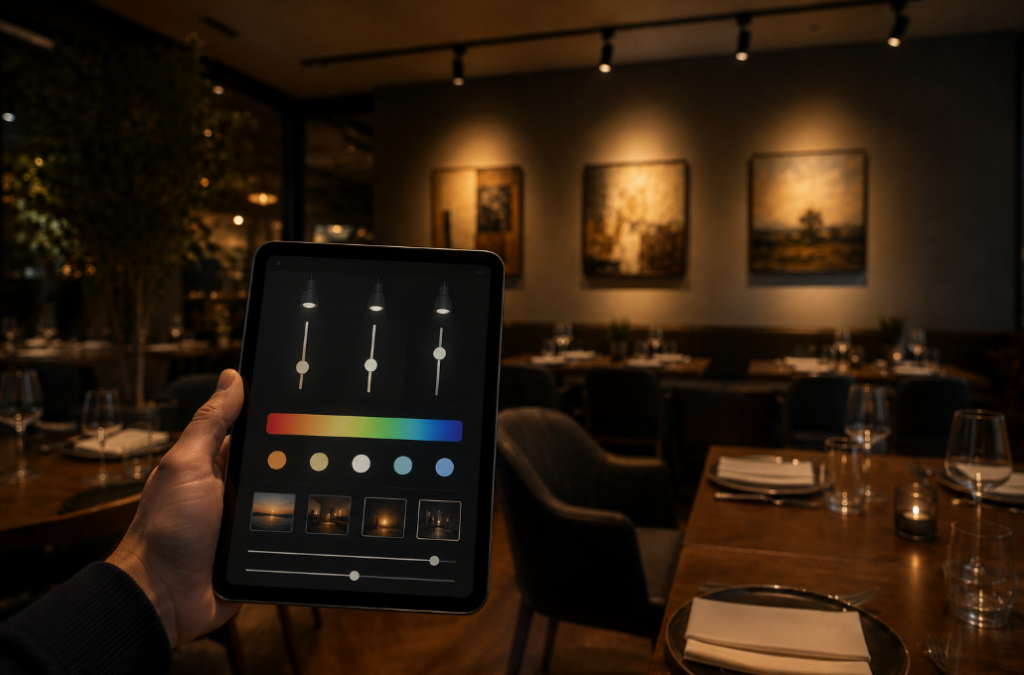
The protocol itself isn’t new — it’s been the backbone of theatre and architectural lighting control for decades. What’s changed is that it’s now built into everyday downlights and track heads, not just stage rigs. Each fitting gets its own address on the line, so a lighting designer (or a shop manager with a tablet) can call up a scene rather than flipping switches room by room.
The gimbal mechanism adds the other half of the story: a downlight that tilts and rotates to put light exactly where it’s needed, whether that’s a mannequin, a cheese counter, or a piece of art on the wall.
RGB vs RGBW — Worth Knowing the Difference
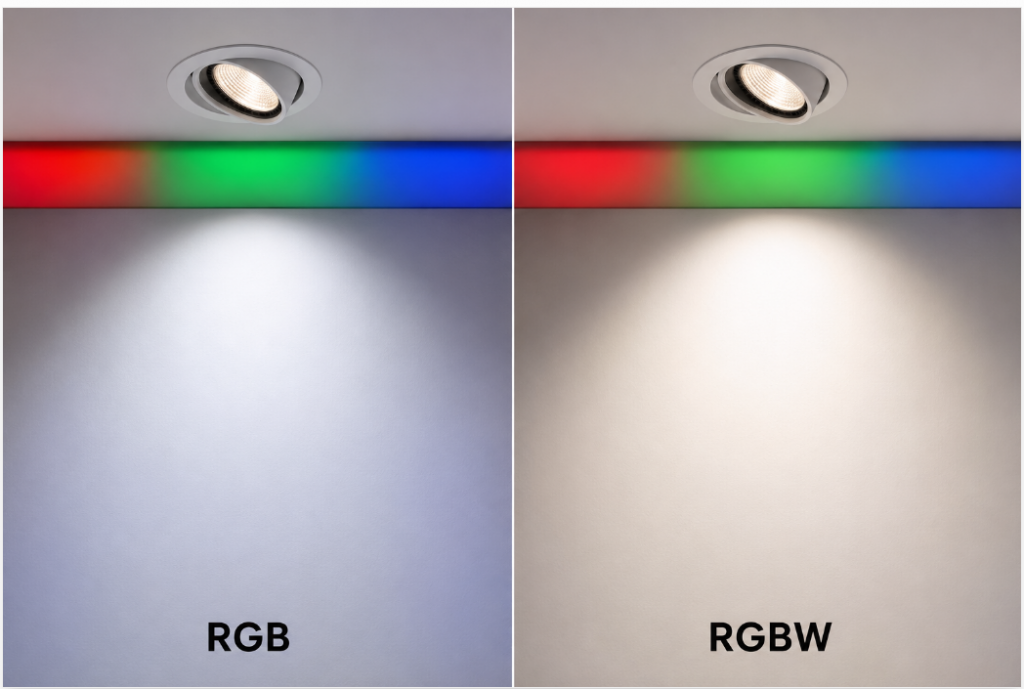
RGB fittings mix red, green and blue to produce colour and white light alike. It works, but the white tends to sit slightly off — not quite what a client expects when they’ve paired it with a warm oak counter or a marble floor.
RGBW adds a dedicated white LED channel alongside the colour mixing. The colours stay just as vivid, but the white output is cleaner and more consistent — closer to what you’d get from a purpose-built white fitting. For any commercial interior where white light quality actually matters day to day, RGBW is the more sensible specification.
Where This Actually Gets Used
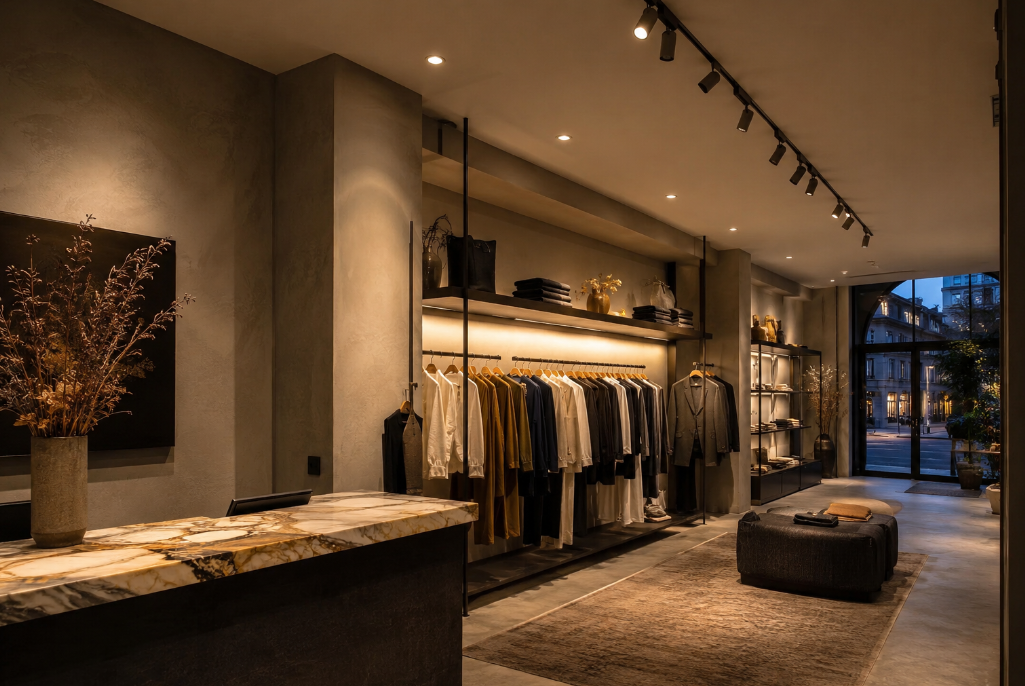
A boutique might run one scene for the morning, a warmer tone through the afternoon, and something bolder for an evening launch event — all on a timer, no electrician required to change it.
A restaurant group with several sites can build one scene library centrally and push it to every location, keeping the brand’s lighting identity consistent from Lisbon to Ljubljana without relying on each site getting it right by eye.
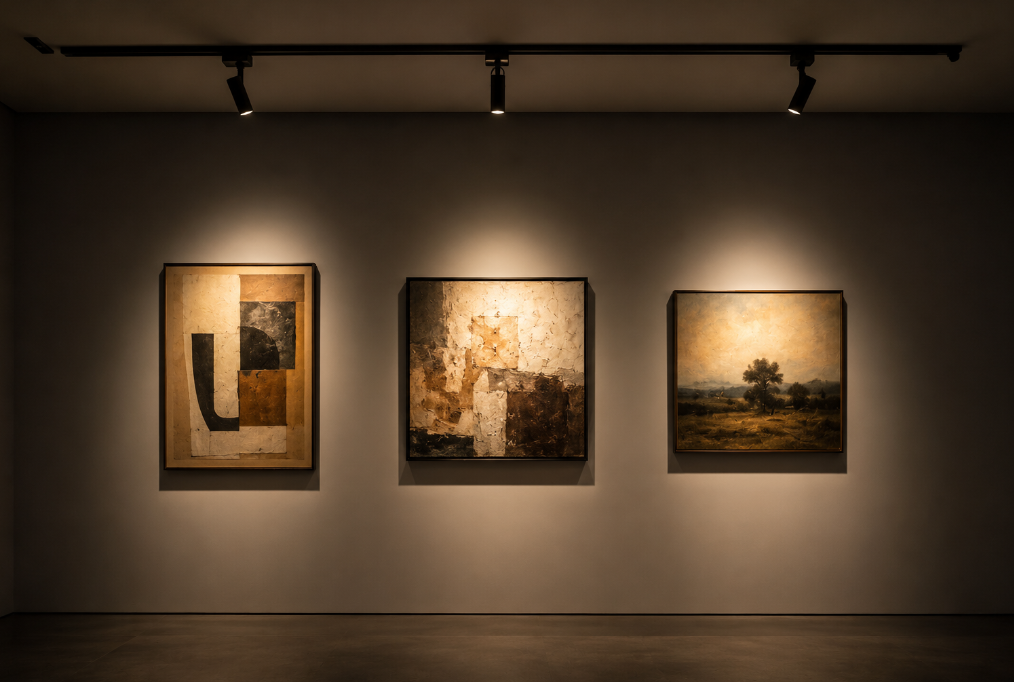
Museums and galleries lean on the gimbal function specifically, angling light onto individual pieces without the colour shift or flicker that lower-grade fittings introduce — something that matters more than people expect when a piece is being filmed or photographed.
Specifying a System — What Actually Matters
Channel count. A basic RGBW fitting needs four DMX channels; some add a fifth or sixth for tunable white. Add up your fixture count before assuming a single 512-channel universe will cover the site.
CRI. Anything under 90 will show on skin tones and food. For hospitality and retail, don’t compromise here.
Dimming curve. Look for smooth, flicker-free dimming across the full range — a fitting that stutters at 10% output is a problem the moment someone’s filming content in the space.
Protocol compatibility. Standard DMX512 with RDM support means the system talks to existing consoles and building management platforms without a workaround.
Mounting. Downlights need a compatible ceiling void; track systems need the rail already specified into the fit-out. Worth checking early, not after the fittings arrive.
Questions Worth Asking Before You Buy
Is DMX512 overkill for a single small shop?
Not necessarily. Even a modest fit-out benefits from scene control once you factor in seasonal changes and evening events — the cost difference over a standard dimmable fitting is usually smaller than people assume.
Can gimbal fittings be retrofitted into an existing ceiling?
Often yes, provided the aperture and depth match. It’s worth having someone check the ceiling void before ordering rather than after.
How many fittings can one DMX512 line actually run?
The protocol allows 512 channels per universe. With RGBW fittings typically using four channels each, that’s around 128 fittings per line before you need to split into another universe.