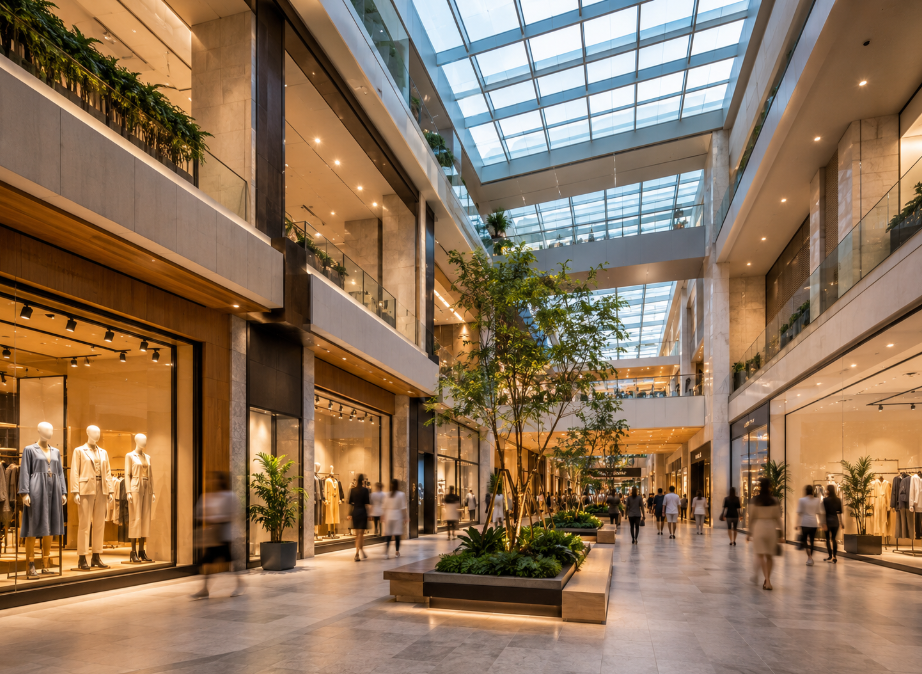
Malls need three things from lighting: an atmosphere that keeps people browsing, accent light that makes products look their best, and controls that keep energy bills down.
Why It Matters
Retail lighting has more jobs than most people realize. It has to make merchandise look accurate and appealing, guide foot traffic, keep the space comfortable for hours at a time, and do all this without running up the electricity bill. Get it wrong and shoppers leave faster, colors look off, and maintenance crews are constantly swapping bulbs. Get it right, and lighting becomes something operators barely think about — because it just works.
Daylight-Responsive Lighting
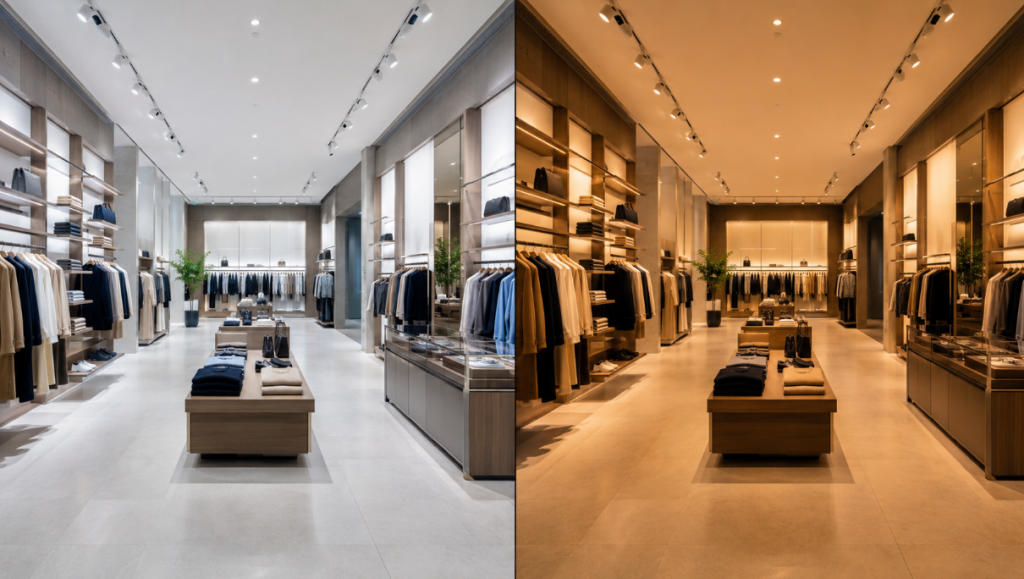
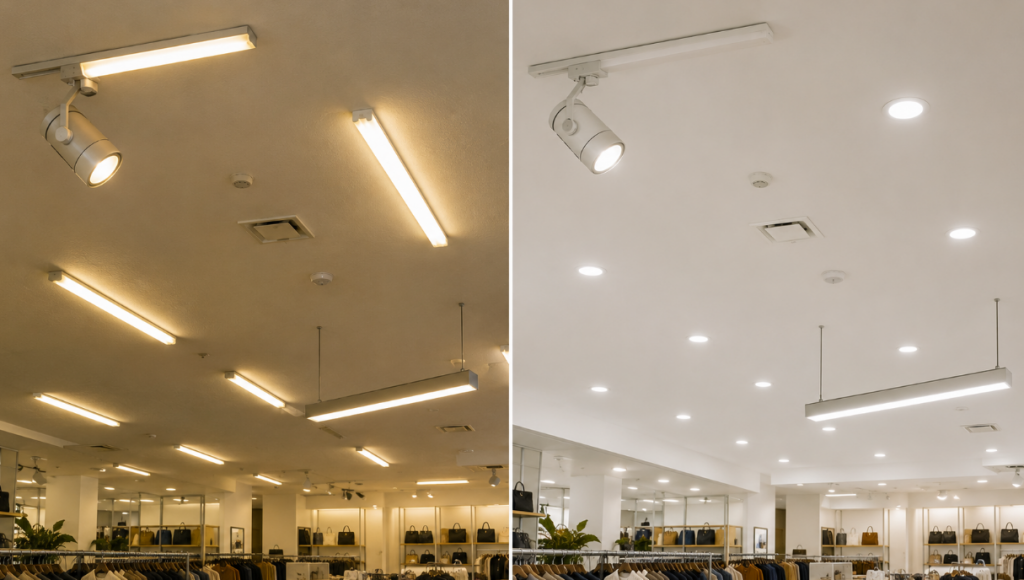
Some malls now shift color temperature and brightness through the day — cooler and brighter around midday, warmer and softer in the evening — instead of running one fixed setting from open to close. This mirrors how natural light behaves outdoors.
What operators typically notice:
- People stay longer when the light feels natural rather than static
- A calmer atmosphere tends to support buying decisions
- Staff and shoppers report less eye strain over a full day
This is handled by tunable-white LED drivers, usually adjustable across roughly 2700K–6500K, controlled automatically rather than switched by hand.
Track Lights and Downlights
Two fixture types cover most of a mall’s needs:
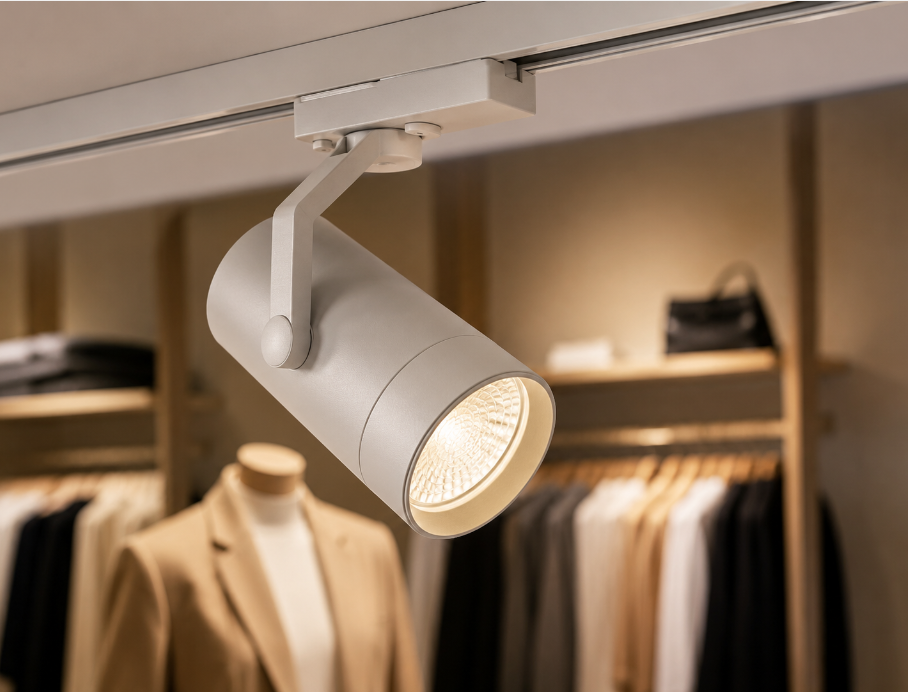
Track spotlights aim at window displays and feature walls. They’re adjustable, so visual merchandising teams can re-aim them whenever a layout changes, without an electrician.
Downlights handle general ceiling illumination in corridors, atriums, and circulation zones — recessed and out of the way.
A few numbers worth knowing when specifying either one:
- UGR below 19 keeps glare from becoming uncomfortable over a long shopping trip
- CRI of 90 or higher, ideally with SDCM ≤3, keeps fabric and food colors true to life
- Zoomable, rotatable heads add flexibility as store layouts change
BREE Lighting builds its track spotlight and downlight ranges around these three numbers, for fashion retail, supermarkets, and department stores.
Wireless Control
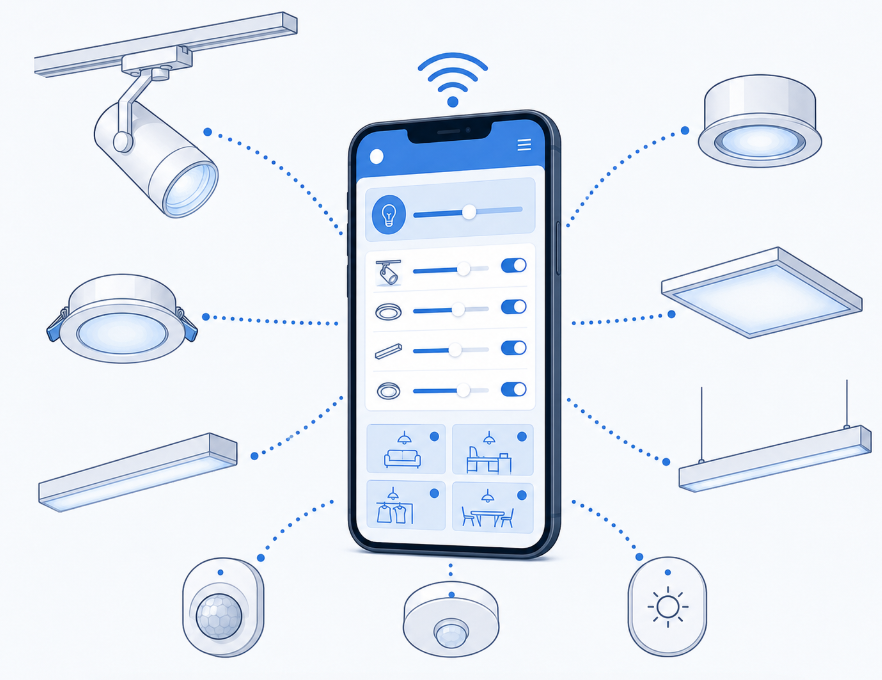
Most modern retail lighting systems run on a mesh network rather than a bank of physical switches. Motion sensors dim or brighten aisles based on occupancy. Daylight sensors hold illuminance steady as sunlight changes through the day. Drivers using DALI-2, Zigbee, or Bluetooth let each fixture be addressed and dimmed individually, usually through one app.
The practical upside: Zigbee and Bluetooth mesh systems don’t need new control wiring, which matters a lot for a retrofit inside a mall that can’t afford to close. DALI-2 is still the go-to where a large site needs one centralized building-management system running the whole floor.
What a Retrofit Usually Looks Like
- Audit existing fixtures, wattage, and operating hours
- Estimate savings and payback period
- Check for local energy-efficiency incentives
- Design the new layout, often with DIALux photometric planning
- Install in phases so the mall stays open
- Measure actual energy use against the baseline
Malls switching from fluorescent or metal halide fixtures to LED with smart controls commonly cut energy use by 50–70%, with payback in 2–4 years. LED fixtures rated for 50,000+ hours also mean far fewer maintenance visits.
Common Questions
What lighting works best for a mall?
A mix: downlights for general areas, adjustable track spotlights for displays, and tunable-white lighting in atriums — tied together through a wireless control system.
How much can LED retrofits actually save?
Most malls see 50–70% lower energy use switching from conventional lighting to LED, paying the investment back in roughly 2–4 years.
Why does UGR matter?
It measures how uncomfortable a light source is to look at. Retail spaces usually target UGR below 19 so glare doesn’t tire people out over a long visit.
Does a wireless system mean re-wiring the mall?
No — Zigbee and Bluetooth mesh systems talk to each other wirelessly, so retrofits skip new control cabling entirely.
Does daylight-responsive lighting really change shopper behavior?
It’s associated with longer visits and a calmer atmosphere, since the lighting matches how people expect light to behave outdoors.