How much can a commercial smart lighting retrofit save?
There is no universal percentage, but real-world projects show why controls matter: one DOE/DLC field study across five commercial buildings found an average 43% lighting-energy reduction from fluorescent-to-LED conversion, while projects combining LED upgrades with the evaluated control strategies averaged about 66% total savings. Results varied considerably by site, so these figures should be treated as field evidence rather than a guaranteed project result.
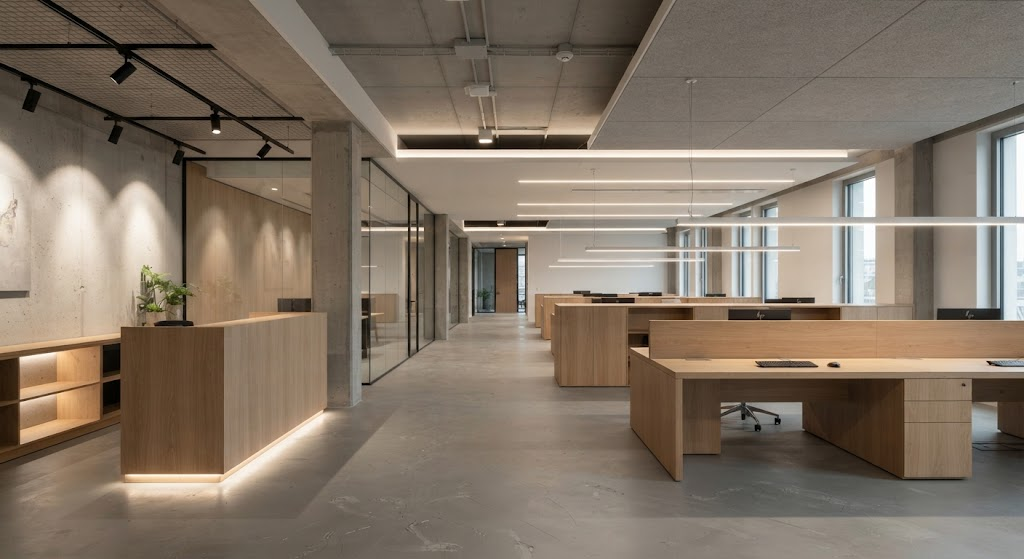
For an existing commercial building, the opportunity is often bigger than simply replacing old lamps. A retrofit can combine LED luminaires, dimming, occupancy detection, daylight harvesting, scheduling and networked controls while keeping much of the existing electrical infrastructure.
The right combination depends on what is already installed, how the building is used and how much control the operator actually needs.
What is a commercial smart lighting retrofit?
A commercial smart lighting retrofit upgrades an existing lighting system with more efficient LED technology and adds automatic control where it can reduce energy use or improve operation.
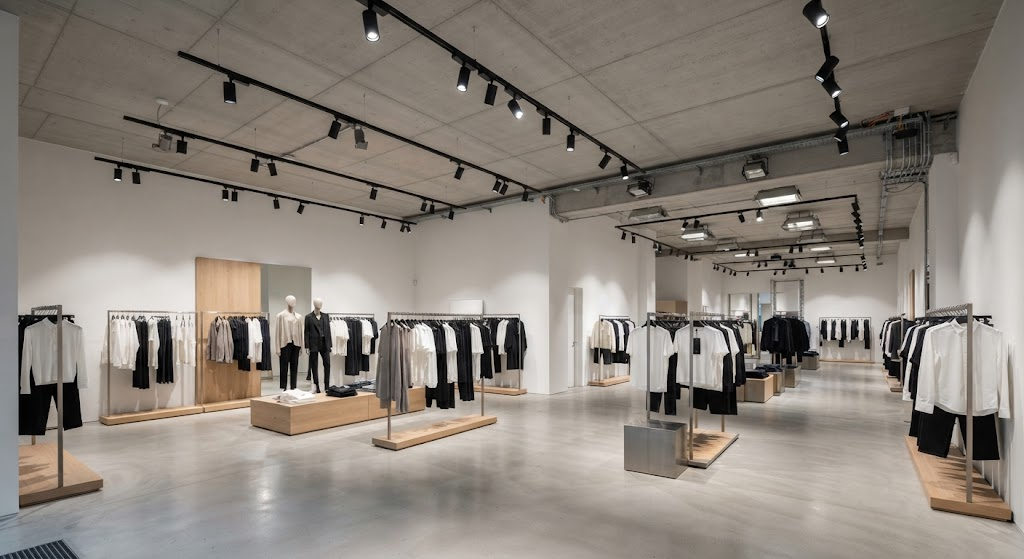
That might mean replacing fluorescent troffers in an office, upgrading high-bay fixtures in a warehouse, or replacing retail track lights while adding dimming and scene control.
It does not always mean replacing every fixture.
A project may use:
- Complete LED luminaires
- LED retrofit kits
- New LED drivers
- Occupancy or vacancy sensors
- Daylight sensors
- Dimming controls
- Wireless control modules
- Wired lighting-control networks
- Gateways
- Building-management-system integration
The practical objective is simple: provide the right amount of light, in the right area, at the right time.
That is also why a smart retrofit should be assessed as a system rather than as a list of individual products.
How much energy can smart lighting controls actually save?
LED conversion reduces the power required to produce light, while controls reduce unnecessary operating time and output.
These are two different sources of savings.
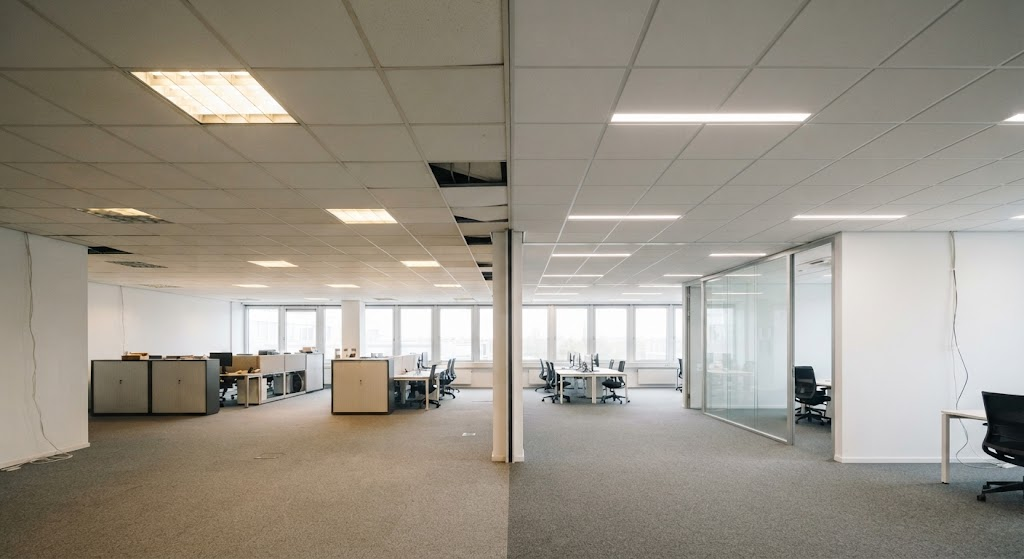
A building that changes from fluorescent lighting to LED may substantially reduce connected load. Adding occupancy detection, scheduling or daylight dimming can reduce consumption further when the space does not need full output.
A DOE/DLC field study illustrates the point. Across five commercial buildings, fluorescent-to-LED conversion alone produced an average 43% lighting-energy reduction. When evaluated control strategies were included, average total savings reached about 66%, although individual buildings performed differently.
| Retrofit measure | What changes | Potential benefit |
|---|---|---|
| LED conversion | Lower connected load | Lower lighting energy |
| Occupancy control | Lights respond to occupancy | Less unnecessary operation |
| Daylight harvesting | Output follows available daylight | Lower perimeter-zone consumption |
| Scheduling | Lights follow operating hours | Less after-hours use |
| Task tuning | Maximum output is reduced | Avoids over-lighting |
| Dimming | Output follows demand | More precise energy control |
| Networked controls | Multiple functions work together | Centralized management |
The actual saving should always be calculated from the existing installation, operating hours and control settings rather than applying a fixed percentage to every project.
Can an existing commercial building be converted to smart lighting?
In many cases, yes, but compatibility needs to be checked before the retrofit specification is finalized.
The existing fixture, driver, wiring, ceiling system and control infrastructure all affect the available options.
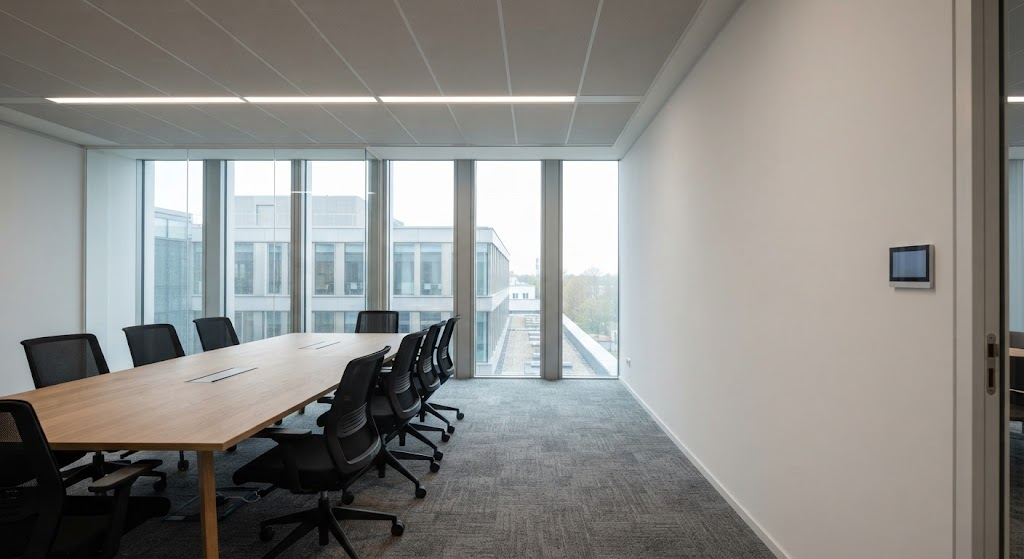
For example, an office with conventional fluorescent troffers may be suitable for LED retrofit kits or complete LED panels. A retail store with track lighting may need a different approach, particularly if beam angles, colour quality and dimming are important.
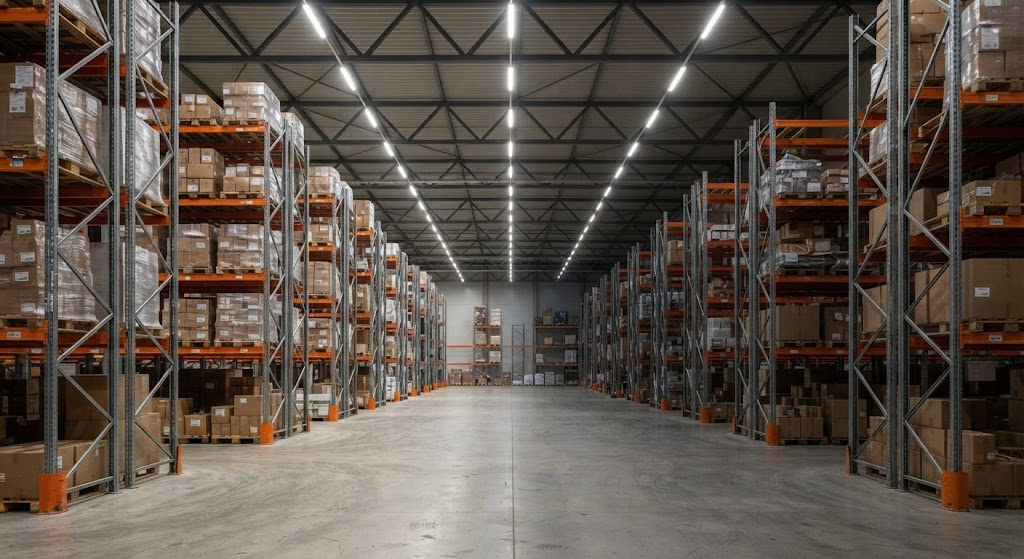
An older warehouse may benefit from high-bay replacement combined with occupancy sensing.
Before choosing products, check:
- Existing fixture type
- Fixture wattage
- Driver arrangement
- Supply voltage
- Existing switching zones
- Ceiling construction
- Operating hours
- Occupancy pattern
- Available daylight
- Existing control infrastructure
The more accurately the existing building is documented, the less likely the retrofit is to become an expensive product replacement exercise.
Should you replace the existing fixtures or retrofit them?
There is no single answer; the decision should be based on fixture condition, optical performance, control compatibility and installation cost.
Complete luminaire replacement
This is generally considered when the existing fixtures are obsolete, damaged or difficult to integrate with modern controls.
It gives the project a new:
- LED light source
- Optical system
- Driver
- Thermal system
- Housing
- Control interface
It also makes photometric performance easier to predict.
LED retrofit kit
A retrofit kit can make sense when the existing housing is still structurally sound.
The potential advantages are:
- Less material replacement
- Reuse of existing ceiling openings
- Potentially less installation work
- Familiar mounting arrangements
Control-only upgrade
An existing LED installation may not need new luminaires at all.
If the current fixtures already provide adequate light but simply operate at full output all day, adding occupancy control, scheduling or dimming may address the actual problem.
In a well-designed retrofit, money should be spent where it changes building performance—not automatically where it creates the newest hardware.
Which smart lighting controls are worth adding?
Occupancy sensing, daylight response, scheduling and dimming are the main functions to evaluate because they directly influence how much light is used and for how long.
1. Occupancy sensing
Occupancy control works best in spaces that are frequently empty or only intermittently used.
Typical examples include:
- Meeting rooms
- Corridors
- Toilets
- Storage rooms
- Stairways
- Back-of-house areas
- Warehouses
The system can switch lights off, reduce output or restore normal levels when people enter.
DOE guidance identifies occupancy controls as particularly useful in spaces with intermittent occupancy.
The important detail is sensor placement. A poorly positioned sensor can create false triggers or leave areas too dark.
2. Daylight harvesting
Daylight harvesting reduces electric-light output when daylight is already contributing to the required illumination.
It is particularly relevant near:
- Windows
- Skylights
- Glazed façades
- Atriums
- Perimeter office areas
The best systems normally make the change gradually.
A sudden transition from full brightness to low output can be distracting, particularly in offices and retail environments.
3. Scheduling
Scheduling is one of the simplest ways to prevent lights from operating when the building is closed.
A commercial system can create different schedules for:
- Normal opening hours
- Cleaning
- Stock replenishment
- Maintenance
- Weekends
- Holidays
- After-hours operation
This is especially useful in buildings with predictable operating patterns.
4. Task tuning
Task tuning reduces maximum light output when the original installation provides more illumination than the space actually needs.
This is often overlooked after an LED upgrade.
Replacing a 60 W fluorescent fixture with a powerful LED fixture does not automatically make the space efficient if the new fixture is still operated at 100% output when 70% would be sufficient.
Task tuning can therefore reduce energy without changing the physical fixture.
5. Dimming
Dimming allows the lighting level to respond to the actual needs of the space instead of using an on/off approach.
Before specifying dimming, confirm:
- Driver compatibility
- Dimming range
- Minimum output
- Flicker behaviour
- Sensor compatibility
- Control protocol
- Emergency-lighting requirements
Is wireless lighting control a good retrofit option?
Wireless controls can be particularly useful when installing new control wiring would be disruptive or expensive.
This can be attractive in:
- Occupied offices
- Existing retail stores
- Hotels
- Historic buildings
- Leased properties
- Buildings undergoing phased refurbishment
A wireless approach can reduce cabling work, but it should not be selected simply because it sounds easier.
Check:
- Wireless coverage
- Device density
- Network architecture
- Cybersecurity
- Battery requirements
- Gateway requirements
- Commissioning process
- Long-term support
Wired control remains a practical option where the building already has suitable infrastructure or where centralized integration is important.
The choice between wired and wireless should follow the building rather than the technology trend.
What does 2026 change for commercial smart lighting?
In 2026, the discussion around smart lighting is moving beyond remote switching toward interoperability, cybersecurity, data access and building integration.
The DesignLights Consortium’s Networked Lighting Controls Technical Requirements V5.2, released in 2026, places greater emphasis on areas including interoperability, cybersecurity and data access.
That matters because commercial lighting systems are increasingly connected to wider building infrastructure.
A lighting-control platform may eventually interact with:
- Building management systems
- Energy-management systems
- Occupancy data
- HVAC controls
- Facility-management platforms
- Digital building dashboards
For a retrofit expected to operate for many years, the control architecture therefore deserves as much attention as the luminaire specification.
How should you plan a smart lighting retrofit?
Start with the existing building, not the product catalogue.
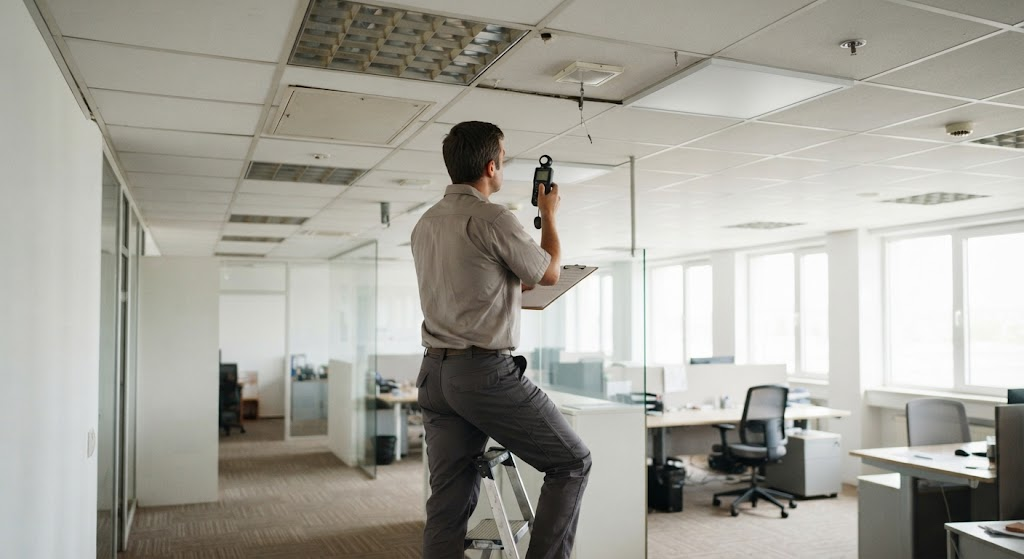
1. Audit the existing lighting
The first job is to establish what the building actually has and how it operates.
Record:
- Fixture quantity
- Fixture type
- Wattage
- Operating hours
- Switching arrangement
- Control zones
- Existing sensors
- Ceiling height
- Daylight availability
- Current illumination
- Maintenance condition
Electricity bills and operating schedules can also help establish a realistic baseline.
2. Define the lighting requirements
The second step is to establish what each space needs from the lighting system.
A warehouse does not need the same control strategy as a fashion store.
| Space | Main requirement | Controls to consider |
|---|---|---|
| Open office | Comfort + efficiency | Occupancy + daylight |
| Meeting room | Flexible scenes | Occupancy + dimming |
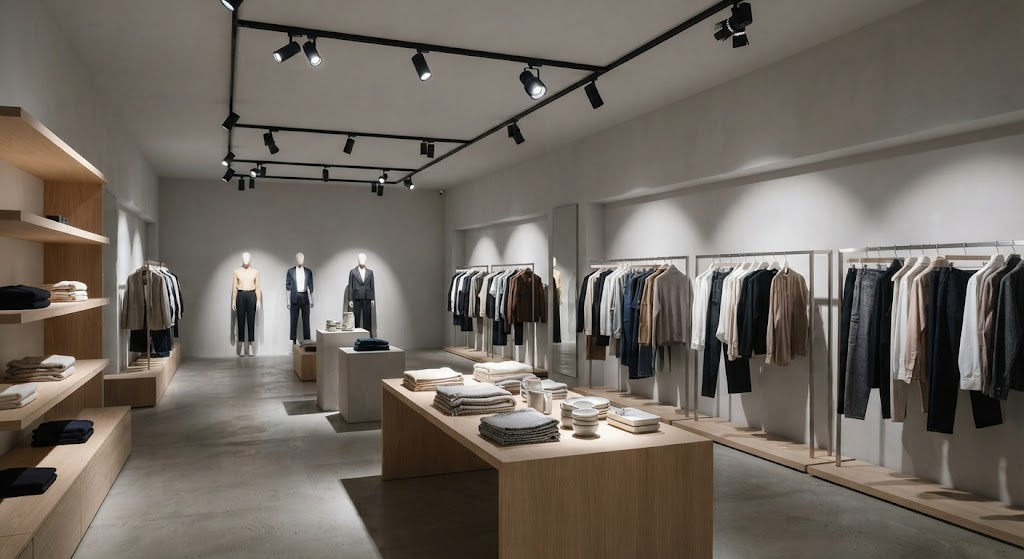
| Retail store | Product presentation | Dimming + scenes |
| Fashion store | Colour + visual quality | Dimming + zoning |
| Warehouse | Efficient general lighting | Occupancy |
| Corridor | Safe circulation | Occupancy |
| Reception | Appearance | Scene control |
| Back-of-house | Functional efficiency | Occupancy + schedule |
Good retrofit design starts with the use of the space and works backward to the hardware.
3. Choose the retrofit method
The third step is deciding whether each area needs a complete fixture replacement, retrofit kit, control upgrade or combination of these.
Large buildings often benefit from a mixed strategy.
For example:
Office: LED + occupancy + daylight control
Retail: LED track lighting + dimming + scenes
Warehouse: LED high bay + occupancy sensing
Corridor: LED + occupancy control
Reception: LED + programmable scenes
There is no requirement for every zone to use exactly the same solution.
4. Select the control architecture
The fourth step is to choose the control platform according to the number of zones, integration requirements and expected future changes.
Consider:
- Dimming capability
- Sensor compatibility
- Communication protocol
- Device capacity
- Gateway requirements
- BMS integration
- Data access
- Cybersecurity
- User permissions
- Firmware management
- Future expansion
DOE guidance also recommends considering control objectives, system capabilities, networking and documentation during control-system selection.
5. Calculate the business case
The fifth step is to compare the existing annual lighting cost with the expected post-retrofit cost.
A basic baseline calculation is:
Annual lighting energy = Lighting load × operating hours
For a controlled LED system, the calculation should also account for dimming, occupancy and scheduling.
The financial model should include:
- Luminaires
- Drivers
- Sensors
- Controls
- Gateways
- Installation
- Commissioning
- Maintenance
- Energy costs
- Available incentives
A realistic ROI calculation should use measured or defensible operating assumptions rather than a generic “smart lighting saves X%” claim.
6. Run a pilot installation
A small pilot can reveal problems before they are repeated across the entire building.
Test:
- Illuminance
- Uniformity
- Glare
- Colour quality
- Dimming
- Sensor coverage
- Daylight response
- Schedules
- User acceptance
For a retail project, for example, it is worth checking whether energy-saving settings still allow merchandise to receive the intended accent lighting.
For offices, check whether occupancy settings behave naturally during meetings and short periods of inactivity.
7. Commission and measure
Commissioning is where the programmed system is adjusted to the actual building rather than left at factory settings.
The process should cover:
- Sensor positioning
- Detection range
- Dimming levels
- Daylight calibration
- Schedules
- Scenes
- User permissions
- Network communication
- Fault testing
- Final documentation
The system should then be monitored after handover.
A smart lighting system that is installed but never properly commissioned is unlikely to deliver its full potential.
What are the main benefits of a smart lighting retrofit?
The value comes from combining lower lighting load with better control over when and where lighting operates.
1. Lower energy consumption
LED technology reduces the power needed to produce the required light.
Controls then reduce unnecessary operation.
The two should be considered separately when calculating savings.
2. Greater flexibility
Digital controls allow lighting zones and scenes to be changed without physically changing the entire installation.
This is useful when:
- Office layouts change
- Retail displays move
- Trading hours change
- Tenants change
- Areas are repurposed
3. Easier maintenance
Modern LED systems can reduce routine lamp replacement, while networked systems may provide additional operating information.
Depending on the platform, facility teams may be able to see:
- Operating status
- Fault information
- Operating hours
- Energy data
- Sensor activity
- Control schedules
4. Better operational visibility
A connected lighting system can turn lighting from a passive electrical load into a source of building information.
That becomes increasingly relevant when lighting is connected to wider building-management systems.
Which commercial buildings are suitable for smart lighting retrofits?
Buildings with long operating hours, variable occupancy, large lighting loads or significant daylight variation are natural candidates for a retrofit assessment.
1. Retail stores
Retail lighting needs to save energy without weakening product presentation.
Useful applications include:
- Track lighting
- Downlights
- Accent lighting
- Window displays
- Fitting rooms
- Back-of-house lighting
The control strategy should allow decorative and merchandising lighting to behave differently from general illumination.
2. Offices
Offices often benefit from zoning because occupancy varies considerably between rooms and working areas.
Meeting rooms, open-plan areas and perimeter zones can each use different control settings.
3. Warehouses
Warehouses can benefit from occupancy-based control because aisles and storage areas are not always continuously occupied.
High-bay LED fixtures combined with appropriate sensing can reduce unnecessary full-output operation.
4. Hotels and hospitality
Hospitality projects need to balance energy management with the visual experience expected by guests.
Different scenes can be created for:
- Daytime
- Evening
- Events
- Cleaning
- Maintenance
- Back-of-house operation
5. Schools and universities
Educational buildings can use schedules and occupancy controls to align lighting with actual room use.
Classrooms, corridors, offices and shared spaces rarely have identical operating patterns.
What should you check before buying a smart retrofit system?
Compatibility is usually more important than choosing the highest advertised wattage or lumen figure.
Lighting
- Delivered lumens
- System efficacy
- Beam angle
- Colour temperature
- Colour rendering
- Glare
- Flicker
- Lifetime
- Thermal performance
Electrical
- Input voltage
- Driver type
- Dimming method
- Minimum dimming level
- Emergency-lighting compatibility
- Existing circuit configuration
Controls
- Sensor compatibility
- Communication protocol
- Gateway requirements
- Maximum device capacity
- Zoning
- Scheduling
- Scene control
- BMS integration
- Data access
Installation
- Ceiling compatibility
- Wiring requirements
- Wireless coverage
- Installation time
- Commissioning requirements
- Occupied-building constraints
Long-term operation
- Warranty
- Spare parts
- Driver replacement
- Firmware management
- Cybersecurity
- Technical support
- Scalability
Can a smart lighting retrofit be installed while the building remains open?
Yes, phased installation is commonly used when closing the building would affect business operations.
A practical sequence is:
- Divide the building into zones.
- Complete one zone at a time.
- Commission each zone immediately.
- Verify the lighting performance.
- Move to the next zone.
- Complete final system integration.
This approach can be useful for:
- Retail chains
- Offices
- Hotels
- Supermarkets
- Shopping centres
- Warehouses
The installation schedule should be considered part of the retrofit design, particularly when the building generates revenue during normal working hours.
Is a smart retrofit worthwhile if the building already has LED lighting?
It can be, particularly when the existing LED system is efficient but poorly controlled.
For example, an existing LED installation may already have good efficacy but still operate at full output:
- after business hours
- in empty meeting rooms
- in unused corridors
- near windows during daylight hours
In that situation, replacing the fixtures again may not be necessary.
A control upgrade may be enough.
On the other hand, if the existing LED fixtures have poor colour quality, excessive glare, unsuitable optics or incompatible drivers, a luminaire replacement may make more sense.
The retrofit should target the actual weakness of the existing system.
How much does commercial smart lighting retrofit cost?
There is no reliable universal price per square metre because the installed cost depends heavily on the existing building and the required control architecture.
| Cost item | What affects the cost |
|---|---|
| LED fixtures | Quantity, output, optics |
| Retrofit kits | Existing fixture compatibility |
| Drivers | Dimming and control requirements |
| Sensors | Quantity and coverage |
| Controls | Wired or wireless architecture |
| Gateway | Number of devices and zones |
| Installation | Ceiling and wiring conditions |
| Commissioning | Programming and calibration |
| Integration | BMS/EMS requirements |
| Maintenance | Spare parts and support |
Available utility incentives can also affect project economics, but these vary by country, region and programme year.
The useful number is therefore the total installed lifecycle cost—not simply the price of an individual LED fixture.
Do you really need smart controls after switching to LED?
Not every building needs a sophisticated networked system, but LED efficiency and lighting control solve different problems.
Think of it this way:
LED efficiency:
How much electricity is required to produce the light?
Smart control:
How much light is actually required, where and when?
A highly efficient LED fixture can still consume unnecessary energy if it runs at full output throughout the entire operating day.
At the same time, overly aggressive control settings can create an uncomfortable environment.
The goal is not maximum automation; it is appropriate automation.
What are the most common mistakes in commercial lighting retrofits?
Most retrofit problems come from treating lighting as a product purchase instead of a complete building system.
Mistake 1: Choosing fixtures before auditing the building
The existing electrical and ceiling conditions can dramatically change the best solution.
Mistake 2: Using theoretical savings as guaranteed savings
Real savings depend on occupancy, operating hours, daylight and control settings.
Mistake 3: Ignoring commissioning
Sensors and dimming systems rarely perform at their best when installed without proper calibration.
Mistake 4: Overcomplicating the controls
A small retail store may not need the same control architecture as a multi-building corporate campus.
Mistake 5: Focusing only on watts
Lighting quality still matters.
Colour rendering, glare, beam distribution, uniformity and visual comfort should remain part of the specification.
Mistake 6: Forgetting future maintenance
The system should remain understandable and serviceable several years after installation.
Commercial Smart Lighting Retrofit FAQ
Yes, provided the existing fixtures and drivers are compatible with the proposed control system.
The driver and communication interface should be checked before committing to a control-only retrofit.
They can, particularly where new control cabling would be disruptive, but wireless coverage and long-term system management need to be considered.
Yes. DALI can provide digitally addressable lighting control, but the complete system—including drivers, controllers and gateways—must be compatible.
Yes, when the lighting-control platform and BMS use compatible communication and gateway arrangements.
No.
The result depends on how the building operates and how the controls are configured.
No.
They make more sense in spaces where occupancy changes significantly.
No.
Simple standalone sensors or local controls can be sufficient for smaller or less complex projects.
What is the most important part of a smart lighting retrofit?
The most important part is matching the technology to the actual building.
A successful project brings together:
- Lighting performance
- Energy efficiency
- Controls
- Electrical compatibility
- Installation
- Commissioning
- Maintenance
- Future expansion
What is the practical approach to commercial smart lighting retrofit in 2026?
The strongest retrofit strategy is usually a measured, phased approach rather than a wholesale technology replacement.
1. Audit the existing installation.
Understand the fixtures, load, operating hours and control system.
2. Identify where energy is actually being wasted.
Look for unnecessary full-output operation, empty spaces, excessive lighting levels and after-hours use.
3. Upgrade the lighting where necessary.
Use complete LED fixtures or retrofit kits where the existing system cannot meet the required performance.
4. Add controls where they make sense.
Prioritize occupancy, daylight, scheduling and dimming according to the building.
5. Pilot before scaling.
A representative zone can reveal problems before they are repeated throughout the project.
6. Commission properly.
Sensor settings, dimming levels and schedules should be adjusted to real conditions.
7. Measure the result.
Compare actual energy consumption and operating performance with the baseline.
8. Optimize over time.
The building may change after the retrofit. Control settings should be able to change with it.
Final answer: What should a commercial smart lighting retrofit actually achieve?
A successful commercial smart lighting retrofit should use less energy without compromising the lighting quality or day-to-day operation of the building.
The technology is only part of the solution.
The more important sequence is:
Audit → Lighting upgrade → Controls → Pilot → Commissioning → Measurement → Optimization
For some buildings, that means a complete LED replacement.
For others, it may mean keeping good existing LED fixtures and adding a control layer.
And for a large commercial property, the solution may combine different approaches across offices, retail areas, warehouses, corridors and back-of-house spaces.
That is why the most useful retrofit question is not “Which smart lighting system is the best?”
It is:
“What does this building need the lighting system to do, and which combination of LED technology and controls will achieve that with the least disruption and a measurable return?”
That question leads to a more practical specification—and usually a more defensible retrofit business case.