High-efficiency LED track linear lights can now reach up to 170 lm/W, while offering CRI 90+, selectable wattage, controlled glare and flexible track mounting. For retail projects, however, efficiency is only one part of the specification. Track compatibility, optical performance, color quality, control and installation flexibility all need to work together.
For a fashion store, supermarket, showroom or multi-store rollout, the following specifications deserve particular attention:
| Specification | Typical requirement / consideration | Why it matters |
|---|---|---|
| Luminaire efficacy | Up to 170 lm/W | Reduces connected load while maintaining light output |
| CRI | 90+ | Better color rendering for merchandise |
| R9 | Specify according to application | Important for saturated reds, skin tones and some materials |
| UGR | <19 where required | Helps control discomfort glare |
| Wattage | Selectable by DIP switch | Allows output to be adjusted on site |
| Track system | 1-circuit or 3-circuit | Determines mounting and switching options |
| CCT | Typically 3000K–4000K | Selected according to store concept and merchandise |
| Control | On/off, phase dimming, DALI, 0–10 V, etc. | Determines integration with the lighting-control system |
| Color consistency | Specify SDCM where required | Helps maintain uniform appearance |
| Lifetime | L70/L80/L90 under defined conditions | Important for long operating hours |
The practical target is not simply the highest lm/W figure. A good retail luminaire should deliver high efficiency without sacrificing color quality, optical control, visual comfort or flexibility.
What is a high-efficiency LED track linear light?
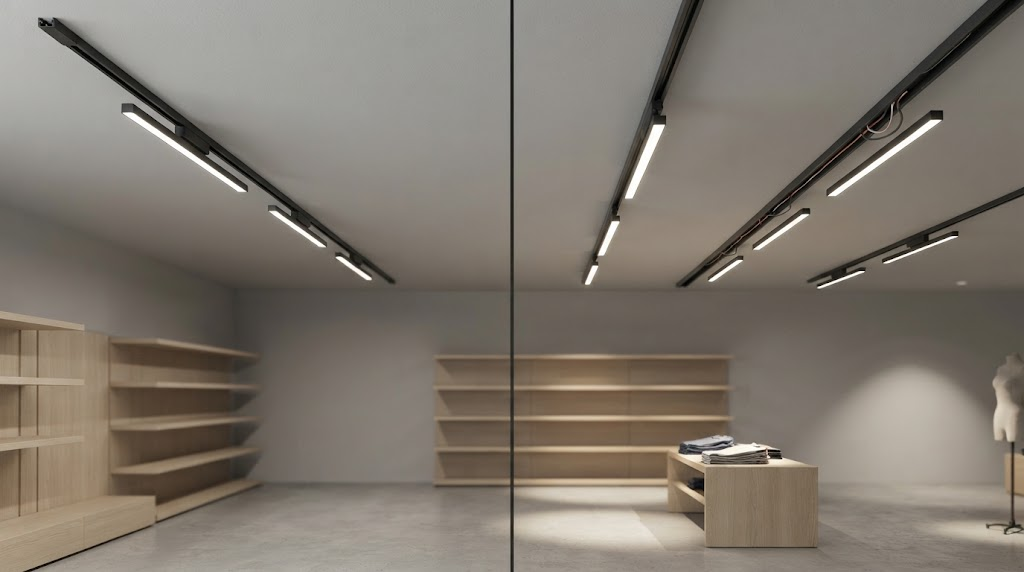
A high-efficiency LED track linear light is a linear LED fixture designed to mount directly onto an electrical track while delivering high useful light output from relatively low electrical power.
The linear form provides a wider distribution than many conventional track spotlights, while the track mounting system allows the fixture to be repositioned when the store layout changes.
For commercial applications, efficiency should be measured at the complete luminaire level:
Luminaire efficacy = delivered lumens ÷ luminaire input watts
This includes the LED source, driver, optics and thermal system.
A fixture advertised at a high LED-chip efficacy does not necessarily deliver the same efficiency as a complete installed luminaire.
How high can the efficiency be?
Modern high-efficiency commercial track linear lights can reach up to 170 lm/W under specified operating conditions.
The actual value depends on:
- LED package;
- CCT;
- CRI;
- operating current;
- optical system;
- driver efficiency;
- thermal management;
- selected wattage.
A 170 lm/W specification should therefore always be understood as a defined product configuration, rather than a universal performance level at every CCT, CRI and output setting.
Why does 170 lm/W matter in retail lighting?
Higher luminaire efficacy can reduce installed electrical load when the required illuminance remains unchanged.
Consider a simple example.
If a project requires approximately 100,000 lumens:
| Luminaire efficacy | Approximate input power |
|---|---|
| 100 lm/W | 1,000 W |
| 120 lm/W | 833 W |
| 140 lm/W | 714 W |
| 150 lm/W | 667 W |
| 170 lm/W | 588 W |
The calculation is simplified and does not account for utilization factors, maintenance factors or lighting-control strategies, but it illustrates why luminaire efficacy matters.
For stores operating for long hours every day, the difference in connected load can become significant across hundreds of fixtures.
The real energy-saving opportunity comes from combining high efficacy with appropriate light levels, zoning, dimming and intelligent control.
Which track systems are compatible with track linear lights?
A track linear light is compatible with a track only when both the mechanical adapter and electrical configuration are suitable.
This sounds obvious, but it is one of the most common points overlooked during procurement.
Two tracks can look almost identical while using different electrical contacts or mechanical interfaces.
Before ordering, check:
- Track profile
- Adapter type
- Number of circuits
- Rated voltage
- Electrical contacts
- Earthing arrangement
- Mechanical locking method
- Control compatibility
A fixture that physically fits into a track is not necessarily electrically compatible with it.
Can any track linear light be installed on any track?
No. Track compatibility must be confirmed by the manufacturer or through the relevant technical specifications.
For a replacement project, the safest approach is to provide the supplier with:
- track photos;
- track dimensions;
- existing fixture information;
- circuit configuration;
- voltage;
- required control method.
The adapter can then be matched before the production order is confirmed.
What is the difference between 1-phase and 3-phase track systems?
The practical difference in retail lighting is mainly the number of independently controlled circuits available within the track system.
In commercial lighting, the terms 1-circuit track and 3-circuit track are often more useful than thinking about the track simply as a conventional three-phase power system.
| Feature | 1-circuit track | 3-circuit track |
|---|---|---|
| Independent circuits | 1 | 3 |
| Switching flexibility | Basic | Higher |
| Lighting zones | Limited | More flexible |
| Installation | Simpler | More complex |
| Typical use | Small / simple stores | Larger retail projects |
| Fixture grouping | Basic | Multiple groups |
| Layout flexibility | Moderate | High |
A 3-circuit system can separate different lighting groups.
For example:
Circuit 1 → general lighting
Circuit 2 → merchandise lighting
Circuit 3 → feature displays
This becomes useful when the store needs different lighting scenes or when merchandise layouts change frequently.
Is 3-circuit track always the better choice?
Not necessarily.
A small boutique with a simple lighting layout may not need three independently controlled circuits.
A larger fashion store, department store or showroom with several lighting zones may benefit from the additional flexibility.
The track system should follow the control requirements of the project rather than being selected simply because it offers more circuits.
How does UGR<19 affect retail lighting design?
UGR<19 indicates a low discomfort-glare target under the specified calculation conditions, but it does not mean that every installation using the fixture will automatically have UGR below 19.
UGR depends on the relationship between:
- luminaire luminance;
- luminaire position;
- observer position;
- room geometry;
- background luminance;
- viewing direction;
- surface reflectance.
This is why the same luminaire can perform differently in two stores.
Why is glare important in retail?
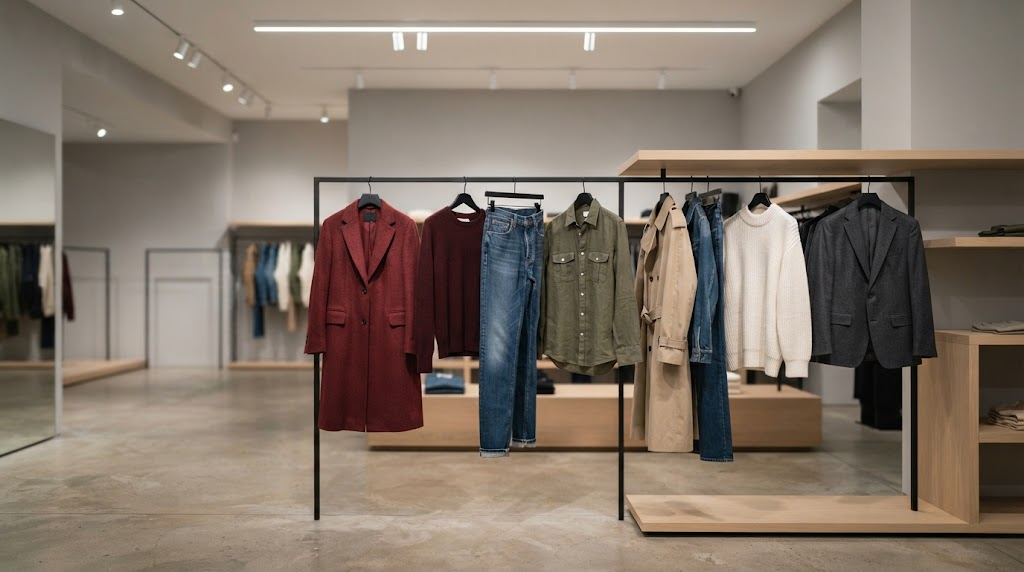
Uncontrolled glare can make a store feel visually uncomfortable and can interfere with the way customers see merchandise.
Potential problems include:
- bright LED sources visible from customer eye level;
- reflections from glossy floors;
- reflections on glass display cabinets;
- direct views toward ceiling fixtures;
- excessive brightness in circulation areas.
Good glare control is therefore not simply about achieving a number on a datasheet.
Does UGR<19 guarantee low glare?
No. UGR is an important metric, but it should be interpreted together with the luminaire’s optical design and the actual installation.
This is particularly relevant to compact LED sources, where a small luminous area can have very high luminance.
A more complete glare assessment should consider:
- Luminaire photometry
- Source luminance
- Optical shielding
- Beam distribution
- Mounting height
- Ceiling layout
- Customer viewing direction
- Room reflectance
- Actual furniture and display arrangement
For retail projects, UGR should be treated as part of the optical design rather than as a standalone marketing specification.
How should UGR<19 be implemented in a retail project?
The most reliable approach is to control glare during the design stage instead of trying to correct it after installation.
1. Identify the viewing positions
Determine where customers and staff are likely to look from.
This includes:
- main circulation routes;
- checkout counters;
- fitting rooms;
- merchandise aisles;
- display areas.
2. Select suitable optics
Use optical systems that provide the required beam distribution while controlling high-angle luminance.
Possible solutions include:
- recessed LED sources;
- reflectors;
- diffusers;
- microprismatic optics;
- shielding structures.
3. Position the fixtures correctly
Avoid placing high-luminance sources directly within common sightlines wherever possible.
4. Verify the lighting calculation
Use actual room dimensions, mounting positions and photometric data.
5. Check the completed store
The final visual result should be checked after installation because furniture, shelving, mirrors and reflective materials can change the visual environment.
How do DIP-switch wattage selection features work?
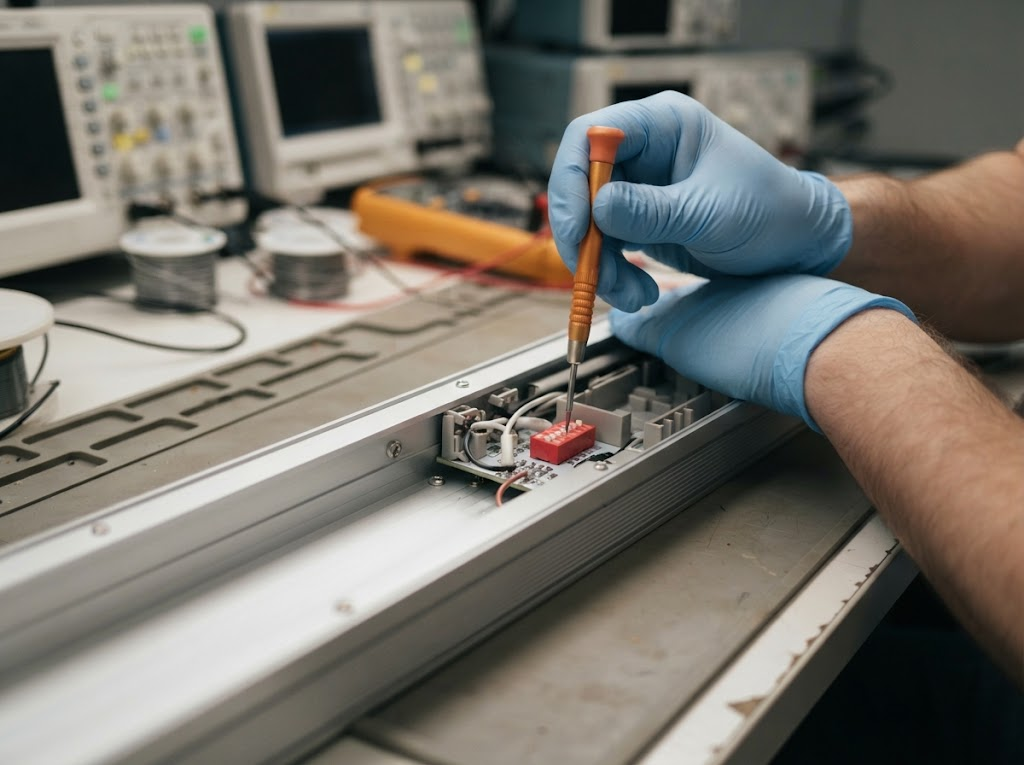
A DIP-switch wattage system allows the installer to select different predefined power levels from the same luminaire.
For example, a track linear light could be configured as:
| DIP setting | Power | Typical application |
|---|---|---|
| 1 | 20 W | Lower-output area |
| 2 | 25 W | General retail |
| 3 | 30 W | Higher illumination requirement |
| 4 | 35 W | Feature / high-output zone |
The actual wattage and lumen output depend on the specific product.
The advantage is straightforward: one fixture platform can cover several lighting requirements without changing the physical luminaire.
Why is selectable wattage useful for retail projects?
DIP-switch wattage selection gives contractors and lighting designers more flexibility during installation and commissioning.
A store may have different requirements in different areas.
1. General merchandise
A lower power setting may provide sufficient illumination.
2. High-ceiling areas
A higher setting may be required because of increased mounting height.
3. Feature displays
Higher output can be used where stronger visual emphasis is needed.
4. Future changes
The power setting can be adjusted if the merchandise layout changes.
This can also prevent the common problem of installing every fixture at maximum output simply because the luminaire offers a high wattage.
Does higher wattage mean better retail lighting?
No. Higher wattage only means greater electrical input; it does not automatically produce better lighting.
Retail lighting quality depends on the relationship between:
- illuminance;
- luminance;
- contrast;
- beam angle;
- color rendering;
- glare;
- surface reflectance;
- merchandise type.
A well-designed 25 W fixture can perform better in a particular location than a poorly positioned 40 W fixture.
The correct wattage is the one that delivers the required lighting result without unnecessary energy consumption.
Why is CRI 90+ important for fashion and retail environments?
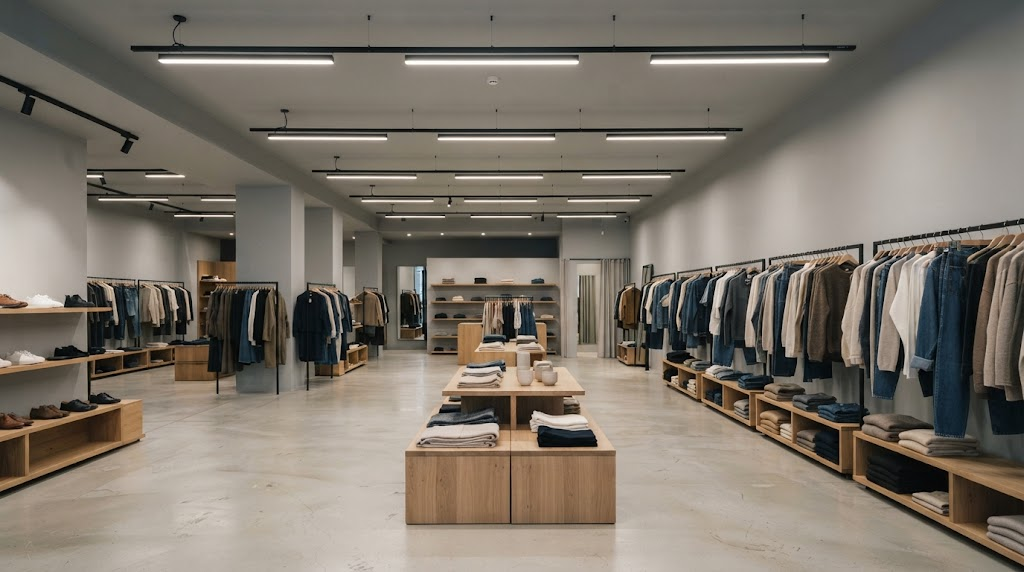
CRI 90+ is valuable in retail because customers need to see merchandise colors and materials with a high degree of fidelity.
This is particularly relevant to:
- fashion;
- footwear;
- leather goods;
- cosmetics;
- jewelry;
- furniture;
- lifestyle products.
A lighting source with poor color rendering can make colors appear dull, shifted or inconsistent.
In a fashion store, this can be particularly noticeable with:
- red garments;
- skin tones;
- denim;
- leather;
- white fabrics;
- pastel colors;
- subtle differences between similar products.
Is CRI 90+ enough for fashion stores?
CRI 90+ is a strong starting point, but CRI alone does not completely describe the color quality of an LED source.
Two luminaires can both have CRI 90+ while producing noticeably different visual results.
For demanding retail applications, it is useful to examine:
- CRI
- R9
- TM-30
- CCT
- SDCM
Why does R9 matter?
R9 describes rendering performance for saturated red, which can be important for fashion, skin tones and certain materials.
A fixture can achieve CRI 90+ while still having relatively weak performance in particular saturated colors.
For this reason, a specification such as:
CRI ≥90 + suitable R9 performance
can be more informative for fashion retail than simply stating “high CRI.”
Should retail lighting specifications include TM-30?
TM-30 can provide a more detailed description of color rendition than CRI alone.
It provides information about:
- color fidelity;
- color gamut;
- hue-specific behavior;
- saturation changes;
- color shifts.
For projects where merchandise appearance is particularly important, TM-30 data can help designers compare LED sources more effectively.
CRI remains widely understood and useful, but it should not be treated as the only indicator of color quality.
What CCT should be used for fashion retail?
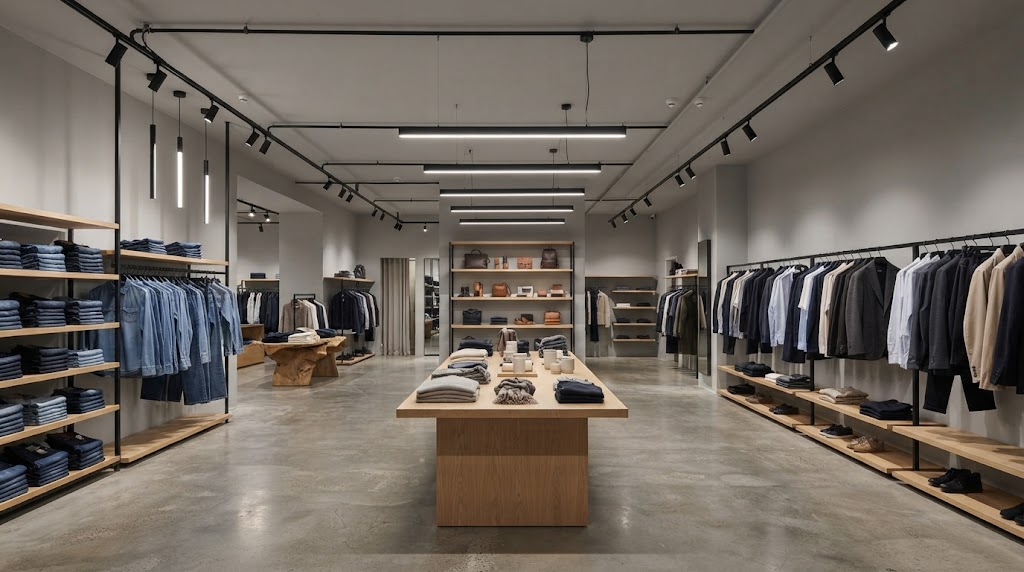
The appropriate CCT depends on the merchandise, interior materials, brand concept and desired visual atmosphere.
Common choices include:
| CCT | Typical visual character | Possible application |
|---|---|---|
| 2700K | Warm | Luxury / intimate environments |
| 3000K | Warm-neutral | Fashion / boutique |
| 3500K | Neutral | Fashion / lifestyle |
| 4000K | Cool-neutral | Modern retail / supermarket / commercial |
There is no universal “best” CCT.
For many contemporary fashion environments, 3000K–3500K provides a balance between color appearance and a comfortable retail atmosphere, while 4000K can work well where a cleaner, brighter appearance is desired.
The important point is consistency across the store.
How should a high-efficiency LED track linear light be specified?
A professional specification should describe the complete lighting system rather than only the fixture wattage.
1. Specify the track
Confirm:
- track type;
- circuit configuration;
- voltage;
- adapter;
- mechanical interface.
2. Specify the optical performance
Confirm:
- lumen output;
- beam distribution;
- UGR;
- optical shielding;
- mounting height.
3. Specify color quality
Confirm:
- CCT;
- CRI;
- R9;
- TM-30 where required;
- SDCM.
4. Specify electrical performance
Confirm:
- input wattage;
- maximum efficacy;
- DIP-switch settings;
- driver efficiency;
- power factor;
- control method.
5. Specify lifetime
Request:
- L70/L80/L90 data;
- operating temperature conditions;
- driver lifetime;
- warranty conditions.
6. Specify control
Confirm compatibility with:
- on/off;
- phase dimming;
- 0–10 V;
- DALI / DALI-2;
- wireless control;
- project-specific systems.
What are the main advantages of high-efficiency LED track linear lighting?
The main advantage is the combination of high efficiency, flexible installation and adaptable optical performance.
1. Lower connected load
Up to 170 lm/W can reduce the electrical power required to achieve a given lumen output compared with lower-efficiency fixtures.
2. Flexible store layouts
The fixture can be repositioned along the track when merchandise zones change.
3. Multiple power levels
DIP-switch selection allows the same fixture to be configured for different areas.
4. Better merchandise presentation
CRI 90+ and appropriate R9 performance help maintain convincing color appearance.
5. Controlled glare
Appropriate optics can reduce uncomfortable high-luminance views.
6. Flexible zoning
3-circuit track systems can divide lighting into independently controlled groups.
7. Easier standardization
A configurable fixture platform can reduce the number of different luminaire models required across a retail rollout.
Where are high-efficiency LED track linear lights most suitable?
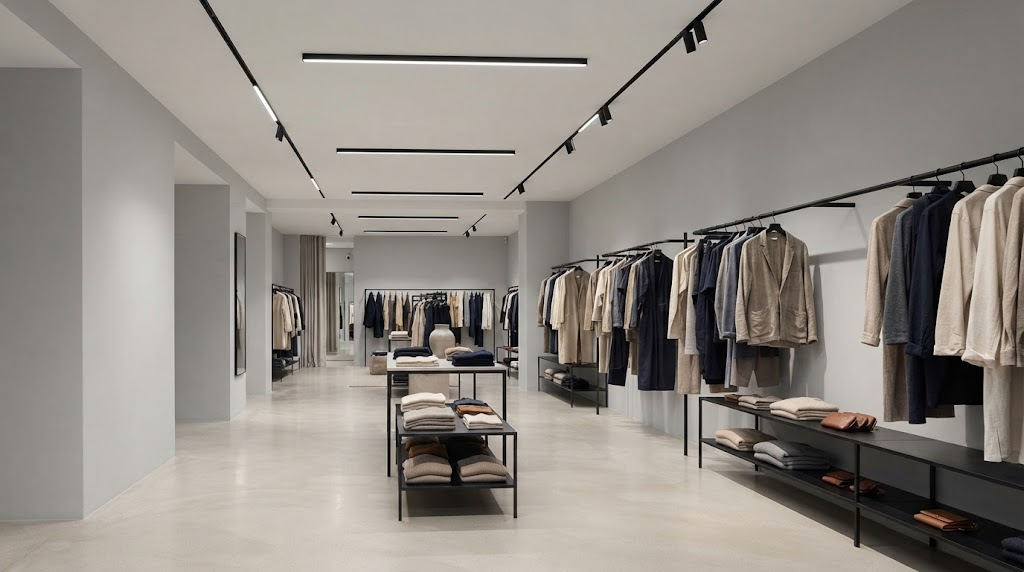
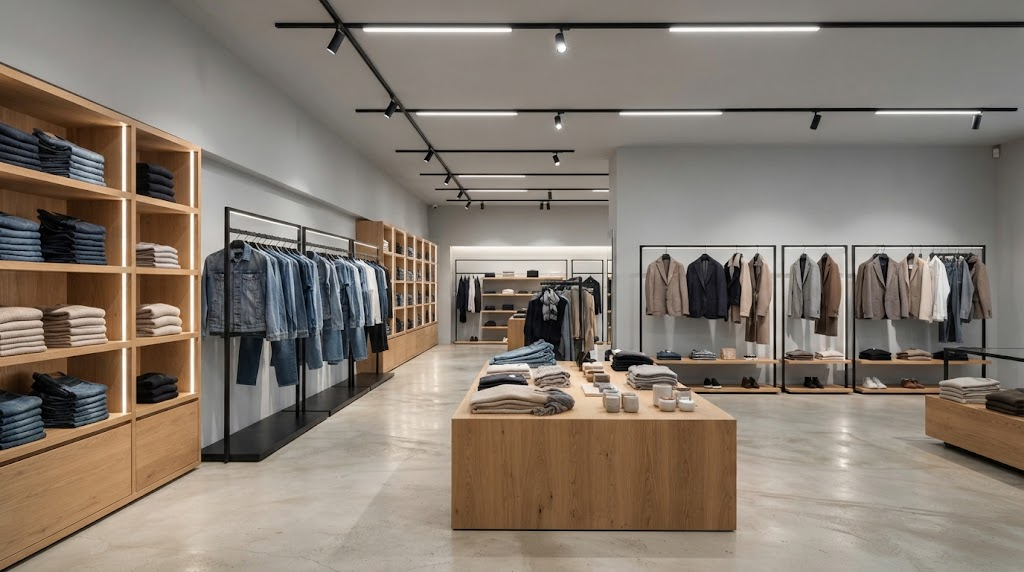
Track linear lighting works particularly well where stores need both broad linear illumination and the ability to adjust the lighting layout later.
1. Fashion stores
Useful for combining general illumination with flexible merchandise lighting.
2. Supermarkets
Suitable for aisles, shelving and promotional zones where lighting positions may change.
3. Department stores
Multiple circuits and selectable wattage can accommodate different departments and ceiling conditions.
4. Lifestyle stores
The linear format can provide clean general illumination while retaining track flexibility.
5. Showrooms
High color rendering is useful for presenting materials, finishes and products.
6. Multi-store rollouts
A standardized fixture family can simplify purchasing, installation and replacement across multiple locations.
What should buyers check before ordering?
The safest purchasing process is to verify the complete technical configuration before approving the sample or production order.
Use this checklist:
- Track compatibility
- Circuit configuration
- Adapter type
- Input voltage
- Luminaire efficacy
- Maximum lumen output
- DIP-switch wattage
- Beam angle
- UGR performance
- CRI
- R9
- CCT
- SDCM
- Dimming protocol
- Lifetime
- Operating temperature
- Warranty
- Photometric file
The photometric file is particularly useful because designers can use it to evaluate the fixture in the actual project rather than relying only on catalogue figures.
FAQ: High-Efficiency LED Track Linear Light
Yes. High-efficiency commercial track linear lights can reach up to 170 lm/W in specified configurations. Actual efficacy depends on CCT, CRI, optical design, driver, operating current and selected power.
Not necessarily. A 170 lm/W fixture may have a different optical system or color specification. Retail projects should compare efficacy together with CRI, R9, UGR, lumen output and beam distribution.
Yes, CRI 90+ is commonly appropriate where merchandise color appearance is important. For demanding applications, R9 and TM-30 can provide additional information.
No. The required glare level depends on the application, viewing conditions and project requirements. UGR<19 can be an appropriate target where visual comfort is a priority.
Only if the specific adapter and electrical configuration are designed to support that installation. Do not assume compatibility from appearance alone.
It normally means the installer can select four predefined operating-power levels. The corresponding lumen output should be checked in the manufacturer’s technical data.
It can. Spectral engineering for high color fidelity may involve an efficacy trade-off. The correct choice depends on the project’s priorities.
Neither is universally better. 3000K can create a warmer boutique atmosphere, while 4000K provides a cleaner, more neutral appearance. The choice should follow the merchandise and interior concept.
There is no single specification that determines suitability. A professional evaluation should consider efficacy, lumen output, track compatibility, optics, glare, color quality, controls and lifetime together.
Final specification principle
A high-efficiency LED track linear light should be judged by the complete lighting result, not by lm/W alone.
A fixture reaching up to 170 lm/W can provide a strong efficiency advantage, but a successful retail installation still depends on five things:
The track must fit.
The light must be efficient.
The optics must control glare.
The spectrum must show merchandise accurately.
The system must remain flexible as the store changes.
For modern retail projects, the most useful specification is therefore not simply “high-efficiency LED track linear light.”
It is:
High efficiency + compatible track system + controlled glare + CRI 90+ color quality + selectable wattage + flexible control.
That combination makes the fixture practical for real-world fashion stores, supermarkets, showrooms and multi-store commercial projects.