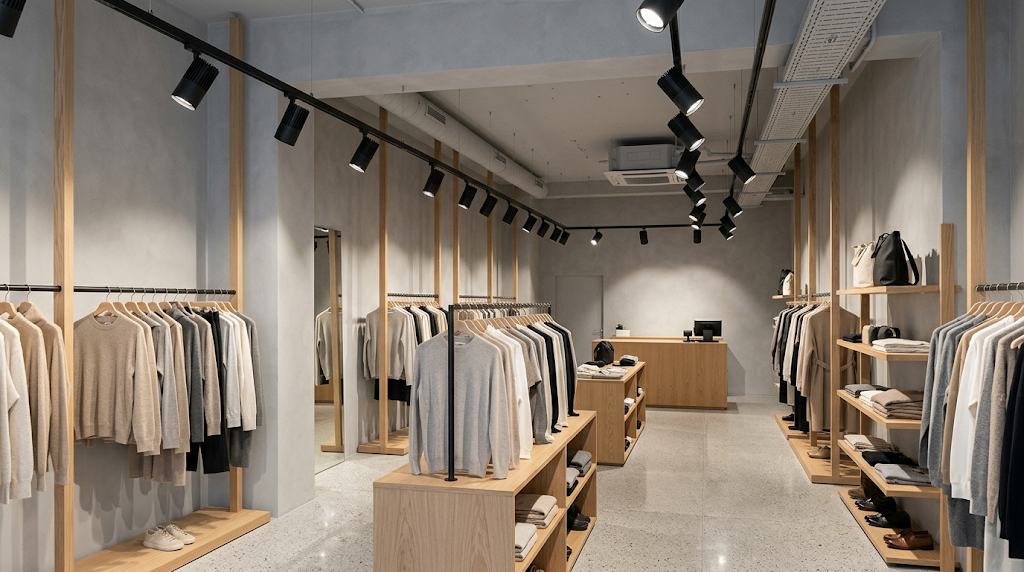
Smart lighting control reduces retail energy costs by scheduling operating hours, dimming lights when full output is unnecessary, and adjusting illumination by zone or daylight availability. Combined with efficient LED track lights and downlights, it helps retailers reduce electricity waste while maintaining product visibility and a comfortable shopping environment.
Why Do Retail Stores Need Smart Lighting Control?
Retail lighting often operates for 10–14 hours a day, sometimes longer during cleaning, restocking and seasonal promotions. If every fixture runs at full output throughout these periods, the store may use more electricity than necessary.
Smart lighting control gives retailers more precise control over when lights operate and how much light each area receives.
The main energy-saving opportunities are:
- Operating hours: Switch off non-essential lighting when the store is closed.
- Brightness: Dim compatible fixtures when full output is not required.
- Lighting zones: Control window displays, sales floors, fitting rooms and stockrooms separately.
- Daylight: Reduce electric lighting when natural light provides sufficient illumination.
- Energy monitoring: Identify unnecessary operating hours and compare consumption across locations.
The potential savings depend on the starting point. A store that already uses efficient LEDs and well-managed schedules may have less room for improvement than a store where lighting runs at full power all day.
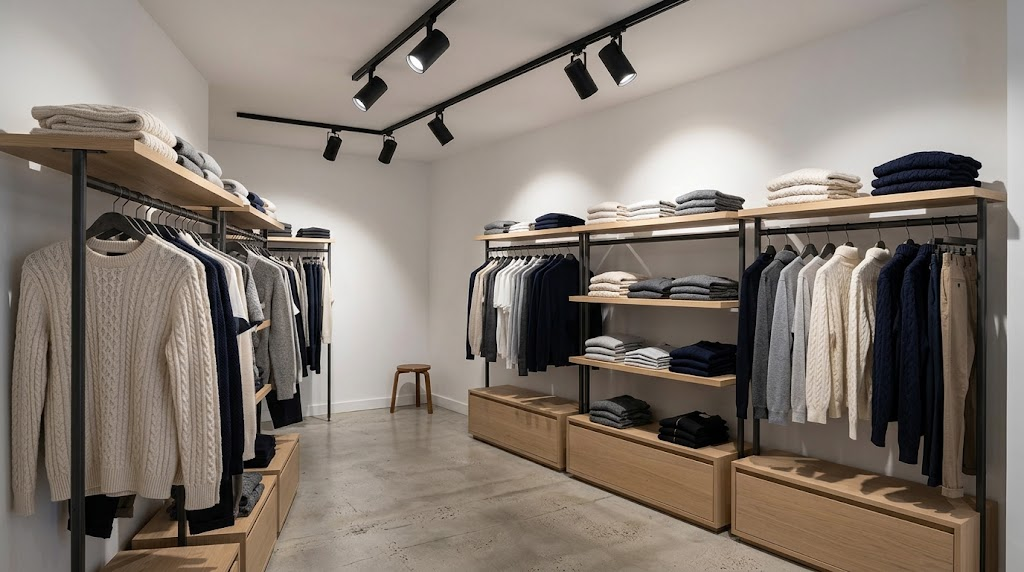
Which Smart Lighting Controls Save the Most Energy?
The most effective control strategy depends on the store layout, opening hours and lighting requirements.
1. Scheduling: Avoid unnecessary operating hours
Lighting schedules can follow the store’s daily routine. Essential areas can be illuminated before opening, the sales floor can operate at its required level during trading hours, and non-essential lights can be switched off after closing.
Cleaning and replenishment schedules should be considered separately from customer opening hours.
Best suited to: Retail stores with predictable opening and closing times.
2. Dimming: Use only the light output required
Compatible LED track lights and downlights can be dimmed when full brightness is unnecessary. Different scenes can be programmed for normal trading, window displays, cleaning and stock replenishment.
The relationship between dimming level and electrical consumption varies by fixture and driver. A 50% dimming setting does not automatically mean a 50% reduction in electricity use.
Best suited to: Stores with adjustable lighting requirements or multiple display scenes.
3. Zone control: Avoid lighting every area in the same way
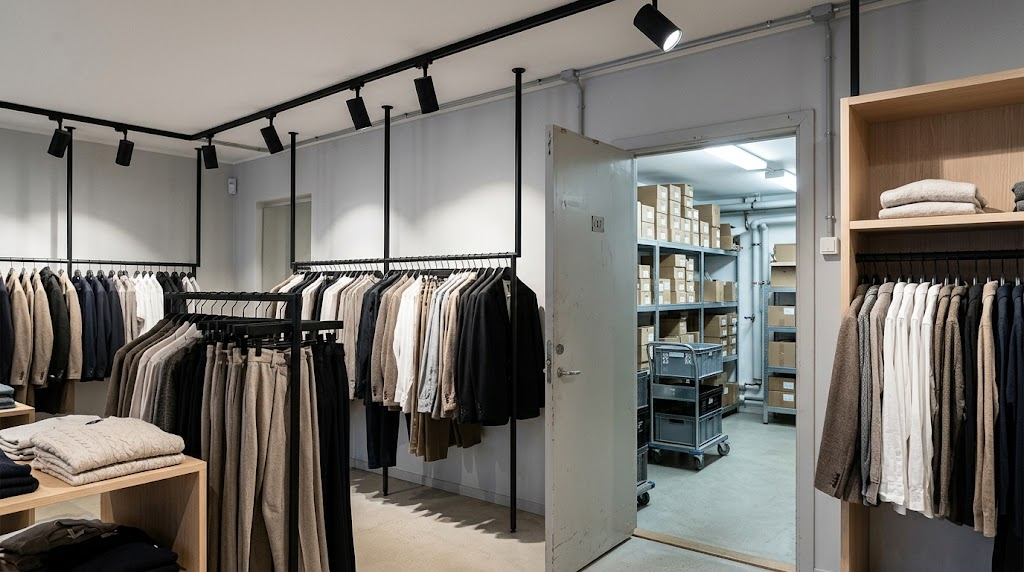
A stockroom does not have the same lighting requirements as a product display wall. Separate control zones allow retailers to operate each area according to its use.
For example, the main sales floor may remain illuminated throughout trading hours, while staff-only areas use occupancy sensors or separate schedules.
Best suited to: Medium and large stores, department stores and retail chains.
4. Daylight control: Reduce electric lighting near windows
Daylight sensors can adjust compatible fixtures according to available natural light. This is particularly useful in stores with large windows or skylights.
Fixtures near the façade should generally be controlled separately from those deeper inside the store, where daylight levels may be lower.
Best suited to: Stores with substantial daylight and lighting circuits that can be controlled independently.
5. Energy monitoring: Find problems that schedules alone cannot solve
Monitoring helps retailers identify lights operating outside scheduled hours, unexpectedly high consumption and differences between branches.
Useful indicators include:
- Lighting electricity consumption in kWh
- Operating hours by store or zone
- Energy use per square metre
- Consumption before and after a control upgrade
- Unexpected operation outside business hours
Monitoring does not save energy by itself. The savings come when the data leads to practical changes in schedules, dimming levels, equipment or operating procedures.
How Much Can Smart Lighting Control Reduce Retail Energy Costs?
There is no universal savings percentage for smart lighting control. Results depend on existing fixture efficiency, operating hours, daylight, control settings and how much lighting is currently wasted.
The following example illustrates how to estimate the financial benefit.
Retail lighting energy cost example
Assume a store has 100 LED track lights. Each fixture consumes 30 W and operates for 12 hours per day, 360 days per year. The electricity tariff is €0.25 per kWh.
| Item | Calculation | Result |
|---|---|---|
| Total connected load | 100 × 30 W | 3 kW |
| Annual operating hours | 12 × 360 | 4,320 h |
| Annual lighting consumption | 3 kW × 4,320 h | 12,960 kWh |
| Annual lighting electricity cost | 12,960 × €0.25 | €3,240 |
If smart controls achieve an assumed 20% reduction in lighting energy consumption, the annual savings would be:
| Item | Before control improvement | After assumed 20% reduction |
|---|---|---|
| Annual energy use | 12,960 kWh | 10,368 kWh |
| Annual electricity cost | €3,240 | €2,592 |
| Annual cost savings | — | €648 |
The 20% reduction is an illustrative assumption, not a performance guarantee. A real project should establish the expected reduction from its existing lighting load, operating conditions and proposed control strategy.
This example also excludes the cost of control equipment, installation, commissioning and maintenance.
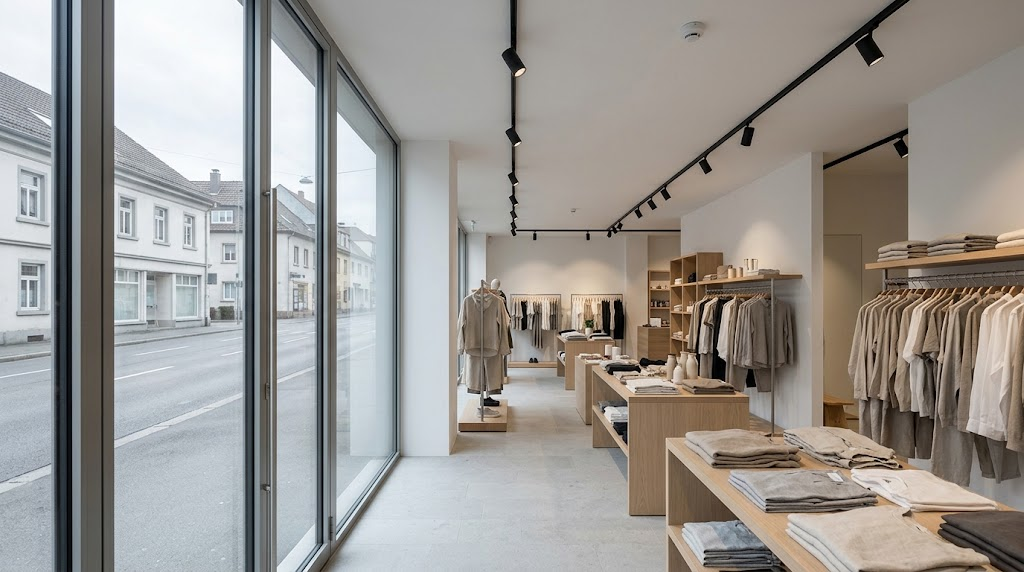
How do you calculate annual lighting savings?
Use the following formula:
Annual cost savings = Baseline annual lighting consumption × Verified energy reduction rate × Electricity tariff
For a store using 20,000 kWh annually for lighting, a verified 15% reduction and an electricity price of €0.25 per kWh would produce:
20,000 × 15% × €0.25 = €750 in annual savings.
To calculate the simple payback period:
Payback period = Total installed cost ÷ Annual net savings
For a realistic investment decision, include maintenance costs and any additional savings or expenses associated with the upgrade.
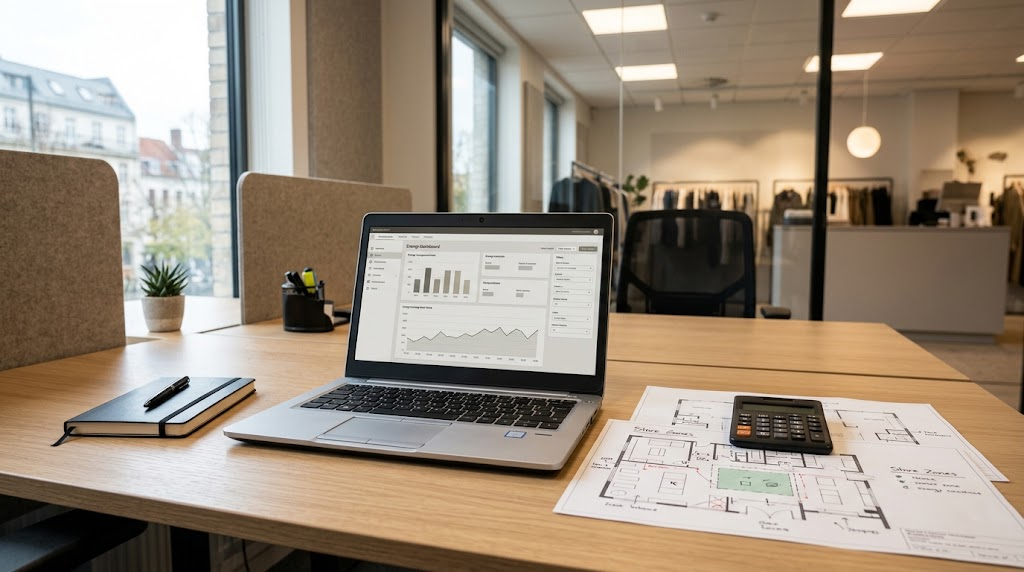
How Can Retailers Reduce Energy Use Without Compromising Product Presentation?
Retail lighting is part of the selling environment. Lower electricity consumption is valuable only if the store still presents merchandise clearly and comfortably.
A practical design should distinguish between ambient lighting and accent lighting.
- Ambient lighting provides general visibility across the store.
- Accent lighting highlights clothing, footwear, displays and feature walls.
- Task lighting supports activities such as checkout, fitting and stock handling.
These layers do not always need the same brightness or operating schedule.
For fashion stores, retailers should check color rendering, beam angle and color consistency when selecting track lights. A narrow beam may suit a feature product, while a wider beam may provide more even coverage across a wall display.
Dimming settings should be tested on site. Excessive dimming can reduce visual comfort, change the appearance of merchandise or create uneven brightness.
The objective is to remove unnecessary energy use while retaining the light needed for the shopping experience.
Smart Lighting Control vs. Conventional Lighting
| Feature | Conventional lighting setup | Smart lighting control |
|---|---|---|
| Operating hours | Often manually switched | Can follow programmed schedules |
| Brightness | Fixed or manually adjusted | Can be dimmed automatically or by scene |
| Area management | May use shared circuits | Can support separate zones |
| Daylight response | Usually manual | Can use daylight sensors |
| Energy data | May be limited | Can provide operating and consumption data |
| Multi-store management | More manual coordination | Can support standardized settings |
| Initial investment | Generally lower | Higher, depending on system complexity |
Smart controls are not automatically cost-effective for every store. A small shop with efficient LEDs and short operating hours may need only basic scheduling. A large store with many display zones and long operating hours may benefit from a more advanced system.
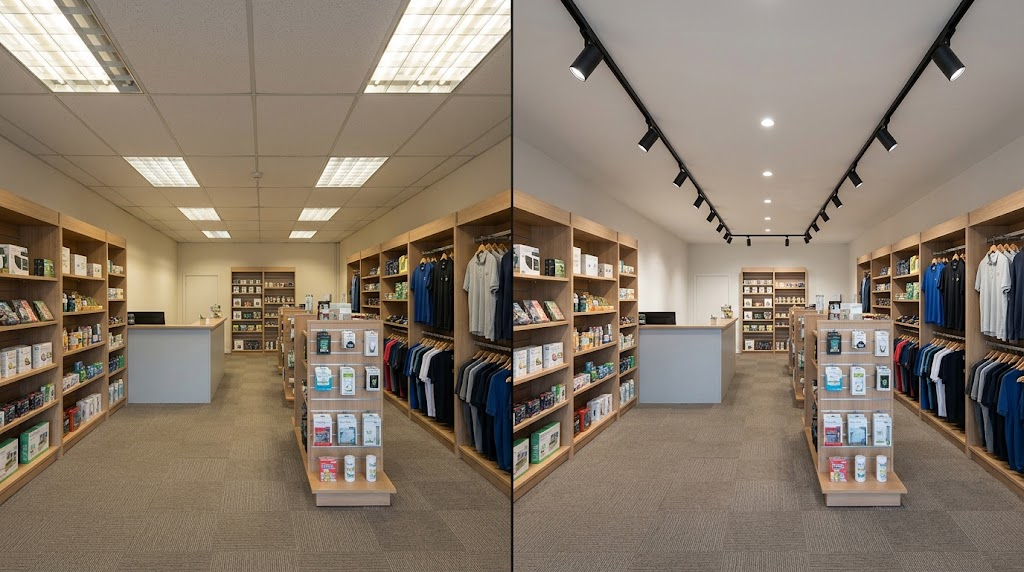
What Should Retailers Check Before Buying a Smart Lighting System?
Before selecting a system, assess the existing installation and the intended energy-saving measures.
Fixture compatibility: Confirm that LED drivers support the selected dimming method and control protocol.
Installation requirements: Check whether additional wiring, sensors, controllers or gateways are needed.
Lighting quality: Establish the required illumination, color rendering and glare control for each area.
Commissioning: Make sure schedules, sensor settings and dimming limits are configured and tested on site.
Total cost: Include equipment, installation, commissioning, training and maintenance in the investment calculation.
Measurement: Record baseline consumption and compare it with post-installation results under comparable operating conditions.
For multi-store projects, standardized fixture specifications and control settings can simplify procurement and maintenance. However, each branch may still require different settings because of its layout, daylight conditions and opening hours.
How Does BREE LIGHTING Support Retail Lighting Projects?
BREE LIGHTING supplies commercial LED lighting for retail applications, including fashion stores, boutiques and supermarkets.
When specifying track lights and downlights for an energy-conscious project, retailers should evaluate fixture efficacy, beam angle, color rendering, glare control, driver compatibility and maintenance requirements together. Selecting the fixtures and control system as a coordinated package helps reduce compatibility problems during installation.
For project-based sourcing, BREE LIGHTING has a stated minimum order quantity of 200 pieces and a lead time of 7–15 working days, subject to product configuration and order confirmation.
The appropriate solution depends on the project’s technical requirements, lighting design, control strategy and delivery schedule.
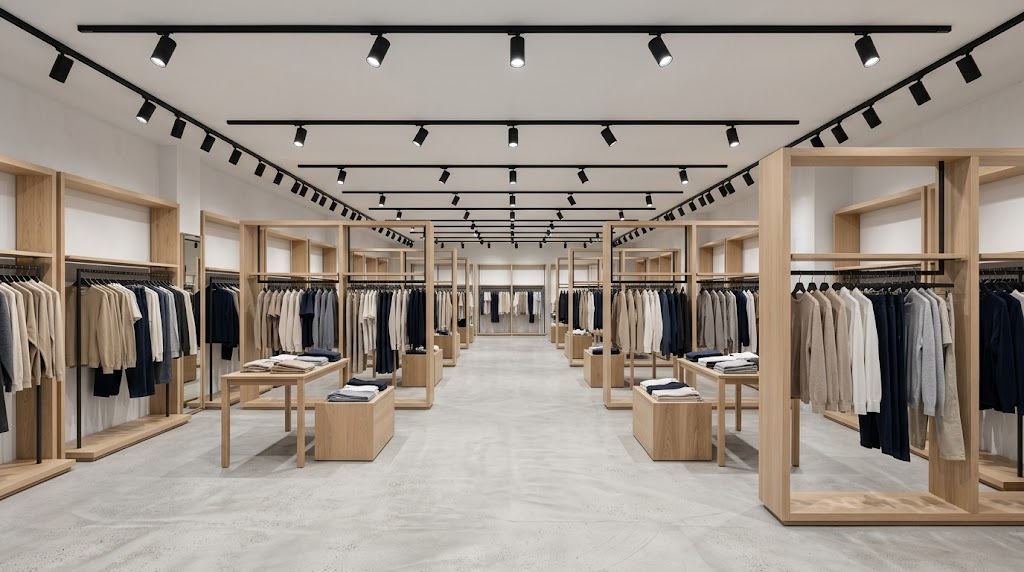
Frequently Asked Questions About Smart Lighting Control in Retail Stores
Smart lighting control uses schedules, dimming, sensors or centralized controls to manage when lights operate and how much light they produce. It helps retail stores align lighting consumption with trading hours, daylight and the needs of individual areas.
It reduces unnecessary operating hours and adjusts light output when full brightness is not required. Independent zone control and daylight-responsive dimming can further reduce electricity use where conditions allow.
There is no fixed percentage for all stores. Savings depend on existing fixture efficiency, operating hours, daylight, dimming capability and control settings. Retailers should calculate potential savings using their own energy baseline rather than relying on a general industry figure.
LED technology reduces the electricity required to produce light. Smart controls reduce unnecessary use by managing operating hours and output. Combining efficient LED fixtures with suitable controls can provide additional savings, depending on the existing installation.
Sometimes. Compatibility depends on the LED driver, dimming method, control protocol and wiring. Retailers should check technical specifications before purchasing controllers or assuming existing fixtures can be dimmed.
Scheduling is often a practical starting point for stores with predictable operating hours. Dimming can be useful where compatible fixtures are installed, while occupancy sensors may suit stockrooms and staff-only areas. The right choice depends on the store’s needs and budget.
They can be useful in stockrooms, storage areas and selected low-traffic spaces. On the main sales floor, automatic switching should be designed carefully to avoid distracting brightness changes or inadequate lighting when customers are present.
No. Electrical consumption does not necessarily fall in direct proportion to the dimming setting. The relationship depends on the LED driver and fixture design, so manufacturer data or actual power measurements should be used.
Yes, when daylight is sufficient and the lighting system supports automatic dimming. Sensors should be positioned correctly, and fixtures near windows should ideally be controlled separately from those farther inside the store.
Divide the total installed cost by the expected annual net savings. Use realistic energy reduction estimates and include installation, commissioning and maintenance costs to avoid overstating the return.
Record baseline energy consumption, operating hours and lighting settings before the upgrade. After commissioning, compare equivalent periods and account for differences in store hours, seasonal daylight and other relevant operating conditions.
It may be particularly useful when branches have long operating hours, multiple lighting zones or inconsistent operating practices. Standardized specifications and monitoring can help identify underperforming stores, but each location should be evaluated against its own operating conditions.
Not always. Some systems use local schedules and controls, while others provide remote monitoring or centralized management through a network. The required connectivity depends on the chosen system and the retailer’s management needs.
Lighting automation changes how lights operate through schedules, sensors or control scenes. Energy monitoring measures or reports consumption and operating data. Monitoring helps identify opportunities for improvement, but savings require appropriate action.
Provide the store floor plan, ceiling height, fixture quantity and wattage, operating hours, existing dimming or control protocol, required lighting levels and preferred control functions. For retrofit projects, photos and details of the existing wiring and drivers can help suppliers assess compatibility.
Check product performance data, color consistency, driver and control compatibility, quality documentation, warranty terms, production lead time and the supplier’s experience with similar retail applications. A low fixture price alone does not establish the lowest lifetime operating cost.
Conclusion
Smart lighting control helps retail stores reduce energy costs by matching lighting operation to real operating needs. Scheduling, dimming, zone control, daylight sensing and energy monitoring each address a different source of unnecessary consumption.
Start by measuring current lighting use, identifying where energy is wasted and checking compatibility with the existing fixtures. Then calculate the expected savings against the total installed cost. This gives retailers a clearer basis for deciding whether a simple control upgrade or a more comprehensive system makes financial sense.