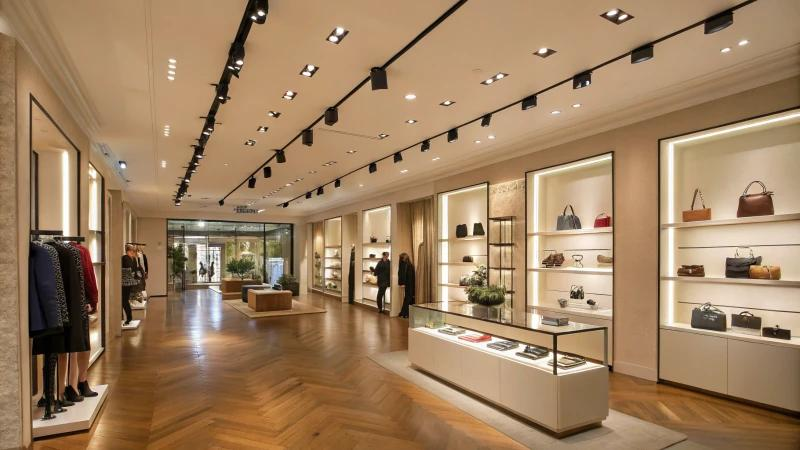
Smart track lighting combines adjustable LED spotlights with digital controls, giving retailers more control over brightness, lighting zones and scenes while keeping the store flexible as displays change.
What Is Smart Track Lighting?
6
A track with adjustable LED spotlights is already flexible. What makes it smart is what happens after the fixtures are installed.
With a basic system, several spotlights may simply switch on and off together. With digital control, individual fittings or groups can be dimmed, scheduled or adjusted separately.
Depending on the project, the system may use DALI-2, wireless control, sensors or a combination of several technologies.
For a small boutique, that might mean nothing more complicated than dimming a few lighting zones.
For a large retail store, it could mean hundreds of luminaires connected to a central lighting management system.
So there is no single definition of a “smart” track light. The right level of control depends on the size and operation of the store.
Why Smart Track Lighting Is Getting More Attention in European Retail
Retail lighting has traditionally been discussed in terms of illumination, colour rendering and appearance.
Those things still matter.
But energy costs, changing store layouts and digital building systems have added another layer to the conversation.
This was visible at EuroShop 2026, where lighting was discussed alongside smart technologies, IoT, AI, energy management and connected building systems. The focus was not only on the luminaire, but also on what the lighting system can do once it is connected.
That is particularly relevant to track lighting.
A track system already gives a retailer physical flexibility. Digital control adds flexibility on top of that.
From a Lighting Track to a Connected System
5
A conventional track mainly provides power and a place to mount the luminaires.
A connected system can also exchange information with controls and sensors.
That opens up fairly practical possibilities.
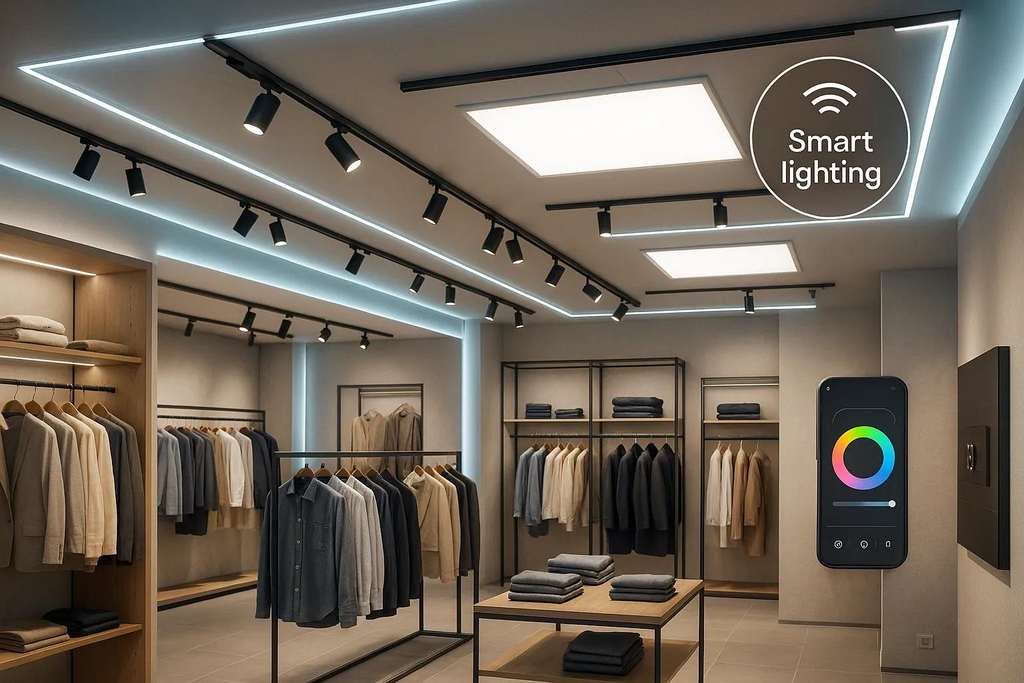
A store can have separate lighting levels for the sales floor and window display. A fitting can be dimmed without switching off the rest of the track. A lighting scene can be changed for an evening event. Sensors can be used in areas where occupancy varies.
Some projects may also connect lighting with wider building management systems.
This is one reason smart lighting is becoming a bigger topic in retail: the lighting system can become part of the building rather than an isolated electrical installation.
EuroShop 2026 highlighted this wider move towards connected lighting and digital building infrastructure.
Which Smart Features Actually Matter in a Retail Store?
Not every store needs an advanced control platform.
In practice, a few functions tend to be more useful than others.
Dimming
Being able to reduce the output of a spotlight or lighting zone is useful when the store does not need full illumination.
Cleaning, stock handling and evening operation are obvious examples.
Zoning
A store might divide its lighting into entrance, sales floor, fitting rooms, window display and feature areas.
Each zone can then be adjusted independently.
Scene control
Some retailers use different lighting settings for normal trading, evening operation or special events.
Once the scenes are configured, changing the lighting does not require someone to walk around the store and adjust individual fixtures.
Scheduling
Lighting can be programmed around opening and closing times.
It sounds simple, but avoiding unnecessary operating hours can make a noticeable difference in a large store.
Smart Track Lighting and Energy Efficiency
6
Energy saving is one of the more practical reasons to introduce lighting controls.
The LED itself is only part of the equation.
Imagine a store with a large number of track spotlights. If all of them operate at full output from the moment the staff arrive until the last person leaves, there is little room to reduce consumption.
With dimming and zoning, the lighting can be adjusted to suit the actual use of the space.
That might mean lower output in some areas during quieter periods, or reduced levels outside normal trading hours.
The exact saving depends on the installation, operating schedule and control strategy. Smart lighting should therefore not be sold on a fixed percentage saving without looking at the individual project.
That is an important distinction when comparing lighting proposals.
Can Sensors Be Used with Track Lighting?
Yes, and they can be useful when there is a clear reason to use them.
Occupancy sensors can help manage lighting in areas where people come and go throughout the day.
Daylight sensors can also be useful near large shopfronts or glazed areas where natural light changes considerably.
Typical applications include:
- Back-of-house areas
- Stockrooms
- Staff areas
- Large retail floors
- Stores with extensive glazing
- Shopping centres
The sensor settings need to be commissioned properly.
A light switching off while a customer is browsing is obviously not a good experience. In retail, energy saving should never come at the expense of basic visual comfort.
Where Does AI Fit into Retail Lighting?
6
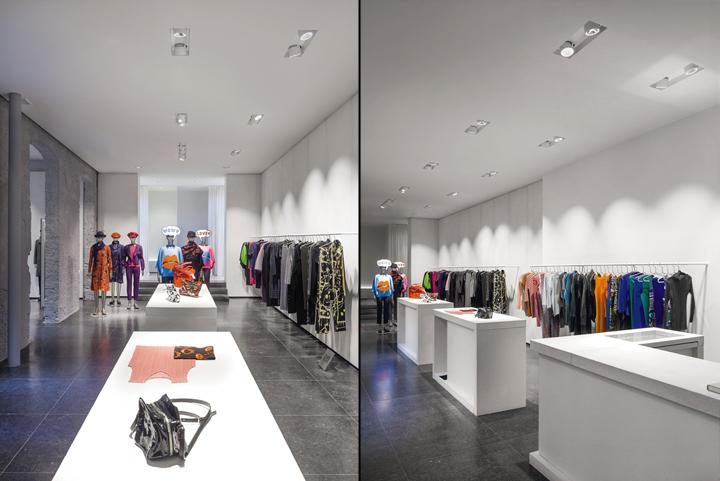
AI is one of the newer parts of the conversation.
It is also one of the areas where it is easy to overcomplicate things.
An AI lighting system does not mean that every track spotlight needs an AI chip inside it.
The more interesting application is at the control level, where software can analyse information such as occupancy, daylight, time of day or operating patterns and use that information to adjust the lighting.
This idea was explored in the EuroShop 2026 lighting programme, where AI-powered lighting control was discussed as a move towards more adaptive lighting systems.
For most retailers, though, there is no need to start with AI.
Good LED fixtures, sensible zoning, reliable dimming and properly configured controls will usually have a more immediate benefit.
AI is better viewed as an additional layer that may become useful as the connected lighting system becomes more sophisticated.
Smart Track Lighting Is Also About Flexibility
6
This is perhaps the most straightforward advantage of track lighting.
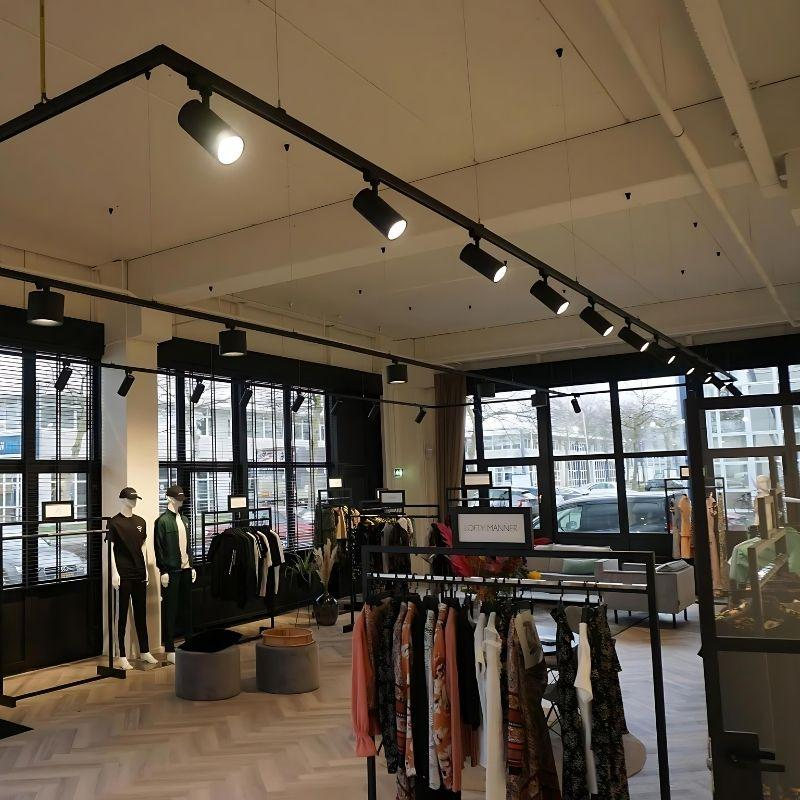
Retail displays move.
A new collection replaces the old one. A promotional table is moved. A wall display changes for the next season.
With fixed downlights, the lighting positions stay where they were originally installed.
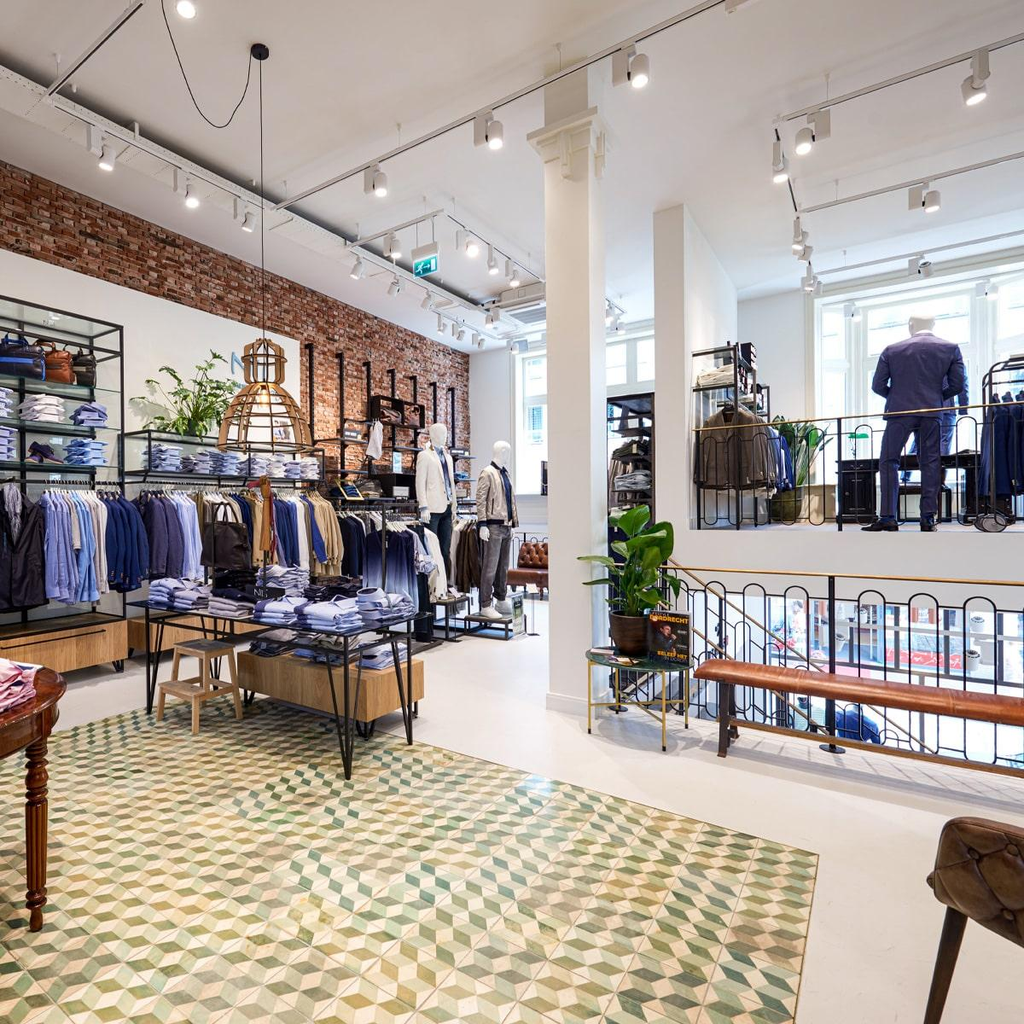
With track spotlights, the fittings can be repositioned.
Smart control adds another adjustment: the output of those fittings can be changed without rewiring the store.
That combination is particularly useful in fashion and lifestyle retail, where the layout is rarely permanent.
Smart Track Lighting vs Conventional Track Lighting
| Feature | Conventional Track Lighting | Smart Track Lighting |
|---|---|---|
| Adjustable spotlights | Yes | Yes |
| Flexible positioning | Yes | Yes |
| On/off switching | Yes | Yes |
| Dimming | Optional | Usually available |
| Individual control | Limited | Available with compatible systems |
| Lighting scenes | Limited | Yes |
| Sensors | Optional | Available |
| Scheduling | Limited | Yes |
| Remote management | Limited | Available |
| Building integration | Limited | Possible |
| Data-based control | No | Possible |
The difference is therefore not really the track itself.
It is the level of control built around the track.
What Should You Check Before Choosing Smart Track Lighting?
The luminaire still matters, even when the control system is smart.
1. Light output and efficacy
Look at the actual lumen output and efficacy rather than wattage alone.
2. Beam angle
A 15° spotlight and a 36° spotlight serve very different purposes. The choice should match the mounting height and display.
3. Colour rendering
For fashion, cosmetics and other colour-sensitive products, CRI 90+ is often worth considering.
4. Glare
A technically efficient spotlight can still be uncomfortable if the optical design is poor.
5. Dimming performance
Check the compatibility between the LED driver and the chosen control system. Smooth, stable dimming matters in a retail environment.
6. Track compatibility
The adapter, track and electrical configuration need to be compatible with the selected luminaires.
7. Future changes
If the store is likely to add sensors, more lighting zones or a different control system later, it is worth considering that before installation.
8. Maintenance
For a retail chain, replacing one faulty fitting should not become a complicated process. Accessibility and spare-part availability are often overlooked during specification.
Is DALI-2 a Good Choice for Retail Track Lighting?
DALI-2 is worth considering when a project needs more detailed digital control.
It can allow luminaires to be grouped, dimmed and managed individually rather than treating the entire store as one circuit.
That can be useful for larger stores with several lighting zones.
For a small shop with a straightforward layout, however, a simpler control solution may be perfectly adequate.
The best control system is the one that matches the project — not necessarily the one with the longest list of features.
Which Retail Stores Benefit Most from Smart Track Lighting?
Smart track lighting tends to make the most sense where the lighting needs to change along with the store.
Good examples include:
- Fashion stores
- Premium boutiques
- Cosmetics retailers
- Lifestyle stores
- Furniture showrooms
- Department stores
- Electronics stores
- Temporary retail spaces
A small shop with a simple layout may only need adjustable spotlights and basic dimming.
A large retail chain may benefit from centralised control, sensors, scheduling and monitoring.
The scale of the lighting system should follow the scale of the business.
What EuroShop 2026 Tells Us About the Future of Retail Lighting
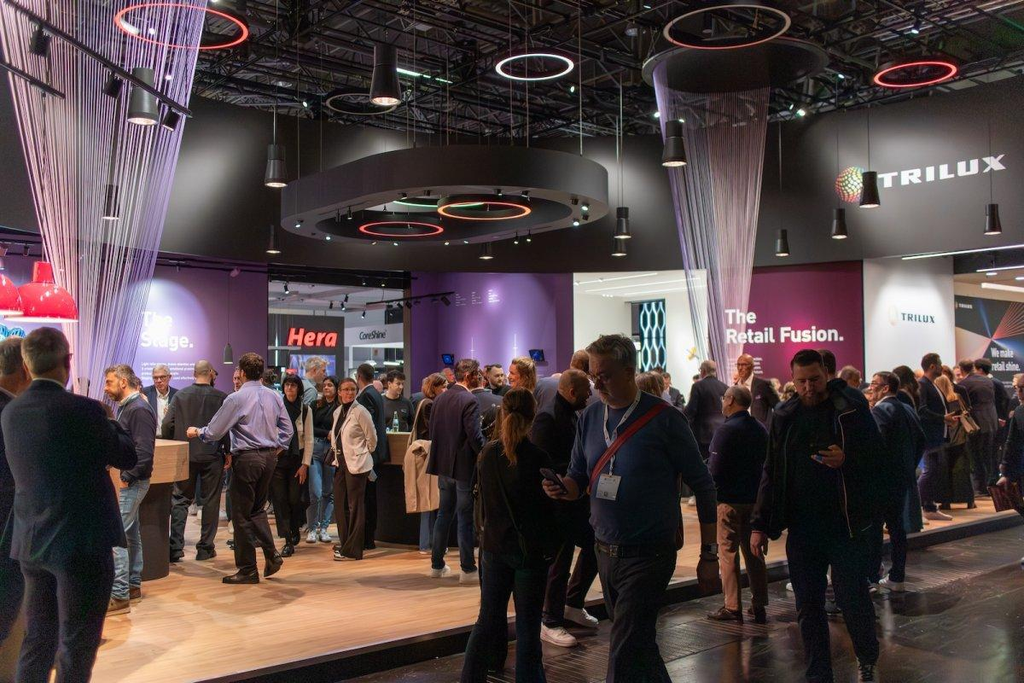
One of the clearest themes around EuroShop 2026 was that lighting is becoming increasingly connected to the wider digital environment of a store.
AI, IoT, smart controls, energy management and building integration are moving into the same conversation.
That does not mean every retail project needs a highly automated lighting system.
Quite the opposite.
The more useful lesson is that retailers now have more options to control their lighting after installation.
A track spotlight can still do the simple job it has always done — highlight a product.
But it can also become part of a system that knows when to dim, which zone to adjust and when a different lighting scene is required.
That is probably the more realistic direction for smart track lighting in the coming years.
Smart track lighting combines adjustable LED track spotlights with digital controls such as dimming, zoning, scheduling, sensors or wireless control.
It can be. Efficient LED luminaires combined with dimming, zoning and sensible operating schedules can reduce unnecessary energy use.
Yes, when the luminaires and control system support individual addressing or control.
Yes. Compatible LED drivers and luminaires can be controlled through DALI-2 for functions such as dimming, grouping and scene setting.
Yes. Adjustable spotlights make it easier to follow changing merchandise layouts, while digital controls allow lighting levels and scenes to be changed without rewiring the store.
No. Dimming, zoning, scheduling and sensors can already provide useful smart-lighting functions. AI is an optional development rather than a basic requirement.
Flexibility. The physical direction of the spotlight can change, while digital controls can change its output and operating schedule.
Smart track lighting is not about putting more technology into a ceiling for its own sake.
For a retailer, the useful question is much simpler:
Can the lighting adapt when the store, merchandise or operating conditions change?
If the answer is yes, the system has a practical advantage.
Efficient LEDs, good optics and adjustable spotlights provide the foundation. Dimming, zoning, sensors and digital controls add another level of flexibility.
And as the discussions around EuroShop 2026 show, the next step is connecting lighting with the wider digital systems already appearing in modern retail buildings.
For most stores, that transition does not need to happen all at once. A well-designed track lighting system can start with the basics and become smarter as the project requires.